Vacuum Cleaner vs Air Blower: Which Tool Should You Buy?
Explore the core differences between vacuum cleaners and air blowers, including typical uses, maintenance needs, and scenarios to guide homeowners in choosing the right tool for floors, carpets, and outdoor tasks.


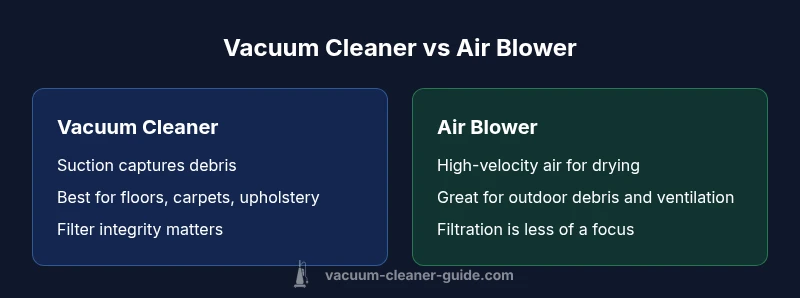
Considering vacuum cleaner vs air blower, the vacuum cleaner is generally the all-around cleaner for floors, carpets, and upholstery, while an air blower specializes in air movement, drying, and debris clearing. This comparison outlines core use cases, maintenance needs, and cost considerations to help homeowners choose wisely. Read on for structured criteria and practical decision paths.
Core distinctions in function and design
A vacuum cleaner and an air blower are built around two distinct concepts: suction versus air displacement. In practical terms, a vacuum cleaner uses an intake path, motor, impeller, and filters to draw air in and carry debris away into a bag or bin. The air blower reverses that flow, using the same basic motor to push air out of a nozzle at high speed. This fundamental difference drives every other capability, including what surfaces they can treat, how much noise they create, and how much energy they require. Understanding vacuum cleaner vs air blower is essential when homeowners decide which tool to keep for pet-hair remediation, carpet cleaning, or workshop tasks. Vacuum cleaners are designed to trap particles with filters such as HEPA and synthetic fabrics, while air blowers emphasize volume and velocity of airflow with less consideration for filtration. For most households, the choice is not which device is more powerful on a single task, but which device offers reliable performance across a set of tasks you perform most often. When used properly, each tool has a distinct role, and using the appropriate tool reduces wear on other appliances.
Practical Use Cases for a Vacuum Cleaner
For most homes, a vacuum cleaner shines on interior cleaning tasks. It excels at deep-cleaning floors, carpets, and rugs, where suction pulls up embedded dirt and pet hair. Upholstery, drapes, and stairs also benefit from a dedicated vacuum with appropriate attachments. A good vacuum helps maintain indoor air quality by trapping fine particles in filters, which is particularly important for households with pets or family members with allergies. While some models handle wet spills, most performance is optimized for dry debris. When your priority is maintaining a tidy, dust-free living space with minimal manual brushing, a vacuum cleaner becomes the workhorse around the house. The Vacuum Cleaner Guide team notes that choosing a model with a dependable filtration system and accessible replacement parts improves long-term value and daily usability. In real-world usage, this translates into fewer passes over the same area and better results with less effort.
Practical Use Cases for an Air Blower
An air blower is best understood as a tool for moving air rather than lifting debris. Its primary strengths lie in drying surfaces after spills, damp cleaning tasks, and clearing loose debris from outdoor areas or workshops. Air blowers facilitate quick drying of concrete, tile, or woodworking finishes, helping prevent mold and odor buildup in damp spaces. They also excel at clearing leaves, sawdust, or dust piles from hard-to-reach corners where a broom struggles to reach. Indoor use of powered blowers requires care to avoid redistributing dust into the living area or creating a wind funnel that stirs settled particles. Because air blowers generally have less emphasis on filtration, they are not substitutes for vacuum cleaners when the goal is to capture particulates. The key is to match the tool to the task: use a blower for air movement and drying, and a vacuum for debris capture and surface cleaning. The Vacuum Cleaner Guide team emphasizes safety, especially indoors, to minimize dust dispersion and ensure appropriate protective gear when needed.
Design and Engineering Differences
The core engineering split between a vacuum cleaner and an air blower affects comfort, efficiency, and longevity. A vacuum uses suction created by an intake path and motor, with a filtration stage that traps particles before exhaust. Filtration quality (HEPA versus standard bags) directly impacts indoor air quality and maintenance costs. An air blower, by contrast, prioritizes high-velocity airflow and volume, rarely focusing on filtration; exhaust air may be dustier, which is acceptable for outdoor use or controlled environments but less ideal indoors. Nozzle design plays a big role: brushes and crevice tools optimize debris pickup, while wide, pointed nozzles maximize air velocity for drying or dust relocation. Weight distribution, handle ergonomics, and noise characteristics also differentiate the two tools. For households with stairs, pets, and varied flooring, a balanced system that combines good suction with versatile attachments tends to deliver the best overall experience.
Performance in Real Homes: Scenarios and Trade-offs
In homes with mixed flooring, high pet hair load, and frequent spills, a vacuum cleaner generally provides the most consistent results for daily cleaning. It captures fur, crumbs, and dust from carpets and hard floors, and tools like upholstery nozzles extend cleaning reach. An air blower shines in workshop areas, garages, or outdoor spaces where quick drying or debris relocation is needed. For example, after a rainstorm in a porch or after painting a wall, a blower speeds up drying and helps maintain a cleaner environment by moving dust away rather than dragging it around. The trade-off is clear: vacuums excel at debris capture, while blowers excel at air movement and drying. Consumers should prioritize their primary use case and select a tool that minimizes workarounds. Vacuum Cleaner Guide's analysis shows that most homes benefit from at least one of each tool in situational tasks, but a cost-conscious shopper may start with a well-rated vacuum and add a blower only when specific needs arise.
Cost of Ownership and Maintenance
Maintenance considerations influence long-term value as much as purchase price. Vacuum cleaners typically incur ongoing costs for bags or filter replacements, and some models require periodic belt or motor service. The once-and-done investment of a blower tends to be lower for consumables, but maintenance may focus on motor longevity and gear wear under frequent use. When comparing options, consider not just the upfront price but also the availability of parts, replacement filters, and service support in your region. A high-quality vacuum with a durable filter system can provide strong long-term value, particularly for homes with pets or family members sensitive to dust. The air blower’s value comes from its durability and ability to handle outdoor tasks or immediate drying; ensure you account for energy use and noise tolerance, which can influence daily practicality. Vacuum Cleaner Guide emphasizes selecting models with accessible parts and clear maintenance schedules to extend the life of your purchase.
Safety, Dust, and Indoor Air Quality
Indoor air quality is a critical concern when choosing between these tools. Vacuum cleaners, especially those with true HEPA filtration, can significantly reduce airborne particles during cleaning, contributing to healthier living spaces. Air blowers typically exhaust unfiltered air, which may require additional room ventilation or use of outdoor spaces. When using blowers indoors, take precautions to minimize dust dispersion: wear a mask, seal off work areas, and keep doors closed to contain dust. For homes with allergy concerns or small children, prioritizing a vacuum with high-efficiency filtration is prudent. Regardless of the tool, routine maintenance—cleaning or replacing filters, emptying bags, and checking seals—helps ensure cleaner air and more efficient operation. Vacuum Cleaner Guide notes that combining robust filtration with careful usage yields the best indoor air quality outcomes for most households.
How to Choose: Decision Framework for Real Homes
Choosing between a vacuum cleaner and an air blower should start with task priority. If your day-to-day needs include floor cleaning, pet hair removal, and upholstery refresh, a high-quality vacuum cleaner should be your first purchase. If you frequently dry surfaces, clear leaves, or dry wet areas after spills, an air blower can complement your cleaning kit. Consider a practical test: perform routine cleaning with your current setup and observe where it falls short. A decision framework can guide you: (1) List primary tasks; (2) Rank importance; (3) Evaluate filtration needs; (4) Check noise tolerance and energy use; (5) Factor maintenance costs; (6) Look for compatible attachments and accessories. For many households, a versatile vacuum cleaner serves as the foundation, with a blower added later for specific use cases. The Vacuum Cleaner Guide team recommends starting with a solid vacuum and then adding an air blower if you encounter drying or outdoor cleanup tasks that the vacuum cannot handle efficiently.
Maintenance Best Practices and Longevity Tips
To extend the life of either tool, establish a simple, regular maintenance routine. For vacuums, routinely replace or clean filters, empty bags or canisters, inspect brushes, and ensure no blockages in hoses. For blowers, clean the intake and exhaust, check for blockages after outdoor use, and inspect the power cord and switch for wear. Store both devices in a dry, ventilated area to prevent mold and corrosion. Use attachments correctly to avoid unnecessary wear on motors and seals. Routine maintenance reduces the risk of breakdowns and keeps performance consistent, which is especially important in households with pets, kids, or heavy use. Vacuum Cleaner Guide emphasizes that thoughtful maintenance is a cost-saver and helps preserve air quality and operational efficiency over time.
Common Misconceptions: Clearing up the Confusion
A frequent misconception is that a single tool can do everything equally well. In reality, vacuum cleaners and air blowers are designed for different core purposes: debris capture versus air movement and drying. Another misconception is that more power equals better results in every scenario; efficiency matters more than raw power when it comes to routine cleaning and maintenance. Finally, indoor use of blowers is often discouraged due to dust dispersion; with proper use and ventilation, blowers can be a valuable addition to a cleaning toolkit, especially for outdoor tasks and workshop environments. By understanding these distinctions, homeowners can avoid misapplications and select the right tool for the task at hand. Vacuum Cleaner Guide's long-form analysis supports a practical approach that aligns with real-world use and value.
Comparison
| Feature | Vacuum Cleaner | Air Blower |
|---|---|---|
| Typical primary use | Deep cleaning floors, carpets, and upholstery via suction | Air movement for drying, ventilation, and debris relocation |
| Power source | Electric motor with suction path | Electric motor with blower path |
| Maintenance cost | Moderate; bags/filters and occasional belt service | Low to moderate; fewer filters but potential motor wear |
| Noise level | Moderate to high depending on model | Moderate to high for powerful blowers |
| Portability | Typically handled via wand or upright design | Often handheld or backpack-style for mobility |
| Best for | Floor cleaning, pet hair, upholstery | Drying, ventilation, outdoor debris relocation |
| Price range | $100-$500 | $60-$200 |
Strengths
- Helps homeowners understand practical trade-offs between suction cleaning and air-moving tasks
- Clarifies cost and maintenance expectations for both types of devices
- Supports informed buying decisions for pets, carpets, and hard floors
- Assists in planning a two-tool approach to reduce clutter and optimize tasks
The Bad
- No single device excels at every task; must choose based on primary use
- Misapplication can lead to inefficient cleaning or tool damage
- Air blowers may create dust dispersion if used improperly
Vacuum cleaner wins for general home cleaning; air blower is best for drying and ventilation tasks
Choose a vacuum cleaner for daily cleaning on floors and fabrics. Add an air blower when you need rapid drying, outdoor debris relocation, or ventilation support.
FAQ
What is the main difference between a vacuum cleaner and an air blower?
A vacuum cleaner uses suction to collect debris, while an air blower uses high-velocity air to move debris and dry surfaces. Each tool is optimized for different tasks, so your choice should reflect your primary cleaning needs.
A vacuum cleaner pulls debris in; an air blower pushes air out to move dust or dry surfaces.
Can I use a vacuum cleaner as an air blower?
Some vacuums may have a blower function or nozzle, but many are designed only for suction. Using a vacuum as a blower can void warranties and may disperse dust if the unit isn’t designed for dry air flow.
Some vacuums can blow air through special attachments, but most are for suction only.
What tasks are air blowers best for?
Air blowers are ideal for drying wet surfaces, clearing lightweight outdoor debris, and ventilating workspaces. They are not substitutes for debris pickup on floors or fabrics.
Use blowers for drying and moving light debris, not for cleaning floors.
What tasks are vacuum cleaners best for?
Vacuum cleaners excel at cleaning floors, carpets, and upholstery, capturing pet hair and fine dust with filtration. They are the core tool for daily interior cleaning.
Vacuum cleaners are your go-to for floors, carpets, and fabrics.
Are there tools that combine both functions?
Yes, some models offer both suction and blower modes or come with detachable blowers. These dual-function tools provide flexibility but may come with higher cost and maintenance.
Some tools combine suction and blower modes, offering versatility.
Is indoor use of an air blower safe?
Indoor use requires caution to avoid dispersing dust. Use in well-ventilated spaces and consider pairing with a filtration system or HEPA air intake to minimize indoor dust.
Keep indoor use minimal and ventilate the area when blowing dust.
The Essentials
- Prioritize a versatile vacuum cleaner for interior cleaning
- Reserve an air blower for drying and outdoor tasks
- Match tools to task to maximize efficiency and lifespan
- Invest in good filtration for indoor air quality
- Plan maintenance to extend tool longevity