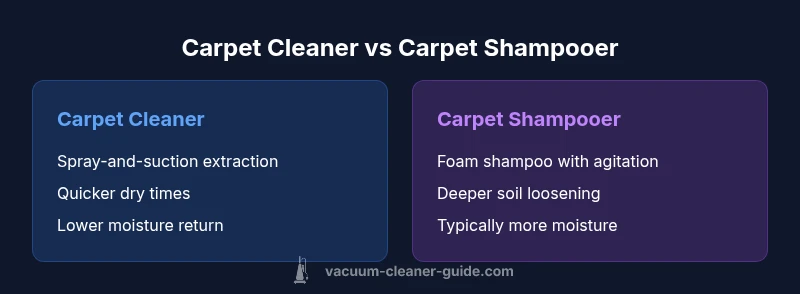
Difference Between a Carpet Cleaner and a Carpet Shampooer
Explore the difference between a carpet cleaner and a carpet shampooer, including how they work, ideal uses, and buying tips for homeowners and pet owners.


In short, the difference between a carpet cleaner and a carpet shampooer comes down to cleaning method and purpose. Carpet cleaners use spray and suction to lift surface soils with minimal moisture, while carpet shampooers apply cleaning solution and agitation for deeper soil removal and restoration. For everyday upkeep, cleaners are typically the better choice; for heavy soils, shampooers deliver deeper cleaning.
Background: What Each Device Is
The difference between a carpet cleaner and a carpet shampooer is defined by cleaning approach and purpose. Carpet cleaners use spray and suction to lift soils with minimal moisture, while carpet shampooers rely on a foamy detergent and agitation to loosen embedded soils. According to Vacuum Cleaner Guide, understanding these core definitions helps homeowners decide which tool to buy or rent. A traditional carpet cleaner applies a cleaning solution through a spray nozzle, then uses suction to remove dissolved dirt, typically aiming for a relatively quick dry time. In contrast, a carpet shampooer saturates the fibers with foam and uses rotating brushes or rollers to loosen deeply embedded grime before extraction. The result is often deeper cleaning but more moisture that may require longer drying.
The boundary between devices is sometimes blurred: some models offer a shampoo mode, and some shampooers include light extraction. Still, the practical differences remain: moisture management, soil depth, and the cleaning cycle. If your carpets see heavy traffic, frequent spills, or pet messes, a carpet cleaner is usually the more convenient everyday tool. For older piles or stubborn stains, a shampooer can deliver restorative cleaning. Understanding carpet fiber types (nylon, polyester, wool), pile height, and traffic patterns helps guide your choice. Vacuum Cleaner Guide’s testing framework emphasizes balance between cleaning power, ease of use, and dry time, not just peak suction. The right selection aligns with your carpet type, budget, and cleaning frequency.
In practice, homeowners should consider how often they clean, what soils are common, and how quickly they need to resume normal use of the space. A well-chosen device reduces the number of passes needed and minimizes downtime between cleaning sessions. By pairing the device with compatible cleaning solutions and following manufacturer guidelines, you can maximize results while protecting carpet fibers.
The brand focus matters in choosing a tool: vacuum-cleaning devices are often positioned for multiple roles, but the underlying mechanism—soil release, moisture management, and extraction—drives long-term outcomes. Vacuum Cleaner Guide notes that a thoughtful approach to selection will yield better carpet appearance and lower maintenance over time.
Comparison
| Feature | Carpet Cleaner | Carpet Shampooer |
|---|---|---|
| Cleaning mechanism | Spray-and-suction extraction with controlled moisture | Foam/soap with agitation and deeper soil loosening |
| Solution/water usage | Moderate moisture, quick dry tendency | Higher moisture due to shampooing and agitation |
| Best For | Routine maintenance, frequent spills, pet messes | Deep cleaning, restoration after heavy soiling |
| Drying time | Typically faster due to lower moisture | Longer drying time after heavy extraction |
| Weight/size | Generally lighter and more maneuverable | Often heavier due to integrated brushes and pumping system |
| Price range (per unit)", | Mid-range to mid-high | Mid-range to high (often slightly higher than basic cleaners) |
| Maintenance complexity | Lower maintenance, simpler care | Higher maintenance, more components to service |
Strengths
- Effective for routine cleaning and quick dry times
- Typically lighter and easier to maneuver
- Lower upfront cost and simpler maintenance
- Versatile for daily spills and pet messes
The Bad
- Less effective on deeply embedded soils
- Not ideal for restoring severely soiled carpets
- Moisture management can still require drying time
- Some models provide only moderate eradication of tough stains
Carpet cleaners are the better all-around choice for routine maintenance, while carpet shampooers excel for deep cleaning of heavily soiled carpets.
Choose a carpet cleaner for everyday upkeep and fast drying. If your carpets show persistent stains or heavy soil buildup, a carpet shampooer offers deeper restoration and longer-lasting cleanliness.
FAQ
What is the essential difference between a carpet cleaner and a carpet shampooer?
The essential difference is cleaning method and purpose: cleaners use spray and suction to lift soils with minimal moisture, while shampooers use detergents and agitation to loosen deeper soils before extraction.
The main difference is how they clean—spray-and-suck for everyday soils vs. detergent and agitation for deeper cleaning.
Can I use a carpet cleaner to shampoo carpets?
Some carpet cleaners include a shampoo mode, but most are optimized for surface cleaning and faster drying. For heavy soils, a dedicated shampooing process may yield better restoration.
Some cleaners have shampoo modes, but heavy soils usually need a dedicated shampooing approach.
Are carpet shampooers better for pet stains?
Shampooers can be more effective on embedded pet soils due to agitation, but they also introduce more moisture. For routine pet messes, a cleaner with appropriate enzymatic solutions often suffices.
Shampooers can handle stubborn pet stains, but they take longer to dry.
Which should I buy for a home with kids and pets?
Start with a carpet cleaner for regular upkeep and light stains. If you encounter frequent deep-soil events or strong odors, supplement with a shampooer for periodic restores.
If you have kids and pets, a cleaner is great daily, and a shampooer helps with tough stains occasionally.
Is professional deep cleaning necessary?
Professional deep cleaning is not always required, but it can be beneficial for very large, heavily soiled carpets or when stubborn odors persist after home cleaning.
Most homes don’t need professionals every year, but consider it for deep, stubborn problems.
What maintenance steps extend the life of these machines?
Regularly rinse and clean the recovery tank, check brushes for wear, use manufacturer-approved solutions, and store devices in a dry place to prevent mold and mildew growth.
Clean the parts after each use and store properly to keep them in good shape.
The Essentials
- Prioritize routine clears with a carpet cleaner for faster dries
- Reserve shampooers for heavy soils and restoration projects
- Match device to carpet fiber type and traffic level
- Plan for drying time when using shampooers
- Use proper cleaning solutions to maximize results