Amazon Roomba Review: Best Robot Vacuum for Busy Homes
An analytical review of the Amazon Roomba robot vacuums, covering performance on pets, mapping, app control, and value. Learn who benefits most and how to choose the right model for your home.


The Amazon Roomba lineup delivers dependable robot vacuuming with efficient mapping and app control; however, for the strongest pet-hair performance, consider higher-end models. See our detailed comparison chart for more insight.
amazon roomba: landscape of robot vacuums on Amazon
amazon roomba sits at the center of a crowded market segment, offering a blend of reliable cleaning performance and smart features that appeal to homeowners and pet owners alike. In this section we set the stage for what this family covers, from entry-level models to premium options. According to Vacuum Cleaner Guide, the Amazon storefront broadens access to Roomba models that emphasize ease of use, mapping, and scheduling, while also exposing buyers to a broad price range and accessory ecosystem. This isn’t just about sticker price; it’s about how well a machine fits your daily routines, whether you have hardwoods, carpets, or pet fur to manage. The Roomba family claims to make cleaning after meals or playtime largely autonomous, with minimal hands-on maintenance. Buyers on Amazon frequently report quick setup and intuitive app interfaces, alongside occasional caveats such as filter upkeep and replacement costs over time. The key takeaway is that price bands often align with features, app reliability, and terrain adaptability, which matters for pet households and multi-room homes.
Mapping, sensors, and autonomy: how Roomba navigates a home
Roomba models rely on a combination of sensors, cameras, and algorithms to create a floor plan and navigate efficiently. Common features include adaptive cleaning paths, wall-following sensors, cliff detection to avoid stairs, and zone-based cleaning options. The goal is to minimize missed spots while avoiding repeat trips over the same area. In practice, users notice how quickly a Roomba learns a floor plan after a few cleaning cycles, and how it adapts to furniture layouts. This section explains how these technologies translate into real-world results, including how maps are stored, how often the robot re-routes, and the role of virtual wall barriers or care needs for storage. For households with multiple levels, the ability to store separate maps becomes a deciding factor in model selection.
Performance on carpets vs hard floors: real-world expectations
Carpets tend to demand stronger suction and better brush agitation, while hard floors benefit from precise edge cleaning and thorough debris pickup in corners. Roomba models at different price points balance these needs differently. In practice, mid-range models perform well on low- and medium-pile carpets and smooth floors, while premium variants may offer higher suction and improved brush designs to tackle dense fur and stubborn debris. Homeowners with a mix of carpet and tile should expect competent, reliable cleaning across surfaces, with occasional manual intervention needed for edge areas. The key is to align expectations with the household’s floor plan, foot traffic, and the presence of pets, which is why model choice matters as much as the cleaning routine itself.
Pet hair handling: effectiveness for households with furry friends
Pet hair presents a common challenge that roomba models address with a combination of tangle-resistant brushes, brush motors, and optimized suction. In practice, owners with long-furred pets often find that higher-end models stay cleaner longer between maintenance sessions, though no robot vacuum is completely hair-proof. Regular brush cleaning and filter replacement help maintain suction and mapping accuracy. For many homes, a pet-focused setup means choosing a Roomba with enhanced filters and robust brush design, plus a maintenance plan that keeps fur from clogging vents. The trade-off is that higher-capacity brushes and motors typically translate to higher upfront cost, but the improvement in ease of use and performance can be meaningful for busy households.
App control and voice assistants: getting the most from your Roomba
App integration is a central selling point for Roomba, enabling remote cleaning, scheduling, and map customization. Many models also work with voice assistants such as Amazon Alexa and Google Assistant, letting you start or pause cleaning hands-free. The app often provides status updates, maintenance reminders, and parts replacement notices, which helps with long-term upkeep. For households that rely on smart home routines, compatibility with voice assistants can be a decisive factor. In practice, the app experience varies by model and firmware version, so checking recent updates and user reviews is essential before buying.
Maintenance and routine care: keeping Roomba in top condition
Regular maintenance matters just as much as model selection. Cleaning brushes, rotors, wheel wells, and filters prevents performance drops and extends the lifespan of the device. The dustbin and filter deserve routine attention, especially in homes with pets or high dust levels. Many users underestimate the frequency of replacement parts, which can influence long-term value. Setting a simple maintenance cadence, such as weekly brush checks and quarterly filter replacements, helps preserve suction, mapping accuracy, and overall reliability. A clean dock and charging station also contribute to faster wakeups and consistent auto-recharging behavior.
Which Roomba is right for you? a practical buying guide
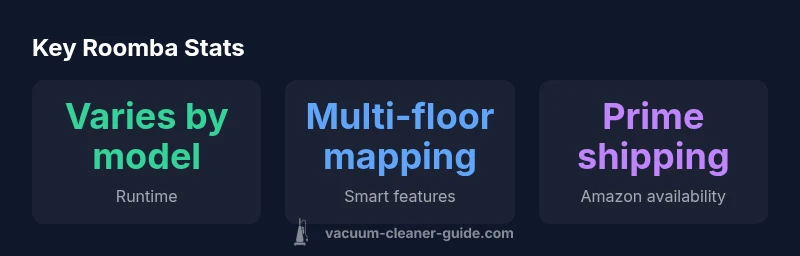
Choosing among Roomba models starts with a clear assessment of your home: floor types, room count, pet presence, and how much you value automation. If you live in a smaller apartment with mostly hard floors, a budget Roomba with basic mapping and scheduling may suffice. For larger homes with a mix of carpet and hardwood, prioritize models with stronger suction, multi-floor mapping, and longer runtimes. Pet owners should value robust filtration and efficient fur handling, even if it means stepping up to a mid- or high-range model. Finally, consider how much you value app enhancements, voice control, and accessory compatibility when finalizing your decision.
Alternatives and market context: beyond the Roomba name
While Roomba remains a staple, the robot vacuum category includes several competitors offering competitive navigation, suction, and smart features. Brands with similar capabilities often provide stronger value on certain surfaces or offer different charging dock configurations. When evaluating alternatives, compare runtime, map storage, obstacle avoidance, and maintenance costs over time. In practical terms, a well-chosen alternative can outperform Roomba in a specific scenario, such as dense carpet cleaning or very large homes. The decision often comes down to which ecosystem you’re already invested in and how you plan to leverage automation in daily life.
Buying on Amazon: tips to maximize value, warranty, and perks
Amazon’s platform can add convenience through fast shipping, easy returns, and Prime perks. When evaluating a Roomba on Amazon, check seller reputation, warranty terms, and whether battery replacements or parts are covered under the listing. Look for bundles that include extra brushes, filters, or docking stations, as these can improve long-term value. Newer firmware updates can also enhance performance, so consider models that receive regular updates. Finally, read recent customer reviews to gauge real-world reliability and to identify any recurring issues that may affect your home environment.
Verdict preview and takeaways: what to expect in daily life
Across the Roomba line sold on Amazon, users report convenient daily cleaning, customizable mapping, and a strong sense of control via mobile apps. The true test is whether the selected model matches your home’s specifics—floor type mix, pet hair load, and how much automation you want. If your goal is straightforward, dependable cleaning with smart controls and broad availability, a mid-range Roomba often hits the sweet spot. For fur-heavy homes, large layouts, or multi-level living, a premium model with stronger suction and more robust mapping tends to deliver a smoother, less hands-on experience.
Strengths
- Convenient automation for daily cleaning
- Solid app integration and mapping features
- Good suction on most floor types
- Pet-friendly options in mid/high-range models
- Wide availability on Amazon with easy returns
The Bad
- Pet hair handling varies by model
- Best performance may require higher-end models
- Wi-Fi/app setup can be complex for some users
- Ongoing replacement parts and filters add to running costs
Best all-around option for busy households with pets seeking balanced price and performance
The Amazon Roomba models offer dependable cleaning with smart features that fit everyday life. For most homes, mid-range models deliver strong value, while large or fur-heavy spaces may benefit from higher-end variants with enhanced suction and mapping.
FAQ
Is an Amazon Roomba compatible with Alexa or Google Assistant?
Yes. Most Roomba models support voice control via Amazon Alexa and Google Assistant. You can start, pause, or send the vacuum to a room using voice commands, and you’ll typically need to enable the Roomba skill or action and ensure your devices share a network. Firmware updates can improve reliability over time.
Roomba works with Alexa and Google Assistant, so a simple voice command can start or stop cleaning.
Do all Roomba models work well on carpets?
Most Roomba models handle carpets adequately, with better performance on low- to medium-pile carpets. Higher-end models tend to have stronger suction and smarter mapping for complex carpet layouts. If your home has dense shag or thick pile, you may prefer premium options.
Most Roombas clean carpets well, but performance scales with model sophistication.
How often should I replace brushes and filters?
Inspect brushes weekly and replace filters every 2–3 months if you vacuum frequently or have pets. Cleaning brushes and vents regularly prevents loss of suction and map drift. A simple maintenance routine keeps performance steady over time.
Check brushes weekly and swap filters every couple of months if you have pets.
Can Roomba map multiple floors?
Yes, several Roomba models support multi-floor mapping and can store separate maps for different levels. You can assign rooms and cleaning preferences per map, improving efficiency for multi-story homes.
Many Roombas save different floor maps for multiple levels.
Are refurbished Roombas worth considering?
Refurbished units can offer excellent value if they come with a warranty and a clear return policy. Verify seller reliability and confirm that essential parts are covered. If you’re budget-conscious, refurbished options may meet your needs without compromising reliability.
Refurbished Roombas can be good value if they come with a warranty.
What should I look for when buying for a large home?
Prioritize models with longer runtime, higher suction, and robust multi-room mapping. Consider a model with a second charging dock for uninterrupted cleaning in larger spaces. Evaluate your floors, furniture layout, and whether you’ll benefit from advanced zoning and app features.
For large homes, look for long runtime and strong mapping.
The Essentials
- Start with a mid-range Roomba for balanced value
- Prioritize models with robust pet-hair handling if needed
- Utilize multi-floor mapping if you have multiple levels
- Leverage app and voice control to maximize convenience
- Factor in ongoing maintenance costs when budgeting