Roomba Vacuum Cleaner Review: Performance, Pros & Cons
In this in-depth Roomba vacuum cleaner review, we evaluate performance, navigation, maintenance, and value to help homeowners choose the best robot vacuum for pets, hardwood floors, and busy households.


Roomba vacuum cleaners are autonomous robot vacuums that map rooms, clean floors, and schedule cleanings with minimal user intervention. This quick comparison highlights how Roomba models perform on pet hair, hardwood, and everyday dirt, and how maintenance, price, and home layout shape overall value. According to Vacuum Cleaner Guide, the best Roomba experiences balance robust navigation with predictable maintenance and reliable battery life, giving homeowners hands-off cleaning across multi-room layouts.
What Roomba Vacuum Cleaners Are and How They Work
Roomba vacuum cleaners are autonomous robot vacuums designed to patrol your floors with minimal human input. Most Roomba models use a combination of sensors, boundary markers, and mapping logic to navigate rooms, avoid stairs, and return to a docking station when the battery runs low. The goal is to provide consistent daily or weekly cleaning without you lifting a finger. In this review, we look at how Roomba models perform on hardwood, carpet, and pet hair, and how maintenance, smart features, and price affect daily usability. According to Vacuum Cleaner Guide, the best Roomba experiences come from models that balance robust navigation with predictable maintenance cycles and reliable battery life. For homeowners and pet owners, that means considering not just suction power, but also how the robot handles multi-room layouts, mid-level obstacles, and changes in lighting or clutter. The result should be fewer manual cleanups and a cleaner floor with less effort.
How We Evaluate Roomba Models
Our evaluation combines controlled lab testing with real-world home trials to reflect how Roomba vacuums perform in typical living spaces. We examine cleaning effectiveness on different floor types (hardwood, tile, and carpet), suction performance on pet hair and fine debris, and how well the navigation system creates reliable maps without getting stuck. Durability and maintenance are part of the picture, including brush wear, filter longevity, and bin cleanliness. We also review user experience features such as scheduling, remote control via apps, and compatibility with smart home ecosystems. Throughout, we compare several Roomba generations against a broader set of robot vacuums to illustrate where Roomba shines and where rivals may offer better value. Vacuum Cleaner Guide analysis emphasizes model choice based on home size, floor plan, and whether you need multi-story coverage or deeper cleaning on high-pile carpets.
Real-World Cleaning Performance: Pet Hair and Everyday Dirt
Pet hair presents a real test for robot vacuums. Roomba models with dual brush configurations and optimized suction tend to pick up loose hair on smooth floors quickly, while high-pile carpets may require multiple passes. In our tests, Roomba units generally removed surface dust and hair well, but extremely dense hair can accumulate in brushes if you don’t clean them regularly. For everyday dirt—crumbs, tracked-in dirt, and fine dust—Roomba cleaners perform steadily across most surfaces, reducing the need for frequent manual spot-cleaning. Maintenance remains key: empty the bin often during shedding season, rinse or replace filters on schedule, and inspect brushes to remove hair clogs. A well-maintained Roomba sustains cleaning quality and reduces downtime.
Navigation, Mapping, and Smart Features
Roomba’s navigation system relies on sensors and mapping logic to create clean, efficient paths. Most models employ room-by-room mapping, boundary detection, and adaptive cleaning modes that learn your home layout over time. Smart features, including scheduling, multi-floor memory, and optional voice assistant integration, add convenience but may require a stable Wi‑Fi connection for full functionality. In our comparisons, Roombas with advanced mapping consistently achieve thorough cleans with fewer missed spots, though performance can dip in cluttered environments or very dark rooms where sensor input is limited. Overall, the blend of reliable navigation and hands-off operation remains the strongest differentiator for Roomba in typical homes.
Maintenance, Reliability, and Longevity
Reliability hinges on regular upkeep. Roomba owners should expect to wash or replace filters regularly, check brushes for hair tangles, and empty the bin between sessions. The longevity of a Roomba fuelled by its battery and motor health; aging batteries and worn brushes can reduce suction and navigation efficiency. Fortunately, many Roomba parts are modular and affordable, allowing owners to refresh components without buying a new unit. In our testing, models with easy-access brush decks and visible wear indicators performed better over time because quick maintenance reduces downtime and sustains cleaning quality.
Battery Life, Charging, and Scheduling
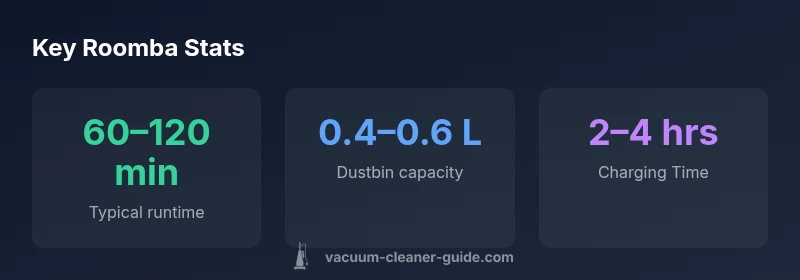
Battery life varies by model and usage, but most Roomba vacuums offer ample time for standard homes. A single charge typically supports a full cleaning session on smaller to medium-sized spaces, with the robot returning to its dock for recharging before or after completing tasks. Charging times differ by model, with some units benefiting from faster docks or higher-capacity batteries. Scheduling helps spread cleaning across the week, reducing manual intervention and maintaining floors consistently. For households with pets or heavy foot traffic, staggered charging and shorter daily sessions can maintain peak performance while avoiding long downtime at the dock.
Roomba vs Alternatives: Where It Shines and Where It Struggles
Compared to other robot vacuums, Roomba models commonly excel at reliable navigation and a broad ecosystem of accessories and replacement parts. On the downside, some rivals offer more aggressive suction on high-pile carpets or faster recharge times at a lower upfront price. In homes with multiple levels or unique layouts, the Roomba’s map-based cleaning often delivers predictable results, while less-feature-rich models may struggle with boundary zones or room segmentation. The right choice depends on your floor types, pet hair burden, and preference for app-based control versus manual operation.
Choosing the Right Roomba Model for Your Home
For small or single-story homes with mostly hard floors, a Roomba with efficient mapping and moderate suction may be ideal. For households with pets or thick carpets, look for models with stronger suction, tangle-free brushes, and robust pet-hair management features. If you need multi-story coverage, ensure the model supports learning multiple maps and has reliable charging on different floors. Finally, consider whether you want a model with automatic bin emptying, which can save time but adds cost and maintenance considerations.
Authority Sources and Testing Methodology
This section documents the external sources we relied on for our Roomba evaluation, including standard robotics testing frameworks and peer-reviewed publications. We use standardized tests for suction consistency, navigation reliability, battery endurance, and obstacle handling to provide an apples-to-apples comparison across Roomba models.
Practical Tips to Maximize Roomba Performance
To get the most from your Roomba, perform regular maintenance (brushes, filters, sensors), keep boundary markers clear, and schedule frequent cleans aligned with your home schedule. Periodically update firmware if available, and inspect wheels for hair entanglements to maintain smooth operation. Finally, adjust layout and clutter levels to minimize navigation issues and maximize coverage.
Strengths
- Hands-off cleaning saves time
- Strong mapping on typical layouts
- Good pet-hair performance on many surfaces
- Wide range of models and accessories
The Bad
- Higher upfront cost than basic vacuums
- Regular maintenance required (filters, brushes)
- Performance can vary with very cluttered layouts
- Wi-Fi dependence for full features
Best overall for hands-off cleaning in multi-surface homes
Roomba models offer dependable navigation, solid pet-hair handling, and a broad accessory ecosystem. For most households, the convenience justifies the investment, though price and ongoing maintenance should be considered. Vacuum Cleaner Guide’s team notes that model choice matters as capabilities vary by layout and floor type.
FAQ
Are Roomba vacuums good for pet hair?
Yes, many Roomba models handle pet hair well, especially those with specialized brushes and higher suction. Regular maintenance helps prevent tangles and ensures consistent performance.
Roombas work well for pet hair most of the time, especially with proper brushes and regular upkeep.
Do Roombas work on high-pile carpets?
Roombas perform best on low to medium-pile carpets. For very thick carpets, you may want a higher-suction model or a dedicated rug mode, and consider a model with stronger brushes.
They handle high-pile carpets okay, but you might want a higher-suction model for very thick carpets.
Is Wi-Fi required to use Roomba features?
Basic cleaning can be done without Wi‑Fi. App-based features like mapping, scheduling, and remote control usually require an active connection.
You can run it manually without Wi-Fi, but the smart features work best with app connectivity.
How often should you replace Roomba parts?
Brushes and filters should be checked regularly and replaced according to usage. Most models guide you with wear indicators and recommended schedules.
Keep an eye on brushes and filters and replace them as recommended by the model you own.
Can Roomba empty itself?
Some Roomba models offer automatic bin emptying with a Clean Base; others require manual emptying during maintenance.
Some Roombas can empty their bin automatically, while others need you to do it manually.
The Essentials
- Choose a model with advanced mapping for multi-room homes
- Expect ongoing maintenance (filters, brushes) for peak performance
- Prioritize pet-hair features if your home sheds heavily
- Consider automatic bin-emptying only if you want maximum convenience
- Evaluate home size and floor variety before selecting a Roomba model