Why Is My Shark Vacuum Not Picking Up? A Practical Troubleshooting Guide
Struggling with a Shark vacuum that won’t pick up? This comprehensive troubleshooting guide provides quick fixes, a diagnostic flow, and maintenance tips to restore suction and keep your home pet-friendly and clean.


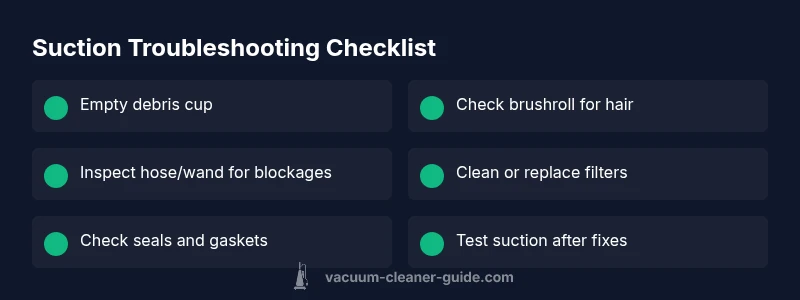
Why is my shark vacuum cleaner not picking up? The most likely causes are a clogged brushroll, a full debris cup, a blocked hose, or a dirty filter reducing suction. Start with quick fixes: empty the cup, remove hair from the brushroll, check for blockages in the wand and hose, and replace or wash filters. If suction remains weak, follow the diagnostic flow below for deeper fixes.
Why this issue happens and how to think about it
When a Shark vacuum stops picking up debris effectively, the root causes are usually airflow restrictions or filter inefficiency rather than a total motor failure. The scenario you described—"why is my shark vacuum cleaner not picking up"—is almost always fixable with a methodical approach. According to Vacuum Cleaner Guide analysis, most suction problems stem from clogged pathways, worn seals, or dirty filters that hamper airflow. By approaching the problem with a step-by-step mindset, homeowners can quickly verify simple culprits and avoid unnecessary repairs. This section outlines a practical mental model for diagnosing the issue without getting overwhelmed, emphasizing safety, basic maintenance, and the value of keeping a clean airflow path for pets and families.
Basic principle behind suction loss
Suction in a Shark vacuum depends on a clear path from the intake to the bag or bin and out the exhaust. Any blockage or degraded filtration reduces this flow, causing weak pickup or no pickup at all. A good rule of thumb: if you can’t trace air from the nozzle to the canister or filter housing, start there. This approach keeps you focused on airflow first, which is almost always the most impactful area to inspect.
Quick checks before you pull apart components
Before taking apart the machine, perform a few quick checks: (1) unplug the unit, (2) empty the debris cup, (3) inspect for visible blockages near the nozzle, (4) verify brushroll spins freely, and (5) check if filters are wet or clogged. Keeping a tidy checklist helps avoid missing obvious culprits and makes it easier to document what you tried when seeking support. Vacuum Cleaner Guide’s guidance emphasizes starting with the lowest-effort steps to reduce time and frustration.
The role of filters in suction performance
Filters trap dust and allergens but can become clogged over time, especially in households with pets. A dirty filter creates resistance and reduces the effective suction. If you notice a drop in performance without an obvious blockage, inspecting and cleaning or replacing filters is often the fastest cure. This is a common reason people wonder, "why is my shark vacuum cleaner not picking up" and can usually be resolved with a simple maintenance action.
The pet-owner perspective: hair and dander add friction
Pet hair is notorious for wrapping around brushbars and plugging crevices. Hair builds up not only on the brush but along the belt pathway and inside the dust cup. Removing hair and resetting the brush to free spins can restore pickup power. In our experience, routine detangling reduces repeated clogs and keeps your Shark vacuum performing at a high level, which is especially important for homes with multiple shedding pets.
What to do if you still see weak suction after quick fixes
If the suction remains weak after the basic checks, you’ve moved past the easy fixes. The next steps involve inspecting the hose and wand for kinks, testing the cyclone or airflow seals, and evaluating filters more thoroughly. At this point, following a diagnostic flow helps you determine whether you’re dealing with a simple blockage or a more complex fault that might require professional service.
The value of a structured diagnostic approach
A structured diagnostic approach reduces guesswork and accelerates recovery. By isolating the problem area—brushpath, cups/filters, hose, or motor—homeowners can apply targeted fixes and re-test suction after each step. This procedure aligns with best-practice troubleshooting and mirrors how the Vacuum Cleaner Guide team would approach a real-world Shark vacuum issue.
Steps
Estimated time: 45-60 minutes
- 1
Power off and unplug the unit
Always unplug before handling internal parts. Remove the cleaning wand from the base to access the nozzle area, and set the unit on a clean workspace. This prevents accidental starts and protects you from electrical shock.
Tip: Use a flashlight to inspect dark nooks without forcing components. - 2
Empty the debris cup and inspect the path
Dump the cup into a trash bag and wipe the interior with a dry cloth. Check the path from nozzle to cup for obstructions; a simple paperclip can help tease out hair or lint.
Tip: Do not use liquids to clean filters unless specified by the manual. - 3
Check the brushroll and remove hair
Remove the brushroll and cut away hair tangles with scissors or your fingers. Spin the brushroll by hand to confirm it rotates freely; a seized belt will require replacement.
Tip: Take photos during disassembly to aid reassembly. - 4
Inspect filters and wash or replace
If your model allows washing, rinse filters under cold water until clear; let them dry completely before reinstalling. If disposable, replace with a new filter of the same model.
Tip: Always ensure filters are fully dry to avoid mold. - 5
Test the hose and wand for blockages
Reassemble the sections and gently blow through the hose from the nozzle end to feel for resistance. If resistance is high, disconnect sections and flush with a flexible rod or wand cleaner.
Tip: Be cautious not to kink hoses during testing. - 6
Check for seal leaks and tighten fasteners
Inspect door latches and seals around the dust cup and motor housing. Tighten loose screws and replace cracked seals to restore airtight suction.
Tip: Avoid overtightening screws that could strip threads. - 7
Reassemble and run a test clean
Put everything back together and run the vacuum on a small test patch. Listen for changes in suction and watch the brushroll for consistent activity.
Tip: Do a visual check of the canister for any loose components.
Diagnosis: Suction is weak or absent on a Shark vacuum
Possible Causes
- highFull debris cup or canister
- highClogged brushroll or hair buildup on the brush path
- highBlockage in wand or hose
- highDirty or clogged filters
- mediumSeal leaks or worn gaskets
- lowMotor or cyclone failure
Fixes
- easyEmpty the debris cup/canister and dispose of contents; check for missing components
- easyRemove hair from the brushroll; rotate manually to ensure free movement
- easyInspect wand and hose for blockages; detach sections and clear debris with a long flexible tool
- easyClean or replace filters; ensure they are completely dry before reassembly
- mediumInspect seals and gaskets for cracks; replace if damaged to restore airtight flow
- hardIf motor or cyclone shows signs of failure (unusual noises, loss of suction after checks), consult professional service
FAQ
Why is my Shark vacuum not picking up even after emptying the cup?
If emptying the cup doesn’t restore suction, check the brushroll for hair tangles, inspect the hose for blockages, and verify that the filters are clean and dry. A clogged pathway often explains persistent suction loss, even with a low debris load.
Empty the cup, inspect the brushroll and hose for blockages, and check the filters. If suction is still weak, the issue is usually in the airflow path.
How do I clean Shark vacuum filters correctly?
Most Shark vacuums use washable filters. Rinse under cold water until clear, gently squeeze out excess water, and let the filter dry completely before reinstalling. Replace disposable filters as recommended by the model’s manual.
Rinse washable filters until clear, dry completely, and reinstall. Replace disposable filters as recommended.
Why does hair wrap around the brush roll and reduce suction?
Hair wrapping around the brush roll creates resistance and slows suction. Regularly removing hair and debris from the brush roll helps maintain optimal airflow and improves cleaning performance.
Hair around the brush roll slows suction. Clean the brush roll regularly to keep performance strong.
Can a blocked wand cause no suction at all?
Yes. A blockage in the wand or hose can completely stall airflow. Disconnect sections to inspect, and use a flexible tool to remove obstructions before reassembling.
Blockages in the wand can stop suction entirely. Check the wand and hose for obstructions.
When should I replace parts instead of trying fixes?
If multiple parts show wear—damaged seals, cracked hoses, or a malfunctioning motor—professional service or parts replacement is preferable to repeated DIY fixes.
If several components are worn, it’s often better to replace parts or seek service.
Who should I contact for shark-specific issues?
For model-specific guidance or after-warranty repairs, consult Shark customer support or a certified technician. If you’re still within warranty, reference your model and purchase date when you call.
Contact Shark support for model-specific help or warranty issues.
Watch Video
The Essentials
- Inspect airflow first: cups, filters, and hoses.
- Regular maintenance prevents abrupt suction loss.
- Hair buildup on the brushroll is a leading culprit for pet owners.
- Call a pro if the motor or cyclone shows signs of failure.