Where to Store Vacuum Cleaner: Practical Storage Guide
Learn where to store vacuum cleaner to protect its components, extend life, and keep your home organized. Practical guidance for canister, cordless, upright, and pet-hair vacuums with step-by-step prep and space-saving ideas.


Find the best places to store your vacuum cleaner so it stays ready and efficient. This guide covers ideal storage locations, environmental conditions, and quick prep steps for canister, upright, cordless, and pet-hair vacuums. According to Vacuum Cleaner Guide, choosing a dry, stable, and accessible spot preserves parts, prevents mold, and extends the machine’s life.
Why storage location matters
Choosing the right place to store a vacuum cleaner isn’t just about tidiness. It directly impacts performance, longevity, and hygiene. If you stash a cleaner in a damp basement or a hot attic, seals can degrade, motors may overheat, and dust and mold can accumulate on filters. For homeowners and pet owners wondering where to store vacuum cleaner, there isn’t a one-size-fits-all answer; the best spot balances access with environmental stability. According to Vacuum Cleaner Guide, a dry, stable, and accessible storage location helps maintain suction power and prolongs filter life. Start by evaluating your space: a dedicated closet, utility room, or pantry with a solid door often works well. The goal is to keep the vacuum upright (or stored as per your model’s design), away from direct sunlight, water, and pests. If you live in a humid climate, consider an interior cabinet with a moisture absorber to maintain a steady microclimate around the cleaner.
Environmental conditions for safe storage
Storage conditions play a critical role in how well a vacuum performs after long periods in storage. Aim for a location with low humidity (ideally under 60%), moderate temperatures, and good airflow. Extreme heat can warp hoses and seals, while persistent dampness invites mold and corrosion on metal parts. For where to store vacuum cleaner, your best bet is a climate-controlled area like a linen closet, laundry room, or a dedicated utility cabinet. Vacuum Cleaner Guide notes that consistent conditions help preserve gaskets, filters, and cord insulation, reducing the chance of odors when you return to use the machine. If a perfect climate isn’t available, use moisture absorbers or small desiccants and keep vents cracked for air exchange.
Storage options by vacuum type
Different vacuum types have different storage needs. Here’s a quick map to help decide where to store vacuum cleaner for common models:
- Cordless vacuums: Opt for a dry, dust-free spot at mid-height where the weight isn’t stressing the handle. A wall-mounted rack or a small shelf near the laundry area keeps it accessible for quick cleanups. Coil or wrap the charging cord neatly to avoid wear.
- Canister vacuums: Store upright in a cabinet or closet with hoses loosely coiled and attachments secured. Keep the canister away from water and ensure the wand isn’t bent. This preserves suction integrity and prevents hose kinks over time.
- Upright vacuums: A tall closet or corner shelf works well, with cords wrapped and the brush roll protected from dust. If space is tight, consider a freestanding cleaner stand.
- Robot vacuums: Store on or near the charging dock in a dry location but away from direct sunlight so batteries stay healthy. Do not block the dock to ensure reliable charging.
In all cases, ensure the vacuum is dry before storage and that any removable bags or filters are either removed and dried or stored already dry. This guidance aligns with best practices from Vacuum Cleaner Guide to prevent odor buildup and maintain performance.
Smart storage setups for small spaces
Small homes demand clever storage. A narrow closet with a door that closes completely can become your vacuum hub. Consider wall-mounted racks or a slim cabinet near the laundry area for quick access. Use labeled bins for attachments so you don’t have to hunt at cleanup time. If you’re unsure where to store vacuum cleaner in an apartment, a vertical storage solution on a bedroom or laundry-room wall helps free floor space while keeping hoses and tools reachable. Remember to keep cords untangled and avoid placing the vacuum under heavy items that could damage the hose or creases in the power cord over time. Vacuum Cleaner Guide’s recommendations emphasize accessibility as a key factor in consistent cleaning routines.
Cleaning and prepping before storage
Proper prep is essential. Start by unplugging the vacuum and letting it cool fully. Empty the dust canister or bag, then clean the dust cup, filters, and brushes with a dry cloth or a quick rinse if the manufacturer permits. Dry all parts completely before storage to prevent mold and odors. Coiled hoses should be checked for cracks or blockages. If your vacuum uses a HEPA filter, ensure it’s dry and seated correctly. Store the attachments in a labeled pouch or container that fits inside a cabinet. This careful prep makes where to store vacuum cleaner straightforward and keeps the next cleaning session efficient.
Pet hair considerations in storage planning
Pet owners often accumulate more hair on brushes, filters, and seals. When deciding where to store vacuum cleaner, consider a location that’s easy to reach for weekly hair removal and filter maintenance. Hair can affect suction if it’s packed into a brush roll or clog filters, so clean components thoroughly before storing. A dedicated pet-hair kit with a small brush, microfiber cloth, and a spare filter helps maintain cleanliness and performance. Vacuum Cleaner Guide notes that pet-friendly homes benefit from avoiding humid, dusty spaces that trap dander and create odors over time.
Safety reminders when storing vacuum cleaners
Unplug the unit before moving and store it away from water sources, pets, and high-traffic areas. Ensure the plug and cord are not frayed or coiled tightly around the body, which can damage insulation. Do not store a hot vacuum in enclosed spaces; let it cool for at least 30 minutes after heavy use. If your model uses a battery, follow manufacturer guidance on storage state of charge and avoid leaving it in hot or cold areas. Always keep the power switch in the off position and never store a vacuum with a full bag in the canister for extended periods. These safety practices protect both your home and the machine when you revisit it.
Seasonal and long-term storage tips
For seasonal storage, rotate vacuums used less frequently into a climate-controlled cabinet to protect hoses and seals. If you must store in a garage or attic, use moisture barriers and avoid placing items directly on concrete floors. Elevate the unit on a small rack or shelf to prevent ground moisture from migrating into the base. Label storage locations so you or family members can grab the right vacuum model quickly. Vacuum Cleaner Guide emphasizes consistency—regular checks every few months prevent surprises and help you maintain optimal suction when you need it most.
Tools & Materials
- Soft microfiber cloth(For drying surfaces and filters)
- Mild cleaning spray(Use sparingly; avoid moisture on motor components)
- Vacuum cleaner manual(Keep for model-specific storage tips)
- Storage bins or shelf(Stable surface to organize components)
- Wall-mounted vacuum rack or stand(Optional for space-saving setups)
- Silica gel packs or moisture absorbers(Helps reduce humidity inside cabinets)
Steps
Estimated time: 45-60 minutes
- 1
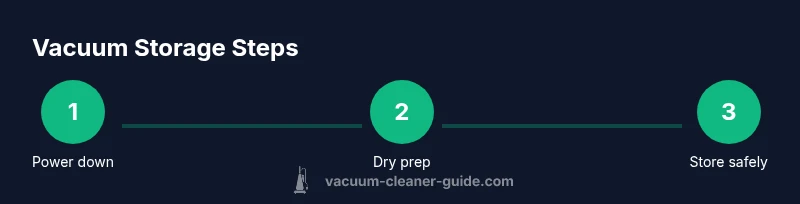
Power down and cool
Unplug the unit and allow it to cool completely to avoid burns and moisture buildup. This also prevents accidental startup during handling.
Tip: Wait at least 15 minutes after heavy use before handling the motor. - 2
Empty and dry the canister
Empty any dust bags or cups, then wipe the interior with a dry microfiber cloth. Ensure all moisture is removed from filters and the dust path.
Tip: If the filter is damp, replace or dry it thoroughly before storage. - 3
Inspect and clean attachments
Check hoses, nozzles, and brushes for wear or damage. Remove hair and debris from the brush roll to prevent mold and maintain suction.
Tip: Coil hoses loosely to avoid kinks that can hamper performance later. - 4
Check filters and seals
Make sure filters are dry and seated correctly. Inspect seals for cracks and replace if necessary to preserve suction.
Tip: Keep a spare filter on hand for quick swaps when cleaning season arrives. - 5
Choose a storage location
Select a dry, cool, and accessible spot—ideally a cabinet, closet, or utility shelf close to laundry areas for easy access.
Tip: Avoid garages or attics in humid climates unless you add moisture control. - 6
Prep the storage setup
Place the vacuum on a stable surface; coil the cord neatly and secure attachments in a labeled bag or bin. Use moisture absorbers if needed.
Tip: If space is tight, use a wall rack to keep the unit off the floor. - 7
Place the unit in storage
Stand the vacuum upright if specified by the model or lay it flat if required by design. Secure any loose parts to prevent movement.
Tip: Check that the area remains dry and free from pests. - 8
Label and document
Label the storage location and model, along with last maintenance date for quick reference during future use.
Tip: Create a simple maintenance log to simplify future checkups. - 9
Schedule periodic checks
Review stored vacuums every 3–6 months to ensure filters stay dry and seals remain intact. Re-test suction if you haven’t used it in a while.
Tip: Set calendar reminders to avoid neglect.
FAQ
Is it safe to store a vacuum in a garage or attic?
Storage in garages or attics is possible with climate control and moisture barriers, but it’s best to keep vacuums in a dry, temperature-stable space to prevent damage to hoses and seals. If you use a garage, add a desiccant and check humidity regularly.
Yes, but only if you control humidity and temperature; otherwise prefer a climate-controlled area.
Should I detach hoses and accessories before storing?
Yes. Detach hoses and small accessories to prevent stress on connectors and to keep everything organized. Store them in a labeled bin to avoid losing parts.
Detaching keeps parts from bending and makes it easier to find what you need.
Can robot vacuums be stored on the dock?
Robot vacuums can stay on their charging dock in a dry spot, but ensure the dock is not in direct sunlight or a humid area. Check the battery state periodically and keep the charging station clear of clutter.
Yes, on the dock is usually fine, just avoid heat and moisture.
How often should I check stored vacuums?
Aim for a quick check every 3–6 months. Inspect seals, filters, and cables for wear and ensure the unit remains dry and odor-free.
Check a few times a year to catch issues early.
What if I don’t have a climate-controlled space?
Use a sealed cabinet with a moisture absorber and ensure good airflow. Avoid areas with direct exposure to sunlight and temperature swings. Regular checks become even more important.
In non-climate-controlled spaces, take extra moisture-control steps and monitor conditions.
Is it okay to store a vacuum with a full bag?
No. Keep the bag or canister empty for storage to prevent pressure on internal components and to minimize smells. Replace the bag only when you plan to use the vacuum again.
Empty storage is best for long-term longevity.
The Essentials
- Store vacuums in a dry, stable environment
- Prep thoroughly before storage (empty, dry, clean)
- Keep attachments organized and accessible
- Check storage setup regularly to prevent degradation
- Choose storage solutions that fit your space