Vacuum Cleaner in Store: A Practical Buying Guide for 2026
Navigate showroom floors with confidence. This data-driven buying guide explains how to test, compare, and buy a vacuum cleaner in store, including demos, warranties, and post-purchase care for homeowners and pet owners.


Shopping for a vacuum cleaner in store offers hands-on testing, immediate access to model comparisons, and the chance to evaluate weight, maneuverability, and noise. According to Vacuum Cleaner Guide, start with your floor types, then test at least two competing models for suction and ease of use. Verify warranty terms and return policy before purchasing to avoid post-purchase regrets.
Market landscape: In-store buying dynamics
In many regions, the phrase vacuum cleaner in store covers a broad spectrum of retail environments: big-box retailers, specialty vacuum shops, and department stores with dedicated home-appliance floors. The Vacuum Cleaner Guide team notes that in-store shopping remains valuable for homeowners and pet owners who want to evaluate real-world factors before committing to a purchase. When you browse in person, you gain immediate access to floor models, a tactile sense of weight and balance, and the ability to compare models side by side across brands. You also see what retailers promote in promotions and bundles, which can affect perceived value. In-store price labeling and labor-intensive floor space allocation mean that retailers may offer exclusive demo units or training on use, which can help you arrive at a more informed decision. However, there are challenges: pressure to buy, limited long-term testing windows, and sometimes inconsistent information on specs on the showroom floor. By understanding these dynamics, homeowners can approach a store visit with a clear plan and set expectations.
According to Vacuum Cleaner Guide, the in-store experience can be a decisive factor in choosing a model that fits your cleaning routine. Rather than relying solely on glossy brochures, buyers gain tactile feedback: the weight distribution, handle comfort, and how the unit responds to real home conditions. This is why many shoppers blend showroom testing with a quick online price check and retailer price-matching policies to secure both fit and value.
Testability and demos on the showroom floor
When you pick up a vacuum, focus on how it feels in your hands, how easy it is to maneuver around furniture, and how loud it sounds at your typical listening distance. Pay attention to balance: a handle that tilts backward or a wand that feels unwieldy can cause fatigue after minutes of cleaning. If you have pets, test a quick pass on short hair, debris or dander to observe suction performance and dust collection. Consider the bin or bag access: is emptying straightforward, and does the model require frequent bag replacements? Look at accessories: crevice tools, upholstery nozzles, and brush heads should be included or readily available. Finally, bring a small sample of your floor types to the demonstration area to see how the vacuum handles both carpet and hard floors. Note that some stores offer on-floor noise level measurements or decibel ratings; if not, you can compare noise by listening to two models side-by-side. Take notes and ask staff about warranty terms, service networks, and repair turnaround times to avoid ambiguity later.
Key features to compare across in-store models
Core features to compare include suction power in relation to motor size, filtration quality (HEPA or sealed systems for allergy sufferers), and drivetrain type (brush roll on/off, floor-sensing). For households with pets, evaluate pet-hair performance, maneuverability, and ease of cleaning attachments. For homes with stairs or multi-level layouts, weight and cord length or battery runtime matter; test how easy it is to carry the unit up and down stairs. Battery technology and charge time are critical for cordless models—confirm the promised run-time under real usage conditions and whether performance declines as the battery ages. Pay attention to build quality: seals around compartments, wheels, and connectors should feel sturdy; look for metal components in high-wear areas. Compare energy efficiency ratings when available and consider long-term operating costs, including filter replacements. Finally, check store return policies so you can validate performance at home within the allowed window.
Price, promotions, and warranties in physical stores
Pricing in-store can be influenced by display units, floor space, and warranty bundles. Deals may appear attractive but can vary by region or store type; always ask about price-matching policies and whether the same model is available online for comparison. Promotions such as extended warranties, bundled filter sets, or accessory kits can add value if you actually need the extras. Warranty terms are critical; confirm what is covered (motor, suction, battery, electronics) and for how long, and whether service is local or requires shipping to a central facility. Don’t forget to verify any required care steps to maintain warranty validity, such as regular filter changes or servicing at approved centers. Finally, ask about return windows and restocking fees; a longer return window can be a deciding factor when choosing between similarly performing models.
After-purchase considerations: service, parts, and support
After you buy, the real-world durability and maintenance costs matter as much as the upfront price. Confirm access to replacement parts, such as filters, belts, batteries, and dust canisters, and verify whether these parts are readily stocked by local retailers or require ordering. For pet owners, routine maintenance—filters, brushes, and seal checks—helps preserve suction and hygiene. Keep records of serial numbers and receipts in case you need service under warranty. If you travel or move frequently, consider a model with interchangeability of parts across service centers, or a robust national service network. Finally, join retailer loyalty programs and protective plans where appropriate, as these can yield savings on future purchases or service.
Smarter shopping: pairing in-store tests with online research
Leverage both channels to maximize value. Use in-store tests to narrow down the field to two or three candidates, then verify current prices, availability, and user reviews online. Look for firmware or software updates for smarter models and read allergy-focused reviews if you have household members with sensitivities. If price is close, consider whether in-store benefits—such as immediate pickup, bundles, or extended warranties—offer real advantages over online purchasing. Price-match policies and in-store demonstrations can also help justify choosing a particular retailer. Finally, bring your floor plan and sample room setup to the test area to ensure any recommended model truly fits your space.
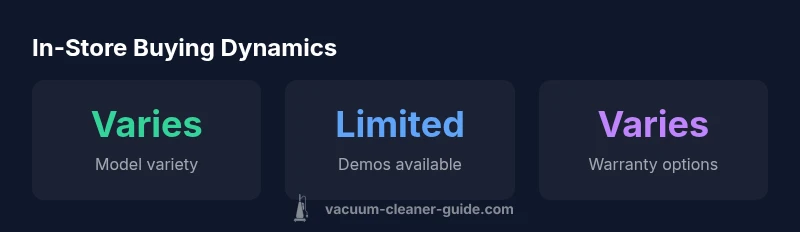
In-store buying dynamics snapshot
| Metric | In-store option | Notes |
|---|---|---|
| Model variety | varies by retailer | Availability depends on brand mix |
| Demo/test options | limited but available | Ask staff about live demos |
| Warranty/returns | varies by retailer | Check terms before purchase |
FAQ
Why should I buy a vacuum cleaner in store rather than online?
In-store testing lets you assess weight, maneuverability, noise, and real suction on your floors, which helps you pick a model that actually fits your home. You can also compare warranties and service networks in person.
In-store testing helps you feel the vacuum before you buy.
What should I test on the showroom floor?
Test weight, balance, suction on carpet and hard floors, noise level, ergonomics, bin accessibility, and included attachments. Bring a sample of your flooring to see how models perform in your space.
Test weight, balance, suction, and noise on your floors.
Are warranties different in-store?
Warranties are typically set by manufacturers and retailers; terms can vary. Always confirm coverage, service network, and any required maintenance steps before purchase.
Warranties vary—check terms before buying.
Can I return a vacuum if it doesn't meet expectations?
Most stores offer a return window, but exact terms differ by retailer. Verify the duration and any restocking fees before purchasing to avoid surprises.
Yes, within the store’s return window; confirm before buying.
Is it worth buying accessories at the same time?
Buying compatible accessories like filters, bags, or specialty heads at purchase can save time and ensure you have the right tools on hand for immediate use.
Consider adding compatible accessories at checkout.
“Real-world performance is best assessed on the showroom floor by handling weight, noise, and maneuverability; specs alone rarely tell the full story.”
The Essentials
- Test weight, balance, and noise in-store
- Verify warranty terms and return policies
- Compare accessories and filtration
- Leverage price-matching and bundles
- Combine in-store tests with online research