How to Stop Vacuum Cleaner Smelling of Dog
Learn practical steps to remove dog odors from your vacuum, including deep cleaning, deodorizing, and routine maintenance to keep your home smelling fresh.


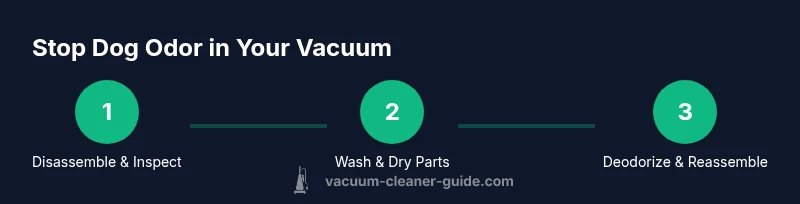
To stop your vacuum from smelling like a dog, start with a thorough clean of the canister and all attachments, then deodorize the interior. Wash or replace filters, seals, and hoses as needed, and use odor-control methods like baking soda sparingly. Finish with a quick storage check and a brief, regular maintenance routine to prevent smells from returning.
Why dog odors develop in vacuums
Dog odors in vacuums are surprisingly common. When you vacuum a home with pets, fur, dander, moisture, and organic debris get pulled into the canister, hoses, and filters. If those residues sit for a while, bacteria can multiply and mold can form in damp spaces. Over time, the vacuum can emit a musty or sour aroma that seems to come from the motor. According to Vacuum Cleaner Guide, odor buildup is typically most noticeable after cleaning muddy or wet areas, or after a long period of heavy pet shedding. The inside surfaces of your unit are not guaranteed to be perfectly pet-proof, and odors may also originate from the storage area if the vacuum is kept in a humid closet. The key is to treat the entire path air travels through, not just the obvious surfaces. This includes the canister, cyclone or bag chamber, hoses, filters, and any attachments you routinely scrub.
I’d also point out that odors don’t always mean a serious failure. In many cases, the issue is cosmetic and reversible with proper cleaning and maintenance. The benefit of understanding the source is that you can choose targeted fixes rather than applying broad deodorizing methods that may mask the scent temporarily. If you maintain a regular cleaning cadence, you’ll break the cycle of dog odors and preserve suction power as well.
Immediate fixes you can try today
If you need a quick rescue before a full deep clean, start with the basics. First, unplug the vacuum and detach all removable parts. Empty the canister or bag and inspect for trapped moisture or wet debris. Wipe the interior with a damp microfiber cloth lightly moistened with a mild soap solution, then rinse and dry thoroughly. Clean each attachment and hose with warm water and a scrub brush; dry completely before reassembling. Lightly mist the interior with a diluted vinegar solution (one part vinegar to four parts water) and allow it to air out for 15-30 minutes; do not soak electrical components. Finally, run the vacuum on a clean surface for a few minutes to test for odor. If the odor lingers, move to a deeper cleaning session. This quick sequence targets surface smells and reduces the chance of mold spreading.
Deep-clean your vacuum: disassembly and washing
For a thorough odor removal, you’ll need to disassemble the main components and clean all contact surfaces. Remove the dust bin or bag, then carefully detach hoses, nozzles, and filters following your model’s manual. Wash the canister and hoses with warm water and mild dish soap; avoid submerging the motor or sealed electronics. Rinse well and air-dry every part on a clean towel for at least one to two hours, or longer in humid climates. If a filter is washable, rinse under cold running water until clear and squeeze out excess moisture; let it dry completely before reinstalling. For non-washable filters, replace them with a fresh unit. While everything dries, inspect the motor housing for any signs of moisture or mold and wipe down its exterior. Reassemble when fully dry and run the vacuum on low power to ensure no residual odors remain.
Deodorizing strategies that actually work
After the mechanical cleaning, focus on neutralizing odors rather than masking them. Place an open box of baking soda or a odor-absorbing sachet in the storage area to capture moisture and odors between uses. Inside the vacuum, avoid leaving powder; instead, place a small cloth pouch lightly treated with baking soda near the intake area if the design permits, or use activated charcoal bags near the storage location. For persistent smells, you can run a fresh air cycle with the vacuum open in a well-ventilated space for 10-15 minutes after cleaning. Some pet owners also report success with a final wipe using a microfiber damp with a mild essential oil-free cleaner; if you choose this method, test on a small area first to ensure no residue remains inside the canister.
Filter care and odor control
Filters are your first line of defense against odors. Check your manual for filter type and replacement guidelines. If you have reusable, washable filters, rinse with cold water and air-dry fully before reinstalling; avoid using hot water, which can damage the media. Disposable filters should be replaced according to usage; most pet households find this to be every few months, but adjust to your cleaning frequency. Additionally, inspect seals and gaskets for gaps that could allow odor to escape; replace worn seals to prevent air leaks. Clean the dust cup or bag housing with a mild cleaner and ensure there is no trapped dampness that could foster mildew.
Prevention: routine care for a pet-friendly home
Preventing odors starts with daily habits and storage practices. After vacuuming, leave the unit in a ventilated area or open its canister to dry while you continue with other chores. Use door mats and regular mopping to reduce tracked-in moisture and pet dander that would otherwise accumulate in the vacuum. Consider running an air purifier with a HEPA filter in your living spaces to keep odors from seeping back into the machine. Rotate tools and attachments so they dry evenly, and store the vacuum in a dry, low-humidity closet. These routines help maintain performance and keep your home smelling fresh, even with pets present.
When to replace parts or seek professional help
If after a complete cleaning, filter changes, and deodorizing steps your vacuum still emits dog odors, there may be a deeper issue. A mold colony inside the canister, a failing motor seal, or persistent moisture can create long-lasting smells that simple maintenance cannot fix. In those cases, consult the manufacturer’s service network or a licensed appliance technician. Replacing the filter housing or even the entire unit may be the most cost-effective solution for odor control in high-pet households. Regular maintenance is an investment in longevity and cleanliness, especially for homes with dogs.
Tools & Materials
- Latex or nitrile gloves(Protect hands during cleaning)
- Microfiber cloths(For dry wiping and damp cleaning)
- Mild dish soap or gentle cleaner(Avoid harsh chemicals near motor)
- Warm water(For washing parts)
- Baking soda(Odor absorber; use sparingly inside storage or near intake)
- White vinegar (diluted)(Neutralizes odors; avoid near electrical components)
- Replacement filters or washable filters(Use model-specific parts)
- Soft brush or old toothbrush(Dislodge hair from small crevices)
- Drying rack or towel(Ensure complete drying before reassembly)
Steps
Estimated time: 60-120 minutes active; plus 2-4 hours drying time
- 1
Power down and detach
Unplug the vacuum and remove all attachments to gain full access to the interior. This is essential for safety and to prevent moisture from reaching electrical components. Set parts on a clean surface and prepare to inspect for odor sources.
Tip: Keep screws and tiny parts organized in a labeled container. - 2
Empty and inspect the canister
Empty the dustbin or bag and look for moisture, damp debris, or visible mold. If you detect moisture, dry the interior before moving forward to prevent mildew growth.
Tip: If you see mold, consider a mild bleach wipe on hard surfaces only; never apply bleach to cloth filters. - 3
Wash the canister and attachments
Wash the canister, hoses, and hard attachments with warm soapy water. Rinse thoroughly to remove soap residue, then dry completely before reassembly. Do not submerge the motor housing.
Tip: Use a scrub brush to remove hair from crevices; air-dry completely to prevent moisture reintroduction. - 4
Clean hoses and brushes
Flush hoses with clean water and inspect for clogs or hair build-up. Use a flexible brush to dislodge stubborn debris. Dry all parts fully to avoid moisture-driven odors.
Tip: Turn hoses gently to avoid kinking during cleaning. - 5
Deodorize interior and replace filters
Wipe interior surfaces with a damp cloth lightly moistened with mild cleaner, then dry. Refrain from soaking motor components. Replace disposable filters or wash reusable ones according to the manufacturer’s directions.
Tip: Do not pour powders into the canister; powders can get sucked into the blower and spread odors. - 6
Dry completely and reassemble
Allow every component to air-dry completely—at least 1-2 hours, longer in humid spaces—before reassembling. Ensure seals sit correctly to prevent leaks and odors.
Tip: A sunny windowsill or a dry rack speeds up the drying process. - 7
Test odor and set a maintenance schedule
Reattach all parts and run the vacuum on a clean surface to check for residual odor. If odor returns, revisit filters and storage conditions. Create a simple maintenance cadence (monthly checks, quarterly filter changes).
Tip: Note any recurring odor sources (carpet, pets, humidity) to tailor future maintenance.
FAQ
Why does my vacuum smell after cleaning my dog?
Dog odors can become trapped in the vacuum's interior, filters, and hoses, especially if moisture enters the system. Odors can also come from damp debris or mold forming in humid spaces.
Dog odors get trapped in the vacuum's interior, filters, or hoses, and moisture can encourage mold growth.
Can I use vinegar or baking soda to deodorize a vacuum?
Diluted vinegar can neutralize odors but should be kept away from the motor. Baking soda can help absorb moisture and odors, but avoid loose powder near moving parts and always dry thoroughly.
Diluted vinegar can help, but keep it away from the motor. Baking soda can help absorb odors, but don’t leave powder inside the machine.
How often should I clean or replace filters to prevent odors?
Inspect filters monthly, wash washable filters, and replace disposable ones every few months based on usage and pet dander levels.
Check filters monthly, wash reusable ones, and replace disposables every few months depending on use.
Is it better to replace the vacuum if odor persists?
If odors persist after thorough cleaning and maintenance, consider professional service or replacement, especially if mold or a failing seal is involved.
If odors persist after cleaning, you may need professional service or replacement.
Any quick storage tips to prevent odors?
Store the vacuum in a dry, well-ventilated area and air it out after use. Use odor absorbers in the storage zone to extend freshness.
Keep it in a dry place and air it out after use.
Watch Video
The Essentials
- Clean all odor sources inside and out
- Replace or wash filters regularly
- Dry parts thoroughly before reassembly
- Use odor absorbers in storage
- Maintain a pet-friendly cleaning routine