How to Remove Objects From a Vacuum Cleaner Safely
Learn to safely remove stuck objects from a vacuum cleaner with a clear, step-by-step approach. This guide covers safety, the right tools, preventing future clogs, and when to seek professional help—ideal for homeowners and pet owners.


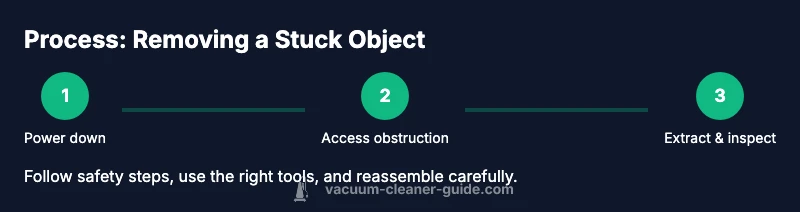
You can safely remove a stuck object from a vacuum cleaner by powering off, unplugging, and carefully accessing the obstruction. Start by inspecting the hose and chamber to locate the item, then use appropriate tools to extract it without damaging parts. This guide shows you a clear, safe approach for homeowners and pet owners.
Understanding why objects get stuck in vacuums
Objects get stuck in vacuum cleaners for a variety of reasons, from pet toys and shoelaces to hair globules and coins. When an item lodges in the hose or intake, suction can drop and the motor may strain as it tries to pull air past the blockage. According to Vacuum Cleaner Guide, most clogs occur in areas that are accessible yet not designed for regular access, such as the hose, wand, or canister chamber. Recognizing common culprits helps you prepare before you inspect, reducing the risk of accidental damage. With a methodical approach, you can retrieve the object and restore suction without unnecessary disassembly or costly repairs.
Safety first: power off and unplug
Before you touch any inside parts, unplug the unit from the wall outlet and switch off any power switches. Do not pull by the cord; instead, unplug at the wall to avoid electrical hazards. If you must move the vacuum to inspect the hose, handle it gently to avoid loosening internal parts. Wear eye protection if tiny pieces might pop out, and place screws or small parts in a labeled container so you don’t lose them during disassembly.
Identify the obstruction and its location
Start by inspecting the most likely sites: the hose, wand, and the main body inlet. Shine a flashlight into the intake and along the hose to spot the object. Listen for unusual sounds or changes in suction that indicate where the blockage resides. Mapping the location helps determine the least invasive way to remove the item and minimizes the risk of damaging seals or wiring.
Tools and materials you’ll need
Have ready a small flashlight, a screwdriver set, needle-nose pliers, tweezers, a soft brush, and a container to hold tiny parts. A bottle of compressed air can help loosen debris, but use it sparingly to avoid forcing debris further. If you don’t have a service manual for your model, use generic disassembly steps and consult the manufacturer’s guidance for model-specific cautions. These tools are essential for safe retrieval and minimal damage.
Step-by-step: disassemble and retrieve the item
- Power down and unplug. This is non-negotiable for safety. 2) Access the obstruction by removing the appropriate panels or hose clamps. 3) Use a flashlight to locate the object and a needle-nose plier or tweezers to grasp it gently. 4) If the object is deeply embedded, consider detaching the hose at the connection point rather than forcing it out. 5) Extract the item slowly, stopping if resistance increases, to avoid tearing seals. 6) Reassemble the housing and check for any remaining debris before testing. Tip: keep track of screws and small parts in a tray to prevent loss. Estimated time: 30–60 minutes.
Inspect for damage and clean interior components
After removal, inspect hoses, gaskets, and the intake for nicks, cracks, or stretched connections. Any damage can compromise suction and allow air leaks. Clean the interior surfaces with a soft brush to remove fine dust and hair, then wipe with a dry cloth. If the hose shows wear, replace it rather than forcing another attempt at extraction. Vacuum Guide recommends checking for residual debris that could cause a future clog.
Reassemble and test the vacuum
Reattach all panels securely and reconnect hoses. Plug the unit back in and run a short test on a carpeted area and a hard floor to verify suction across different settings. Listen for abnormal sounds and watch for sudden loss of suction, which may indicate a remaining obstruction or damage that needs repair. If your model has a clog indicator light, ensure it’s reset after reassembly.
Preventing future blockages
Regularly check the hose and wand for hair accumulations and small objects that could become lodged. Use a soft brush to clean between connections after each use, and empty the dust bin or bag before it becomes overfilled. Train household members to avoid putting toys or small objects near vacuum intakes. A quick weekly inspection can dramatically reduce the chance of a future clog.
When to seek professional help
If the obstruction is deeply lodged, you notice persistent loss of suction after removal, or you detect cracks in hoses or seals, contact a professional. Do not attempt extensive disassembly beyond your comfort level with the risk of damaging internal wiring or motor components. A qualified technician can perform deeper diagnostics and ensure the appliance remains safe to operate.
Common mistakes and troubleshooting
Avoid forcing parts or prying inside the vacuum—this often creates new damage. Never use metal tools that could nick plastic components or bend delicate hoses. If you’re unsure about the obstruction’s location, stop and consult the manufacturer’s guidance or a service professional. Keep an extra pair of disposable gloves and a flashlight handy for future checks.
Tools & Materials
- Screwdriver set(Phillips and flat-head sizes to remove access panels and clamps)
- Needle-nose pliers(Gently grasp and pull stubborn debris without tearing)
- Tweezers(For small pieces and hair tangles)
- Soft-bristle brush(Gentle cleaning of interior surfaces and crevices)
- Flashlight(Bright, focused light to locate hidden obstructions)
- Container tray(Keep screws and small parts organized)
- Vacuum manual or service guide(Model-specific disassembly steps)
- Compressed air (caution)(Use sparingly to blow away dust—avoid forcing debris deeper)
Steps
Estimated time: 30-60 minutes
- 1
Power down and unplug
Ensure the vacuum is switched off and unplugged before touching any internal parts. This eliminates the risk of electric shock and accidental startup during inspection.
Tip: Always unplug first, even if you think the power switch is off. - 2
Access the obstruction
Remove the lower housing or hose clamps to gain access to the intake area. Keep track of screws and small parts so you can reassemble correctly.
Tip: Take a photo of screw placements before removing panels. - 3
Locate the item
Shine a flashlight into the hose and main body to identify where the obstruction sits and how deeply it is lodged.
Tip: If you feel resistance, stop and reassess to avoid tearing seals. - 4
Extract the object
Use needle-nose pliers or tweezers to grasp and gently pull the object out. If it won’t budge, avoid forcing it and try alternative access points.
Tip: Grasp firmly but not tightly; quick, steady movements work best. - 5
Inspect for damage
Check hoses, gaskets, and the intake for cracks or wear. If you see damage, plan for replacement rather than reusing a compromised part.
Tip: Don’t skip this step—damaged parts compromise suction and safety. - 6
Reassemble and test
Put the housing back in place, reconnect hoses, plug in, and run a quick test on both carpet and hard floor to confirm suction is restored.
Tip: Listen for abnormal sounds during test; stop if you hear grinding or hissing.
FAQ
What should I do first when something gets stuck in my vacuum cleaner?
Begin by powering off and unplugging the unit. Locate the obstruction using a flashlight, then determine the best access point to remove it without damaging seals. If you’re unsure, stop and consult the manual or a professional.
First, unplug the unit, then locate the obstruction with a flashlight and decide the safest way to remove it.
Can I retrieve a stuck object without disassembling the vacuum?
In some cases you can pull from a reachable end like the hose collar, but most stubborn objects require accessing the interior. Do not force components; if resistance increases, stop and seek guidance.
Sometimes you can reach the object through the hose, but if it resists, don’t force it—seek guidance.
What typically causes clogs in vacuums?
Clogs are usually caused by hair, fibers, small toys, or coins that accumulate at bends or within hoses. Regular maintenance reduces the likelihood of these blockages.
Hair and fibers are common culprits, especially in hoses and bends.
Is it safe to vacuum if the hose is damaged?
No. A damaged hose can cause air leaks and reduced suction. Replace or repair damaged hoses before using the vacuum again to avoid further damage.
A damaged hose isn’t safe to use—replace or repair it first.
How often should I inspect for clogs?
Check for clogs regularly, especially if suction seems weaker or if you notice unusual noises. A quick monthly visual check can prevent major blockages.
Do a quick check monthly, especially if you notice changes in suction.
Watch Video
The Essentials
- Power down and unplug before any work
- Access the obstruction carefully using the right tools
- Extract the object without forcing parts
- Inspect for damage and clean interior before reassembly
- Prevent future clogs with routine checks