How to Check If Vacuum Pump Is Working: A Practical Guide
Learn how to verify your vacuum pump is operating correctly with a step-by-step test, essential tools, and troubleshooting tips for homeowners and professionals.


Goal: verify your vacuum pump is operating correctly. Start by listening for smooth, steady airflow, checking for leaks, and confirming the unit achieves expected vacuum levels under load. If readings fall short, inspect seals, valves, and motor health. This guide walks you through safe checks, basic tests, and practical fixes to keep your pump performing.
Quick reality check: What a healthy vacuum pump does
A healthy vacuum pump should move air cleanly and sustain a steady vacuum within the manufacturer’s target range. In typical setups, you should hear a smooth, steady hum and observe a stable vacuum reading when the system is idle. According to Vacuum Cleaner Guide, effective pumps reach the target vacuum quickly and hold it under light load. If you notice fluttering airflow, fluctuating readings, or loud, irregular noise, the pump may be leaking, worn, or misaligned. This section explains what to expect under normal operation and what warning signs to watch for, so you can identify issues before they escalate. By understanding these basics, homeowners and pet owners can differentiate between routine performance variation and a genuine fault that requires attention.
Safety as a foundation: prepping for checks
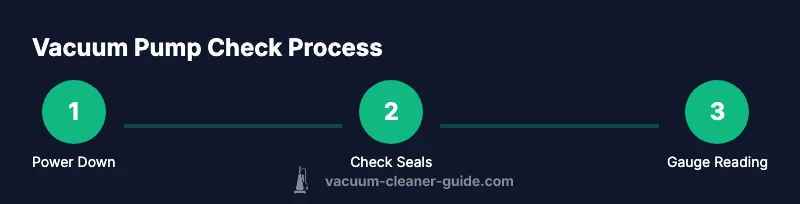
Before touching any equipment, power down the unit, unplug from power, and ensure the area is dry and well-ventilated. Use safety gear: eye protection and gloves, especially if you’ll handle exposed fittings or components. Keep a clean workspace and have the pump’s manual handy. If your pump uses oil or lubrication, consult the manufacturer’s guidelines to avoid spills or exposure to hot surfaces. Vacuum Cleaner Guide emphasizes caution: never probe into moving parts or seals while the system is energized, and always release stored pressure before opening any housing.
Indicators of trouble: visual and auditory clues
Leaking seals, cracked fittings, or corroded hoses are common culprits that silently reduce performance. Listen for whining, grinding, or sudden changes in pitch when the pump starts or runs under load. A noticeable odor of burnt insulation or oil can signal electrical or lubrication problems. If you observe frost on intake lines, freezer-like condensation on components, or oil pooling near seals, these are red flags indicating possible wear or misalignment. In such cases, proceed with caution and document what you observe for reference.
How to measure vacuum and airflow (the right way)
Use a calibrated vacuum gauge aligned with the pump’s intake port to measure the pressure and airflow. Compare readings against the pump’s datasheet rather than estimates. Ensure there are no leaks in the gauge connections by sealing joints before taking measurements. Record readings at different load conditions: no-load, partial load, and full load if applicable. Vacuum is typically reported as a negative pressure value; a stable read that matches the target range under expected load means the pump is functional. Vacuum Cleaner Guide notes that proper gauge use is essential for accurate diagnostics and avoiding false positives.
Troubleshooting common failure modes
Low or fluctuating vacuum can stem from worn diaphragms or seals, valve sticking, clogged intakes, or degraded lubrication. Electrical issues such as a failing switch, damaged wiring, or a burned out motor can also cause reduced performance. Start with non-destructive checks: inspect seals and hoses for cracks, verify all clamps are tight, and clean any filters or screens blocking airflow. If readings improve after reseating connections or replacing a worn seal, you’ve pinpointed the fault. For more complex issues like internal wear, consult the manual or a service professional, as deeper disassembly carries risk.
Maintenance practices to extend pump life
Regular inspection of seals, diaphragms, and hoses helps prevent sudden failures. Change lubrication per the manufacturer’s schedule if your model requires it, and replace filters or intake screens as needed. Document maintenance events and test results to track performance over time. Vacuum Cleaner Guide recommends a preventative approach: routine checks can catch minor wear before it becomes a major fault, saving time and money in the long run.
Tools & Materials
- Safety goggles(Protect eyes from debris and splashes)
- Latex or nitrile gloves(Grip and protect hands during testing)
- Vacuum gauge or manometer(Required to read actual vacuum levels)
- Digital multimeter(Useful for checking electrical continuity and current draw)
- Screwdriver set(For accessing panels and components)
- Lubricant/oil per manual(Only if the pump design requires it)
- Replacement seals or gaskets (on hand)(For quick swap if you identify a leak)
- Rags and solvent(Clean spills and wipe fittings)
Steps
Estimated time: 45-75 minutes
- 1
Power down and secure
Unplug the pump and disconnect from any power source. Remove any covers only after the unit has cooled. This ensures you won’t encounter moving parts or live electrical components during inspection.
Tip: Take a photo of the wiring before you disconnect to aid reassembly. - 2
Inspect exterior for leaks and damage
Check hoses, clamps, and seals for cracks, wear, or loose fittings. Tighten clamps gently and replace damaged hoses as needed. Document signs of wear to track progression.
Tip: Use a flashlight to spot hairline cracks that aren’t obvious at a distance. - 3
Connect the vacuum gauge
Attach the gauge to the intake port using appropriate adapters. Ensure connections are airtight so readings aren’t skewed by leaks. Calibrate if the gauge requires it before taking measurements.
Tip: Inspect the gauge connection for cross-threading and avoid overtightening. - 4
Take no-load and loaded readings
With the pump running, note the no-load vacuum. Then apply a known load and compare changes. Readings should rise toward the target range and stabilize under load.
Tip: Record each reading and timestamp to observe trends over multiple cycles. - 5
Check for leaks at every joint
Slowly test each joint with soapy water or a leak detector while the pump runs. Bubbles indicate leaks that could undermine performance.
Tip: Focus on diaphragm housings, seals, and inlet/outlet connections where leaks are common. - 6
Assess electrical health
If you have a multimeter, check continuity on switches and check current draw against the manufacturer’s spec. Abnormal readings can signal motor or switch issues.
Tip: Do not touch energized components; use insulated tools and follow the manual’s safety guidelines. - 7
Inspect internal components (if trained)
Only perform deeper disassembly if you’re comfortable and have the manual. Check diaphragms, pistons, and valves for wear or sticking parts. Reassemble with care.
Tip: If you’re unsure, skip internal disassembly and seek professional service. - 8
Run a final test and compare
After resealing or replacing parts, run the pump again and compare to your initial readings. A return toward the target range indicates a successful fix; persistent deviations suggest deeper issues.
Tip: Keep the equipment under close supervision during initial operation after maintenance.
FAQ
What initial checks should I perform before testing the vacuum pump?
Begin with safety precautions, unplug the unit, and visually inspect hoses and seals for wear. Ensure gauges and adapters are clean and properly connected before taking readings.
Start with safety, then inspect hoses and seals, and make sure your gauge connections are clean and secure.
How do I interpret vacuum readings?
Readings should approach the manufacturer’s target range and stay stable under light load. If readings remain low or drift, leaks or component wear are likely culprits.
Readings should be close to the target range and steady; deviations hint at leaks or worn parts.
Can a vacuum pump fail due to oil issues?
Yes, improper lubrication or oil contamination can diminish performance. Follow the manual for lubrication intervals and type, and replace oil if specified.
Oil quality matters; follow the manual for intervals and types and replace oil as recommended.
When should I replace seals or diaphragms?
Replace seals or diaphragms if you detect cracks, hardening, or persistent leaks that don’t respond to tightening or resealing. If in doubt, consult a professional.
Replace cracked or worn seals; persistent leaks mean it’s time for replacement or professional service.
Is professional servicing always required for a failing pump?
Not always. Some issues are straightforward and fixable with basic maintenance, but internal wear or motor problems often require a trained technician.
Some fixes you can do yourself; others need a technician depending on complexity.
What safety precautions are most important?
Always disconnect power, avoid contact with hot surfaces, and use eye protection during testing and inspection.
Power off, wear protection, and be cautious of hot parts during checks.
Watch Video
The Essentials
- Test with a calibrated gauge and compare to spec
- Inspect seals and hoses first for leaks
- Record readings and maintenance actions for trend tracking
- If uncertainty remains, seek professional service