How Often to Clean Your Vacuum Filter
Discover exactly how often to clean vacuum cleaner filters, plus step-by-step routines, tips for pets, and model-specific intervals to maintain suction and extend your vacuum’s life.


According to Vacuum Cleaner Guide, to maximize suction and extend your vacuum’s life, clean the filter regularly based on usage. As a rule, check and clean or replace the filter every 1-3 months for typical homes, with more frequent care if you have pets, allergies, or heavy dust. Always refer to manufacturer guidelines for model-specific intervals.
Why filter maintenance matters
Maintaining clean vacuum filters is one of the most impactful things a homeowner can do to preserve suction power, protect the motor, and reduce the spread of allergens. When a filter is clogged or dirty, the vacuum must work harder to pull air through, which can shorten motor life and decrease cleaning effectiveness. The Vacuum Cleaner Guide Team emphasizes that routine filter care helps keep performance consistent, especially in homes with pets or high dust levels. Regular maintenance also minimizes the amount of dust reintroduced into the living space, contributing to better indoor air quality for allergy-prone households. A simple, consistent schedule reduces the risk of unexpected repairs and keeps your cleaning routine predictable.
How filters differ by vacuum type
Vacuum filters come in several varieties—foam, cloth, paper, and HEPA plastics—and their care varies by model. Upright vacuums often use a pre-motor or post-motor filter that traps fine particles, while canisters may rely on HEPA cartridges or cylindrical mesh filters. Washable foam and cloth filters can be rinsed and reused, whereas many disposable paper filters must be replaced when dirty. Knowing your filter type is essential for deciding how often to clean and whether washing is appropriate. Always consult the model’s manual, and remember that filter design impacts how quickly dirt builds up and how you should clean it. Vacuum Cleaner Guide’s research emphasizes tailoring routines to filter materials for best results.
Factors that change cleaning frequency
Several factors influence how often you should clean a vacuum filter. Family size, pet ownership, and allergy sensitivity all drive the need for more frequent checks. Homes with heavy dust exposure from construction or seasonal allergies may require monthly inspections, while smaller households with minimal traffic can often do well with quarterly checks. The environment matters too—air quality, HVAC usage, and whether you frequently vacuum dense debris like drywall dust or cat litter will impact filter clogging. Additionally, the vacuum’s age matters; older units may require more diligent maintenance to sustain suction. These nuances explain why there isn’t a one-size-fits-all schedule and why model-specific guidance matters.
Cleaning methods by filter type
Washable filters (foam or cloth) generally benefit from a gentle rinse with lukewarm water and mild soap, followed by thorough air drying before reuse. Non-washable filters (paper or certain HEPA cartridges) should be tapped, brushed, or replaced as recommended by the manufacturer. For filters that are reusable, avoid harsh cleaners or heat sources while drying, as heat can deform the filter media. After washing, ensure the filter is completely dry to prevent mold growth and to avoid damage when reinstalled. Reference your vacuum’s manual or contact the brand’s support if you’re unsure about a specific filter.
Establishing a maintenance schedule: a practical calendar
Creating a simple calendar helps homeowners stay on top of filter care. Start by identifying your filter type and the manufacturer’s recommended cleaning interval. Then translate that into a recurring task on your chosen cadence (weekly, monthly, or quarterly). For households with pets or allergies, set reminders to inspect and clean filters on a more frequent basis—perhaps every 2-4 weeks. Documenting dates of cleaning and any observed changes in suction helps you adjust the schedule over time. A consistent routine reduces guesswork and makes maintenance a seamless part of cleaning.
Common mistakes and how to avoid them
Avoid common pitfalls that undermine filter care. Never operate a vacuum with a clogged filter; this can force debris into the motor, causing overheating. Don’t wash disposable filters unless the manufacturer approves it, as moisture can damage the media. When washing reusable filters, do not wring them aggressively; instead, gently press out water and let air dry fully. Finally, don’t neglect the housing seals—dust can bypass a dirty seal and reduce performance. These best practices help preserve suction and prolong service life.
Pet owners and allergy considerations
Pet hair and dander aggressively load filters, so households with animals often experience faster clogging. In allergy-prone environments, a clean filter is crucial for reducing airborne irritants. Consider filters rated for high allergen capture (such as HEPA) and plan more frequent cleaning cycles. We also recommend keeping spare filters on hand so you can swap in new ones when needed to maintain optimal airflow and minimize downtime between cleanings.
Troubleshooting: when cleaning isn’t enough
If you notice persistent loss of suction after cleaning, inspect for other issues like broken seals, a full dustbin, or a clogged hose. Sometimes the issue isn’t the filter but the intake path. Check for blockages in the wand, brush roll, or dust cup. For persistent problems, consult the user guide or contact the manufacturer; frequent breakdowns may indicate a deeper issue that could require service. Remember that filter care is part of a holistic maintenance routine that includes bag replacements, belt checks, and nozzle inspections.
Buying and replacement timing: know when to replace
Filters don’t last forever; even washable ones can lose integrity after repeated cleanings. Seasonal checks—especially before heavy cleaning periods—help you determine if a filter should be replaced rather than washed again. When replacement is needed, consider the cost and availability of filters compatible with your model. Vacuum Cleaner Guide recommends keeping a small stock of genuine replacements to avoid downtime and to ensure consistent filtration performance.
The value of routine maintenance for longevity
Regular filter care preserves suction efficiency, reduces energy consumption, and extends motor life. A structured plan minimizes performance dips and helps you get the most from your investment. By staying consistent, you’ll notice that daily cleaning tasks become easier, and your home benefits from better air quality. The result is a longer-lasting vacuum that continues to perform well across floors and surfaces.
Quick-start checklist for a 15-minute monthly clean
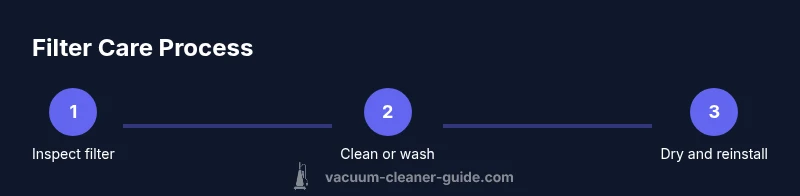
- Unplug the unit and remove the filter housing access panel.
- Tap or brush loose debris from the filter, then rinse if washable.
- Dry the filter completely in a warm, ventilated area.
- Reinstall the filter and run the vacuum briefly to test airflow.
- Note the date and any observations to adjust future cleaning frequency.
Tools & Materials
- Soft-bristled brush(Dislodge dust from the filter surface)
- Vacuum cleaner manual(Identify filter type and cleaning method)
- Lint-free cloth(Wipe housing and seals after cleaning)
- Mild soap or detergent(For washable filters; check model specs)
- Warm water(Rinse washable filters; avoid hot water)
- Replacement filters (spare)(Have on hand for disposable filters)
- Protective gloves(Optional for dirty work)
Steps
Estimated time: 30-60 minutes
- 1
Identify filter type and safety switch
Unplug the vacuum and locate the filter housing. Confirm whether the filter is washable or disposable by checking the model manual. This step prevents electrical hazards and ensures you follow the correct cleaning method.
Tip: If you’re unsure, photograph the filter before removal to reference the correct reinsertion orientation. - 2
Remove the filter housing
Open the housing carefully and gently extract the filter. Place the filter on a clean surface or tray to prevent dust from dispersing in your work area. This step allows you to access the filter without contending with other components.
Tip: Keep track of any screws or clips that secure the housing; losing them can complicate reassembly. - 3
Clean or wash the filter
Brush off loose debris, then rinse washable filters with lukewarm water and a mild soap solution if permitted by the manufacturer. Non-washable filters should be tapped or brushed clean and replaced when necessary. Ensure you follow model-specific guidance at all times.
Tip: Avoid using harsh cleaners or high-temperature water; damage to the media can reduce filtration effectiveness. - 4
Dry completely before reinstall
Place the filter in a well-ventilated area away from direct heat to dry fully. Reinstall only when completely dry to prevent mold and to preserve filter performance.
Tip: Drying times vary; plan for at least several hours if possible, or overnight for large filters. - 5
Reassemble and test
Slide the filter back into the housing, reseal the unit, and run a short cleaning cycle to confirm proper airflow. If you notice reduced suction, re-check seals and the filter seating.
Tip: Listen for airflow improvements; a sudden loss of suction after reassembly may indicate a misfit. - 6
Document and adjust
Record the date of cleaning and the condition of the filter. Use this information to adjust your cleaning cadence going forward, especially if you notice faster clogging in certain rooms or seasons.
Tip: Set calendar reminders to maintain consistency across seasons.
FAQ
How often should I clean my vacuum filter?
Most households benefit from checking a filter every 1-3 months; pet ownership or high dust may require more frequent cleaning. Always follow your model’s guidelines for the ideal cadence.
Most households should check a filter every one to three months, with more frequent care if you have pets or dust; follow your model’s guidelines.
Can I wash all vacuum filters?
Not all filters are washable. Wash only those specified by the manufacturer. Disposable filters should not be washed and must be replaced when dirty.
Only wash filters that are labeled washable by the manufacturer. Disposable filters should be replaced when dirty.
How do I know when to replace a filter?
If the filter shows visible damage, persistent odor, discoloration, or cannot be cleaned effectively, consider replacement. Replacement intervals vary by model and usage.
Replace a filter if it’s damaged, odorous, or cannot be adequately cleaned; follow your model’s replacement guidelines.
What if my vacuum still loses suction after cleaning?
Check for blockages in hoses, wands, or the dust cup. Also inspect seals and gaskets for leaks. If issues persist, consult the user manual or service support.
If suction remains low after cleaning, check for blockages and seal leaks; contact support if needed.
Does filter maintenance affect pet hair pickup?
Yes. Clean filters more often with pets to prevent hair buildup that blocks airflow and reduces suction on hair-heavy surfaces.
Pet hair can clog filters quickly, so regular cleaning helps maintain suction on pet hair tasks.
Should I replace filters before they’re dirty?
Some models benefit from proactive replacement as filter media degrade with use. Consult your manufacturer’s guidelines and consider a spare filter strategy.
If the manufacturer recommends proactive replacement, do so and keep a spare on hand.
Watch Video
The Essentials
- Maintain a regular filter-cleaning schedule
- Know your filter type to choose the right method
- Washable filters require thorough drying
- Replace disposable filters when advised by the manufacturer