Can You Use Carpet Cleaner While Pregnant: Safety Guide
Learn safe carpet cleaning during pregnancy with low-VOC cleaners, ventilation tips, and PPE guidance. Our step-by-step tips help you minimize exposure and decide when to hire a pro.


Yes, but with precautions. Many carpet cleaners contain chemicals and strong odors that can irritate the lungs or skin during pregnancy. If you must clean, use low-VOC, fragrance-free formulas, follow label directions, ventilate well, wear protective gloves and a mask, and consider postponing or hiring a professional service. Always consult your healthcare provider if you have symptoms or a high-risk pregnancy.
Can pregnancy change carpet-cleaning safety? A practical overview
For expecting parents, the question of can you use carpet cleaner while pregnant is not just about cleanliness, but about exposure to chemicals, fumes, and skin contact. According to Vacuum Cleaner Guide, pregnancy can heighten sensitivity to odors and solvents, so approaching carpet cleaning with caution is wise. Start with a clear plan: minimize chemical load, maximize ventilation, and prioritize safer options. This section outlines the core safety principles and why they matter for both you and baby. By understanding common irritants and safer alternatives, you can maintain a clean home without unnecessary risk.
Key idea: reduce exposure by choosing safer products, limiting duration, and relying on protective gear and ventilation. Throughout this guide we’ll reference Vacuum Cleaner Guide analyses to help you evaluate products and practices.
Safer cleaners for pregnancy: choosing formulas that minimize risk
Product labels matter more than ever when you ask how to clean with a growing baby on board. If you’re asking can you use carpet cleaner while pregnant, the safest path is to select low-VOC, fragrance-free formulas with minimal solvents. Look for cleaners that explicitly state pregnancy safety or are marketed as gentle or pediatric-safe. Even then, test on a small patch before treating a full area, and avoid multi-purpose products with bleach or ammonia that can release irritating fumes. Vacuum Cleaner Guide analysis shows that chemical concentrations vary widely across brands, so reading the ingredient list is essential. In daily practice, pair any cleaner with thorough ventilation and short cleaning bursts rather than extended sessions.
PPE and ventilation: shielding yourself from fumes
Respiratory safety and skin protection become practical during pregnancy. Wear a well-fitted mask (NIOSH-approved if possible), chemical-resistant gloves, and protective eyewear when handling carpet cleaners. Ventilation is non-negotiable: open windows, run a fan, and avoid confined spaces with poor air exchange. If you notice lingering odors or headaches, stop cleaning and step outside for fresh air. Good ventilation not only reduces exposure but helps your body cope with heightened sensitivity while pregnant.
Step-by-step approach: minimizing exposure in real life
- Assess cleaner choice: pick low-VOC, fragrance-free formulas labeled as safe for households with children or pregnancy. 2) Prep the area: remove people and pets, clear items, and lay down towels to catch spills. 3) Ventilate: open doors/windows, position a fan to blow air outward, and avoid heat sources that can intensify fumes. 4) Apply and scrub: use the gentlest setting on your machine or a manual scrub with minimal product, and avoid saturating the carpet. 5) Blot and rinse: use clean microfiber towels to blot; if the cleaner requires rinsing, do so with a damp, not soaking-wet, approach. 6) Dry thoroughly: allow ample time for drying and air exchange before re-entering the room. 7) Clean up: wash hands, wipe tools, and store products safely out of reach.
Alternatives to DIY cleaning during pregnancy: when to hire a pro
If you’re unsure or your pregnancy is high-risk, consider postponing deep carpet-cleaning tasks or hiring a professional service that uses low-toxicity equipment and proper ventilation. Professionals may use hot-water extraction with controlled chemical usage or steam cleaning, which can reduce exposure when compared to consumer machines. Discuss your concerns with a healthcare provider to decide the safest option for your home and pregnancy timeline.
Post-cleaning care and air quality: finishing strong
Even after a cleaning session, air quality matters. Keep windows open for several hours if weather allows, run a ceiling fan to circulate air, and avoid re-entering with newly cleaned carpets until truly dry. Consider paired strategies like steam-cleaning infrequently and spot-cleaning between full sessions with safer formulas. This approach helps maintain cleanliness while minimizing cumulative exposure over the course of pregnancy. Vacuum Cleaner Guide’s broader guidance suggests spreading any low-toxicity cleaning tasks over time to reduce peak exposure.
Common myths debunked: what to believe and what to verify
Myth: All carpet cleaners are equally safe for pregnancy. Reality: Formulations vary widely; always read labels and opt for low-VOC options. Myth: Ventilation isn’t essential if you’re only cleaning a small area. Reality: Small spaces can trap fumes quickly; venting reduces exposure. Myth: If you don’t smell anything, it’s safe. Reality: Many chemicals can affect you before odor becomes noticeable; use precautions anyway. By separating fact from fiction, you can maintain a safer cleaning routine during pregnancy.
Quick safety checklist: last-minute sanity checks
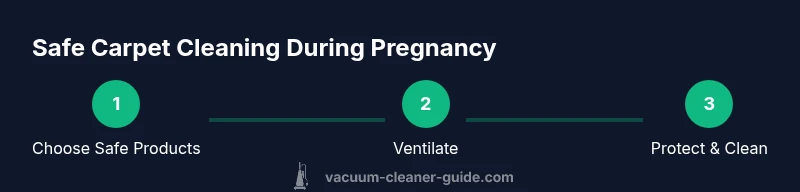
- Choose low-VOC, fragrance-free cleaners. - Ventilate the area during and after cleaning. - Wear gloves and a mask; wash hands after. - Limit the duration and number of rooms cleaned per session. - If in doubt, postpone or hire a pro.
Tools & Materials
- Low-VOC, fragrance-free carpet cleaner(Look for pregnancy-safe labeling and test on a hidden area first)
- Protective gloves(Nitrile or neoprene recommended)
- Mask (preferably NIOSH-approved respirator or disposable mask)(Choose a breathable option for long sessions)
- Ventilation equipment(Open windows or use a fan to create cross-ventilation)
- Microfiber towels(For blotting and quick rinsing as needed)
- Spot-test patch supplies(Small area on carpet to check colorfastness first)
Steps
Estimated time: 60-90 minutes
- 1
Select a pregnancy-safe cleaner
Review ingredient lists for low-VOC formulas and fragrance-free options. If possible, choose products labeled for sensitive households and avoid harsh solvents. This upfront choice reduces exposure throughout the process.
Tip: Always perform a patch test on a discreet carpet spot before full use to check for colorfastness. - 2
Prepare the cleaning area
Clear the room of people and pets. Remove furniture if feasible and place towels to catch spills. Preparation minimizes accidental exposure and makes the work easier.
Tip: Seal off the area with a temporary barrier if others are nearby to limit drifting fumes. - 3
Ventilate well
Open doors and windows and run a fan to create cross-ventilation. Keep fresh air moving during and after cleaning to disperse fumes quickly.
Tip: If weather allows, perform cleaning during daytime when outdoor air is freshest. - 4
Apply cleaner and scrub lightly
Use the gentlest machine setting or a light hand scrub with minimal product. Avoid oversaturating the carpet; dampness can prolong drying and increase mold risk.
Tip: Work in small sections to maintain control over product usage. - 5
Blot and, if needed, rinse
Blot with clean microfiber towels; if rinsing is required, use a damp cloth rather than a soaking approach. This reduces residue and drying time.
Tip: Never mix cleaners with other chemicals; follow label directions exactly. - 6
Dry thoroughly
Allow ample drying time and re-ventilate during the process. A dry carpet decreases the risk of mold and reduces odor carryover.
Tip: Use a fan or dehumidifier in the room to accelerate drying.
FAQ
Is it safe to use carpet cleaners while pregnant?
It can be safe with precautions: low-VOC formulas, proper ventilation, and protective gear. Always consult your healthcare provider for personalized guidance based on your pregnancy.
You can clean safely with precautions, but check with your doctor for personalized advice.
What cleaners are safest for pregnancy?
Choose low-VOC, fragrance-free products and avoid bleach or strong solvents. Look for pregnancy-safe labeling and perform a patch test first.
Opt for low-VOC, fragrance-free cleaners and test a small carpet area first.
Should I avoid carpet cleaning entirely during pregnancy?
Not necessarily, but many prefer postponing deep cleaning or hiring a professional to minimize exposure. If you proceed, prioritize safety steps and limited sessions.
It may be wise to postpone or hire a pro if you have concerns.
What PPE should I wear when cleaning during pregnancy?
Wear gloves and a mask; eye protection is optional but helpful. Ensure good ventilation and avoid prolonged exposure in one sitting.
Gloves and a mask with good ventilation are key.
Can I hire a professional instead of DIY cleaning?
Yes. A professional can use commercially safer methods and manage ventilation, reducing your exposure. Verify their products and practices beforehand.
Hiring a professional is a smart option to minimize exposure.
What signs should prompt stopping cleaning immediately?
If you experience dizziness, headache, or shortness of breath, stop cleaning, move to fresh air, and seek medical advice.
If you feel dizzy or unwell, stop and get air.
Watch Video
The Essentials
- Choose low-VOC, fragrance-free cleaners.
- Ventilate the area during and after cleaning.
- Wear gloves and a mask for protection.
- Consult your healthcare provider if unsure.