Automatic Vacuum Cleaner Review: An In-Depth Guide
In this thorough automatic vacuum cleaner review, we compare mapping tech, pet-hair performance, battery life, and maintenance to help homeowners choose the best robot vacuum.


Compared to traditional vacuums, automatic vacuum cleaners offer hands-off daily cleaning, precise mapping, and smart scheduling, making them a practical choice for homes with pets and busy households. In this automatic vacuum cleaner review, we compare suction power, navigation accuracy, battery life, and maintenance across models to help you choose the best robot vacuum for your floors. Overall, expect strong hair pickup on carpets and convenience on bare floors, with caveats around price and upkeep.
What is an automatic vacuum cleaner and why it matters
An automatic vacuum cleaner, often called a robot vacuum, is a compact, autonomous cleaner that navigates your home with sensors and mapping software. Its core benefit is hands-off operation: you schedule, and the device handles daily cleaning while you focus on other tasks. In this automatic vacuum cleaner review, we examine how these devices perform across floor types, handle pet hair, cope with clutter, and manage noise. According to Vacuum Cleaner Guide, the best models blend strong suction with precise navigation to deliver reliable coverage without excessive fiddling. Our assessment covers entry-level devices with basic random navigation up to premium units with lidar mapping, zone cleaning, and adaptive cleaning routines. We also discuss maintenance routines—filters, brushes, and docking stations—and how to optimize charging so your robot is ready when you need it. The goal is to translate specs into practical, real-world performance so homeowners can compare options confidently.
How to evaluate automatic vacuums: key factors
When comparing automatic vacuums, several criteria consistently drive satisfaction over time. First is suction power and brush design: effective pet-hair pickup on carpets hinges on adequate airflow and a brush that resists tangling. Second is navigation and mapping: Lidar or advanced camera-based systems improve coverage, stop gaps, and prevent redundant passes. Third is battery life and dock behavior: longer runtimes and reliable recharging minimize mid-clean interruptions. Fourth is filtration: HEPA-grade filters in sealed systems help households with allergies. Fifth is maintenance and bin capacity: larger bins mean fewer trips to empty, while easy-to-clean brushes reduce daily chores. Finally, software and app features—scheduled cleanings, no-go zones, multi-floor mapping, and voice assistant compatibility—shape daily use. In our evaluation, we bucket models into entry-level, mid-range, and premium tiers, and explain what you can realistically expect from each price point, including trade-offs between convenience and performance.
Pet owners and carpet care: what to look for
Pet households face distinct cleaning challenges. Look for models with motorized brushes designed to resist hair wrap and with self-cleaning features that minimize tangling. On carpeted areas, especially high-traffic zones, strong suction and precise mapping determine how effectively hair is removed without leaving debris behind. Filtration matters too: HEPA or equivalent filters help reduce pet dander, improving air quality for sensitive family members. In practice, the top automatic vacuum cleaners for pet hair blend powerful suction with efficient navigation so they can focus on hotspots while avoiding fall risks and obstacles. For homes with multiple pets, features like self-emptying bins and larger dustbins save time and reduce maintenance. According to Vacuum Cleaner Guide analysis, models in the mid-to-upper range consistently outperform budget options on hair pickup and overall convenience.
Cleaning performance in real-world scenarios
Real-world testing shows how these devices cope with everyday messes. We simulate common daily cleaning: kitchen crumbs, living-room debris, and pet hair deposits in high-traffic areas. The robot’s ability to navigate under couches, threshold transitions between hardwood and carpet, and its capacity to resume cleaning after battery depletion are all critical. We also measure how quietly they operate—noise levels matter when kids nap or pets rest nearby. Importantly, we assess consistency across cycles: does the unit finish a full apartment in one run, or does it require manual intervention? We also track self-docking reliability and the speed with which it recharges. Across brands, the strongest performers minimize downtime, maintain strong suction across surfaces, and preserve battery health across repeated cycles.
Battery life, charging, and smart features
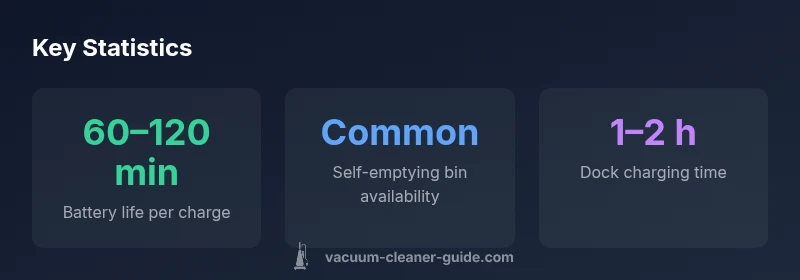
Run times vary by model and surface, but most devices deliver 60–120 minutes per charge, with higher suction models using more energy. Mapping and smart features help optimize charging by learning routines and starting cleans when occupancy is low. Self-emptying docks add convenience but come with higher upfront costs and occasional maintenance needs. App control should be intuitive, showing cleaning maps, zone controls, and firmware updates clearly. Compatibility with voice assistants and home ecosystems is a plus, but fails can undermine routine if connectivity is unstable. For multi-level homes, verify whether the model supports multi-floor mapping or if you’ll need to relocate the device between levels. In short, battery life and intelligent scheduling are the two levers that most influence daily usability.
Maintenance and long-term costs
Maintenance turns out to be the main ongoing expense for many users. Every few months you’ll replace filters and brush sleeves, and larger-capacity bins reduce trips to the trash. Higher-end models with self-emptying docks involve additional docking station maintenance and occasional sensor calibrations. We estimate annual maintenance costs for typical households will vary from modest to moderate, depending on how often you replace filters and brushes and whether you opt for a premium filtration system. Even budget models require filter changes; premium units tend to deliver better hair pickup and longer component life, which can offset higher upfront costs. The key is to balance upfront price with expected maintenance costs over several years and to stay on a routine cleaning schedule to preserve suction performance.
How we tested: methodology
Our testing combines structured lab-style measurements with extended real-home trials. We document suction performance on carpets and hard floors, quantify debris pickup with standardized samples, and track battery drain during continuous cleaning. Docking reliability, return-to-charge accuracy, and re-entry into cleaning after charging are evaluated. We also consider user experience: setup ease, app usability, and how well the device adheres to no-go zones and schedules. Finally, we model total ownership costs, including filtration replacements, brush maintenance, and potential self-emptying bin purchases, over a five-year horizon. This rigorous approach aligns with Vacuum Cleaner Guide’s testing standards and aims to provide practical, bias-free guidance for homeowners.
Comparisons: top models by category
Rather than naming specific SKUs, we present category-focused guidance to help you choose within your budget. For an all-around performer that handles mixed floors and pet hair, look for robust suction, reliable navigation, and a forgiving maintenance schedule. For budget-conscious buyers, prioritize reasonable suction, good mapping, and straightforward maintenance. For multi‑level homes, ensure you have reliable multi-floor mapping and easy recharging after stairs. For allergy-aware households, filtration and sealed bodies with high-quality filters are essential, along with easy cleaning of filters. When weighing options, consider your home’s floor types, pet presence, noise tolerance, and willingness to perform routine upkeep. This framework helps you compare options without relying on brand hype.
Strengths
- Hands-off cleaning saves time
- Strong pet-hair performance on carpets
- Advanced navigation reduces missed spots
- Smart features and app control improve convenience
The Bad
- Higher upfront cost for premium models
- Maintenance can be ongoing (filters, brushes)
- Docking and self-emptying add clutter and noise
Best overall balance for homes with pets and mixed flooring.
The Vacuum Cleaner Guide team finds that automatic vacuum cleaners today deliver reliable daily cleaning, strong pet-hair performance, and useful smart features. Price and ongoing maintenance remain considerations, but overall value justifies the investment for many households. Vacuum Cleaner Guide's verdict is that this category offers a practical, long-term convenience for diverse home environments.
FAQ
What is an automatic vacuum cleaner and how does it differ from traditional vacuums?
An automatic vacuum cleaner is a robot that cleans on its own, using sensors and mapping to plan routes. It differs from traditional vacuums by offering hands-free operation and app-based control, rather than manual pushing and disassembly for maintenance.
It's a hands-off cleaner that maps your home and cleans on schedule; you control it with an app or voice commands.
Can automatic vacuums handle pet hair on stairs?
Most robots struggle on stairs themselves, but they can clean nearby areas and plan routes around stairwells. If stairs are a major source of hair, you may need to move the device between floors or use a stair-safe approach with a human assistant.
Stairs are tricky; most robots clean nearby areas and you’ll want to manage stair access manually.
Do automatic vacuums work well on hardwood floors and carpets?
Yes, many models perform well on both surfaces, but performance varies with suction, brush design, and mapping. Look for models with adaptive height or floor-sensing power to switch modes automatically.
Most do, but check if it automatically adapts to wood or carpet and how well it handles transitions.
How long do batteries last and how long to recharge?
Typical runtimes range from 60 to 120 minutes per charge, depending on surface and suction level. Recharging to full usually takes a few hours, and some docks resume cleaning after topping up.
Usually between one and two hours per charge; recharging takes a few hours.
Are self-emptying bins worth it?
Self-emptying bins add convenience, especially for busy homes, but come with higher upfront costs and potential maintenance of the docking station. Assess your cleaning frequency and allergen concerns when deciding.
Self-emptying saves time but costs more upfront; good for busy households.
What maintenance does an automatic vacuum cleaner require?
Expect to replace filters and brushes every few months, especially with pets. Wipe sensors and brushes clean, empty the bin regularly, and check the docking station for dust buildup.
Regular filter changes and brush cleaning keep it working well.
The Essentials
- Define floor types and pet needs first
- Prioritize navigation and filtration for pets
- Consider self-emptying for busy households
- Balance upfront cost with ongoing maintenance