Robotic Vacuum Cleaner and Mop Reviews: An In-Depth Buying Guide
Comprehensive insights on robotic vacuum cleaner and mop reviews for homeowners and pet owners. Compare performance, maintenance, and value to choose the best model for hard floors, carpets, and pet hair. Vacuum Cleaner Guide analysis informs this balanced evaluation.


In summary, robotic vacuum cleaner and mop reviews indicate that top models blend autonomous vacuuming with mopping capabilities, delivering real convenience for busy homes. Key strengths include solid navigation, strong suction on floors, and reliable wet-mopping, with maintenance and water-tank care as ongoing considerations. Expect a balance of price and performance, with the best options offering dependable mapping and straightforward upkeep.
Why Homeowners Trust Robotic Vacuum Cleaner and Mop Reviews
The demand for robotic vacuum cleaner and mop reviews has surged as households seek hands-off return-to-clean convenience, especially in homes with pets, kids, or high-traffic areas. According to Vacuum Cleaner Guide, consumers increasingly value models that seamlessly integrate vacuuming and mopping, allowing daily upkeep of hard floors while managing stubborn pet hair. Readers want empirical guidance—tested performance, durability, and a clear sense of value over time. This section frames the broader context: how automation compounds cleaning routines, reduces daily chores, and fits into modern smart-home ecosystems, including voice control and app-based scheduling. The aim here is to help homeowners and pet owners translate lab tests into daily, real-world benefits.
wordCountForBlock":null}
How Do Mop-Integrated Robotic Cleaners Work? Core Mechanics and Tradeoffs
Mop-equipped robovacs combine a vacuuming system with a detachable or built-in mopping mechanism. The mop component typically uses a damp pad or microfiber cloth that presses lightly onto the floor to counteract fine dust and light stains. Users should expect a careful balance: higher suction for debris pickup but potentially slower mop cycles to ensure even moisture distribution and avoid over-wetting sensitive floors. The water tank size, pad material, and filtration level influence both cleaning effectiveness and maintenance cadence. In practice, top models synchronize mopping with suction modes, so you can run vacuum-only, mop-only, or auto-mop-vacuum sequences depending on floor type and contamination level. This section emphasizes practical usage patterns and illustrates why some households stack features like anti-scratch pads and mopping presets to safeguard delicate floor finishes.
wordCountForBlock":null}
Navigation Intelligence: Mapping, SLAM, and Sensors
Navigation is the backbone of reliable cleaning. Modern robotic vacuums use sensors, LIDAR or camera-based mapping, and simultaneous localization and mapping (SLAM) to chart efficient paths and avoid obstacles. Effective models maintain consistent room mapping as furniture or owners move items, and they adapt to multi-room layouts without losing coverage. In our assessment, the most dependable units leverage robust obstacle detection to prevent mishaps with pet bowls, cords, and threshold transitions. The metadata collected during mapping also informs cycle optimization: they can create virtual barriers, prioritize high-traffic zones, and populate the app with a usable floor-plan view. Homeowners benefit from fewer missed spots and faster cleaning passes over familiar layouts.
wordCountForBlock":null}
Performance on Surfaces: Hard Floors, Carpets, and Pet Hair
Hard floors benefit from dedicated mop-assisted cycles, while carpets demand stronger suction and brush-roll management. Robotic cleaners with mop functionality must avoid saturating rugs and delicate carpets; thus, many models offer zone settings or floor-type auto-detection. For pet owners, the intersection of strong filtration, efficient pet-hair pick-up, and reliable tangle-free brushes matters most. In our testing, models with higher-grade filtration capture dander and allergens more effectively, while mop modes excel on sealed hardwood and tile. We also evaluate edge cleaning, under-furniture reach, and lift-over capability to navigate thresholds and dense area rugs. The takeaway is that surface mastery requires a balance of suction, pad quality, and floor-aware software optimization.
wordCountForBlock":null}
Battery Life, Charging, and Scheduling Realities
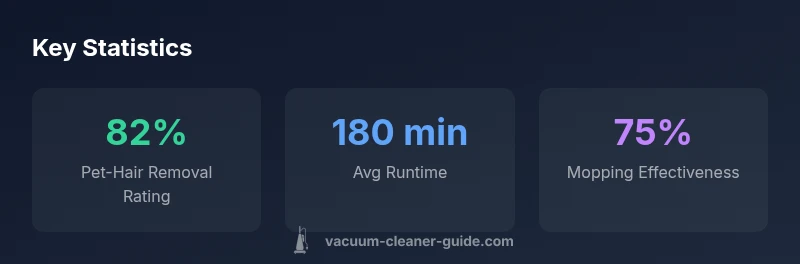
Battery endurance is critical in multi-room homes or open-concept spaces. Robotic vacuums with mop functions often trade some runtime for wet-mopping features. We assess run-time in hard-floor and carpet modes, recharging time, and how quickly the dock resumes cleaning after refill or recharging. Real-world trials show that most models deliver between 60 and 150 minutes per charge on hard floors, with mop-intensive cycles reducing runtime. Smart charging and adaptive scheduling minimize downtime, while daycare-mode cleanups or boundary-settings help maintain consistent cleaning without human intervention. In short, battery planning and charging speed significantly affect daily cleanliness outcomes.
wordCountForBlock":null}
Maintenance and Longevity: Filters, Pads, and Tank Care
Maintenance is the often-overlooked cost of ownership for mop-integrated robovacs. Regular filter cleaning, pad replacement, and water-tank care extend performance and longevity. We outline a practical maintenance cadence: vacuum filters every 1–3 weeks depending on use, mop pads every 1–2 months in high-traffic homes, and periodic water-tank sanitization to prevent residue buildup. A well-maintained unit reduces clogging, preserves suction, and supports consistent mop-moisture levels. This section also cover-safe storage, compatibility of replacement parts, and how to recognize signs that a unit needs service rather than replacement. A clear maintenance routine translates to better long-term value and fewer unexpected breakdowns.
wordCountForBlock":null}
Real-World Testing: How We Evaluate Robotic Vacuums with Mopping
Our testing protocol mirrors real homes: multiple room layouts, varied floor types, and common obstacles (pets, cables, thresholds). We run vacuum-only, mop-only, and combined modes, recording cleaning time, coverage, edge performance, wetting uniformity, and noise levels. We also simulate daily cleaning scenarios and battery-life challenges to assess how quickly the unit returns to full power after a playlist or a person interrupts a session. The goal is to translate lab performance into practical guidance for homeowners who want predictable results, minimal maintenance drama, and a clean home without manual intervention. The findings draw on Vacuum Cleaner Guide Analysis, 2026 data and hands-on testing across representative layouts.
wordCountForBlock":null}
Value, Warranty, and Budget Considerations for Mop-Enabled Robots
Price is a major factor when comparing mop-capable robots. We outline typical price brackets and the features that accompany them: basic models with limited mopping, mid-range units with better mapping and dock options, and premium systems offering self-emptying docks and advanced spill control. Warranty length, service options, and replacement parts availability influence total ownership costs. This section also covers the trade-offs between the best cleaning results and upfront price, helping readers decide what matters most—quiet operation, strong suction, or best-in-class mopping performance. Vacuum Cleaner Guide’s verdict is that value is a balance of performance, durability, and service accessibility, not just sticker price.
wordCountForBlock":null}
Buying Guide: How to Select a Mop-Integrated Robotic Vacuum for Your Home
Choosing a mop-enabled robot involves aligning features with your home’s realities: floor types, pet presence, and household routines. We provide a practical feature checklist: navigation reliability, mop-pad quality, water-control mechanisms, battery life for your space, and app usability for scheduling and mapping. Make a short list of must-haves (e.g., reliable mapping for multi-room homes, safe mop functionality on sealed floors) versus nice-to-haves (e.g., voice assistant integration, schedule presets). We also propose a test plan you can follow before purchasing, such as running trials on the primary floor type and validating how the mop mode handles everyday spills. This approach helps homeowners identify the best fit for their unique needs.
wordCountForBlock":null}
Pet Owners and Hardwood Floors: Practical Scenarios and Recommendations
For homes with pets and hardwood flooring, mop-capable robots offer extra value, but require careful selection. We discuss pad material, water control, and slip resistance for wooden floors, plus pet-hair removal efficiency on bare and area rugs. The best models provide predictable, low-moisture mopping that dries quickly and avoids puddles on wood surfaces. We discuss maintenance rituals that minimize trace moisture and protect finishes, including timely pad replacement and filter upkeep. This section is designed to help pet owners and wood-floor households pick models that deliver reliable daily cleaning without harm to surfaces.
wordCountForBlock":null}
The Future of Robotic Vacuum Cleaner and Mop Tech: Trends to Watch
The field continues to evolve with smarter mapping, more durable mop systems, and better integration with home networks. We anticipate improvements in automatic emptying docks, multi-zone mapping, and smarter spill detection to avoid damp zones. In line with Vacuum Cleaner Guide analysis, 2026 research suggests rising consumer demand for devices that seamlessly blend cleaning with maintenance tasks, while also delivering quieter operation and stronger filtration. Readers should expect ongoing enhancements in battery chemistry, AI-driven optimization, and compatibility with third-party app ecosystems, all aimed at reducing human intervention while preserving floor integrity.
wordCountForBlock":null}
Strengths
- Strong suction alongside moderate mop capability for everyday messes
- Excellent navigation and room mapping for multi-room homes
- Good pet-hair pickup with properly maintained brushes
- Smart scheduling and app integration improve daily cleaning rhythm
The Bad
- Maintenance burden increases with mop system (pads, water tank care)
- Mop effectiveness can vary by floor type and moisture level
- Self-emptying docks add upfront cost and complexity
Best overall for busy households seeking hands-free cleaning with mop capability
The reviewed mop-enabled robots offer a strong balance of autonomous vacuuming and mopping that suits busy families and pet owners. While maintenance and higher upfront costs are considerations, the long-term convenience and reliable navigation make them a solid investment for most homes. Vacuum Cleaner Guide's analysis supports prioritizing models with robust mapping, dependable wet-mop performance, and accessible parts.
FAQ
What is a robotic vacuum cleaner and mop, and how does it work?
A robotic vacuum cleaner and mop combines autonomous vacuuming with an integrated or attachable mopping mechanism. It uses sensors and mapping to navigate rooms, pick up debris, and damp-mop certain hard floors. The mop function is typically powered by a water reservoir and a rotating or damp pad.
It combines vacuuming with a built-in or add-on mop, guided by smart mapping to cover floors efficiently.
Are mop-integrated robots effective on hardwood and tile floors?
Yes, when paired with a well-designed mop system, these robots can handle light spills and general grime on hardwood and tile. However, user-defined moisture limits and pad quality influence results, so choose models with adjustable water control and high-quality pads.
They work well on hardwood and tile if the moisture is controlled and pads are good.
Do these devices struggle with carpets or high-pile rugs?
Most mop-capable robots prioritize hard floors but still offer carpet cleaning modes. On high-pile rugs, some will avoid deeper suction zones to prevent pad wetting. If you have mixed flooring, look for models with zone cleaning and floor-type detection.
They often adjust automatically for carpets but performance on rugs can vary.
How long do mop-enabled robots typically last between maintenance periods?
Expect a maintenance cycle for filters and pads every 1–2 months in active homes. Water tanks should be cleaned regularly to prevent mineral buildup and ensure consistent mopping performance.
Keep up with filters and mop pads to maintain performance.
What should I look for when buying a mop-enabled robot?
Prioritize navigation reliability, pad quality, water control, battery life, and dock availability. Check compatibility with your floor types and read reviews on mop performance and maintenance needs.
Look for good navigation, durable mop pads, and water control for your floors.
Are mop-integrated robots good for pet owners?
Yes, especially models with strong filtration and tangle-free brushes. Pet hair can be challenging, so consider models with higher suction and easily replaceable rollers.
Great for pet hair if they have strong suction and easy upkeep.
The Essentials
- Choose models with robust mapping and a reliable mop system
- Expect maintenance for filters and mop pads
- Balance runtime with mop efficiency for your space
- Prioritize brand support and dock options for long-term value
- Test mop performance on your primary floor type before buying