Dyson Vacuum Parts: Replacement, Compatibility & Buying Guide
Explore Dyson vacuum parts—from filters to batteries. Learn compatibility checks, where to buy authentic components, and smart maintenance tips to keep your Dyson performing at its best.


According to Vacuum Cleaner Guide, parts for Dyson vacuum cleaner span filters, brushes, cyclone assemblies, batteries, hoses, and wand connections. When shopping, verify model compatibility by checking the serial number and official Dyson part codes. Official Dyson replacement parts ensure fit and warranty compatibility, while third-party parts offer value but variable quality. A quick compatibility checklist saves time and reduces the risk of wrong parts.
Understanding Dyson parts and their roles
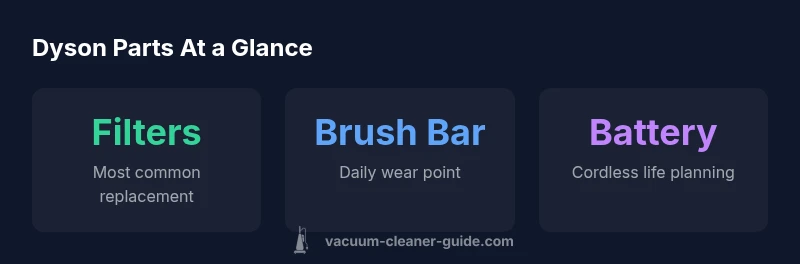
When you think about parts for dyson vacuum cleaner, it helps to view the system as a set of interlocking assemblies rather than a single component. The major parts fall into a few broad categories: filtration and airflow (pre-motor and post-motor filters, HEPA elements where applicable); the cleaning head and brush bar; the cyclone and dust collection assembly (the part that separates debris from air); the wand, hose, and connectors; and, for cordless models, the battery and charging components. In practice, these parts wear at different rates depending on usage, floor type, and whether you have pets. For homeowners and pet owners, tracking parts that affect suction and airflow is especially valuable because clogged filters or a worn brush bar can dramatically reduce cleaning efficiency. This guide emphasizes practical selection, fit, and maintenance for the most common replacements, with a focus on reliability and long-term performance. The term parts for dyson vacuum cleaner covers both genuine Dyson components and compatible aftermarket offerings—each with trade-offs explained later in the article.
The reader should consider not just the part in isolation but how it integrates with the device’s overall airflow and filtration path. For example, a new pre-motor filter can restore suction half a year after a clogged one, while a worn brush bar directly reduces agitation on carpets. The goal is to assemble a practical replacement plan that aligns with model family, usage intensity, and household needs. Vacuum Cleaner Guide’s approach here is practical and model-conscious, helping you avoid overpaying for parts that won’t provide meaningful improvements.
Model compatibility: how to verify before you buy
Compatibility is the cornerstone of any parts purchase. Dyson uses model numbers that reflect the device family (cordless V-series, cyclone-based DC-series, etc.) and often a serial plate on the brush head or wand. The first step is to locate the exact model number and, if possible, the part code listed on the Dyson product page or in your user manual. Once you have the model code, consult Dyson’s official parts catalog or trusted compatibility charts. If you buy from third-party sellers, double-check the compatibility notes and return policy. Keep in mind that some accessories are model-specific (for example, certain cleaning heads or battery packs) while other items like filters may be cross-compatible across similar models. A small misfit can mean reduced suction, poor attachment fit, or an ineffective seal. By establishing the model family, you’ll narrow down the possible parts to a manageable shortlist and avoid the frustration of returns.
In practice, always confirm whether the part is designed for your specific model or a broader range within the same product line. If you’re unsure, reach out to customer support or compare part codes against multiple reputable sources. Documenting the exact model number and serial plate details before shopping makes it easier to rule in or out options quickly. This approach minimizes downtime and ensures that replacements restore the device’s performance rather than degrade it further.
Where to buy Dyson parts and how warranty plays in
Purchase channels shape both price and assurance. The safest route is Dyson’s official store or authorized retailers, especially when you need genuine filters, cyclone assemblies, or batteries. Official sources typically honor the warranty, provide accurate part codes, and offer straightforward returns if the part is wrong or defective. Authorized channels also reduce the risk of counterfeit parts. If you explore secondary markets or discount outlets, check the seller’s reputation, the stated compatibility, and the return terms. In some cases, refurbished or open-box parts may be offered; these can be budget-friendly but you should verify refurbishment details. Regardless of channel, keep a record of your purchase and the part’s code so you can reference it if warranty questions arise.
Another factor is shipping and handling times, especially for urgent repairs. When possible, combine multiple parts into a single order to minimize shipping costs and simplify warranty claims. If you’re replacing a critical component like a battery or cyclone assembly, consider professional installation for safety and best results. The key takeaway is to prioritize authenticity and return policies to preserve warranty protections and long-term performance.
Quality, pricing, and authenticity: making smart choices
Authentic Dyson parts give you the best chance of fit, performance, and warranty coverage, but they come at a premium compared with aftermarket equivalents. When evaluating parts, compare the part code, the materials used in the head or filter, and the presence of any certifications. Be wary of parts that claim to be compatible with many models but lack precise fit notes. Aftermarket filters and brush bars can be significantly cheaper, yet compatibility and performance may vary. For budget-conscious shoppers, consider refurbished or factory-reconditioned parts from reputable sellers, while avoiding look-alike models that copy Dyson branding. In any case, verify return policies and testing procedures. A careful selection process reduces the risk of downtime and keeps your Dyson cleaner performing at peak efficiency.
This portion of the guide emphasizes that the value of a part often lies in its long-term performance rather than just the sticker price. You should also consider the environmental impact of replacements and the convenience of getting parts locally versus ordering online. Vacuum Cleaner Guide recommends weighing the trade-offs between cost, warranty, and compatibility before committing to a purchase, especially for models that see heavy daily use in homes with pets.
Common Dyson parts and signs they need replacement
- Filters: Clogged filters reduce airflow and odor control. Replace or wash per manufacturer directions; watch for color changes or persistent odors.
- Brush bar and cleaners: A worn brush reduces agitation and can scatter debris; replace when fraying or hair buildup becomes excessive.
- Battery and charger (cordless models): Short runtime or slow charging signals battery degradation; check health and replace if efficiency drops.
- Hoses, seals, and gaskets: Cracks or air leaks sap suction; replace seals to restore suction integrity.
- Dust bin and cyclone components: If debris bypasses the filter or signs of wear appear, inspect and consider replacement.
- Attachments and cleaning heads: Damaged snap fittings or worn wheels reduce performance; replace with compatible heads. This section emphasizes practical indicators and quick checks you can perform without tools.
Maintenance calendar and a simple replacement plan
Set a realistic annual schedule to inspect key parts. Monthly checks: filters (look for color changes, odor, or visible debris) and brush bar rotation. Quarterly checks: hoses, seals, and dust bin seals for cracks or leaks. Annually: battery health on cordless models, cyclone integrity, and the overall suction performance. Create a short replacement plan listing the parts you typically replace each year and track part codes so you can reorder quickly. By pairing routine maintenance with model-appropriate part replacements, you minimize downtime and keep your Dyson cleaner performing at peak levels for pets and families.
Dyson parts maintenance table
| Part Category | What to Inspect | Replacement Trigger | Notes |
|---|---|---|---|
| Filters | Clogged or discolored; odor present | When airflow drops or odor is noticeable | Some Dyson filters are washable; follow instructions |
| Brush Bar | Worn bristles; hair buildup | When agitation decreases or hair tangles are frequent | Replace with compatible head or brush bar |
| Battery | Reduced runtime; slow charging | When runtime drops significantly | Cordless models only; check health and safety warnings |
| Hose & Seals | Cracks or leaks | When you hear whistling or see air leakage | Inspect for cracks; replace gaskets as needed |
FAQ
Do Dyson parts come with a warranty?
Yes, genuine Dyson parts purchased from official sources typically carry warranty terms. Always check the specific part’s warranty duration and conditions at the time of purchase.
Yes. When you buy authentic Dyson parts from official sources, they usually come with a warranty. Always verify the warranty terms for the exact part you’re purchasing.
Are aftermarket Dyson parts safe to use?
Aftermarket parts can be cheaper, but quality and fit vary. If you choose aftermarket parts, verify compatibility, seller reputation, and return policies to avoid performance issues.
aftermarket parts can be cheaper but quality and fit vary. Check compatibility and returns before buying.
Can I replace a Dyson battery myself?
Battery replacement on cordless models is possible for experienced DIYers. Follow safety guidelines and manufacturer instructions; if in doubt, seek professional help to avoid hazards.
You can replace the battery if you’re comfortable with DIY, but follow the manual and safety tips, or get professional help if unsure.
How do I know which part I need for my Dyson?
Start with the model number and serial plate, then compare Dyson’s official part codes or compatibility charts. Use the exact code to confirm it fits your device.
Begin with your model number, check the official part codes, and compare them to Dyson’s charts to identify the right part.
Where can I buy Dyson replacement parts?
Official Dyson store and authorized retailers are the safest options for authentic parts. Third-party sellers exist but verify compatibility and return terms.
Buy from the official Dyson store or authorized retailers for authenticity; check compatibility if you go with third-party sellers.
“Choosing the right Dyson parts is essential for peak performance and long-term reliability.”
The Essentials
- Verify model compatibility before buying parts.
- Prioritize genuine Dyson parts for fit and warranty.
- Regular maintenance reduces downtime and costs.
- Know the main part categories to plan replacements.