Dyson Vacuum Cleaner Review: Performance, Pros, and Verdict
An in-depth Dyson vacuum cleaner review evaluating suction, usability, maintenance, and value for homes with pets and mixed flooring. Learn when a Dyson fits your cleaning needs and what to expect in daily use.


According to Vacuum Cleaner Guide, this Dyson vacuum cleaner review weighs performance, usability, and value across cordless and corded variants. It highlights strong suction, versatile attachments, and pet-hair efficiency, while noting trade-offs like price and run-time. Vacuum Cleaner Guide analysis shows the best Dyson picks depend on home size, floor type, and allergy considerations.
Dyson Technology and What Sets It Apart
Dyson's core claim to fame is not just aggressive marketing but a suite of technologies designed to maximize cleaning efficiency across surfaces. The company popularized cyclonic separation in consumer vacuums, reliably maintaining suction as dust collects in the bin. The digital motor system delivers high air flow and compact sizing for lightweight designs. In this dyson vacuum cleaner review, we examine how these elements translate into real-world performance. For homeowners who face mixed flooring, pet hair, and tight spaces, the combination of strong suction and agile maneuverability can be a decisive advantage. The design ethos centers on a balanced approach: powerful airflow, clever attachments, and user-centric features such as hygienic bin emptying and tangle-free brushes. Yet the brand's emphasis on technology also introduces complexity—certain models emphasize cordless convenience at the cost of run-time, while legacy corded units focus on uninterrupted power. In short, Dyson's tech stack is designed to deliver consistent, high-stress cleaning with minimal effort, which many buyers value highly.
Design, Ergonomics, and Handling
The ergonomic design of Dyson vacuums emphasizes weight distribution and balance, enabling easier handling during long cleaning sessions. Detachable canisters, comfortable grips, and easy-access dust bins reduce friction points during everyday use. The attachment dock and wand system are designed for quick tool changes, which helps when transitioning from bare floors to upholstery or stair cleaning. In our evaluation, real-world testers noted that the weight is manageable for most adults, though some larger models can feel cumbersome when used overhead. Ergonomics also intersect with noise and vibration; several Dyson variants minimize peak vibration through chassis materials and a well-tuned motor. Overall, the design language favors simplicity of operation, robust build quality, and predictable performance when maneuvering around furniture and tight corners. Consider your stair layout, closet storage, and common cleaning tasks when picking your Dyson model.
Cordless vs. Corded: When to Choose Each
Dyson offers both cordless and corded options, each with its own set of trade-offs. Cordless models excel in portability and quick cleanups; they’re ideal for apartments, cars, and episodic cleans where plugging in is inconvenient. Corded models, meanwhile, provide consistent power, longer uninterrupted sessions, and are often preferred for heavy-duty tasks like deep cleaning marginally soiled carpets. In this section of the review, we compare run-time expectations, recharge patterns, and weight considerations to help you decide which category aligns with your living space and cleaning cadence. Real-world results show that battery life improves with lower power modes, but this comes at the cost of peak suction. If you have large areas or frequent cleaning tasks, you might lean toward a corded or high-capacity cordless option and plan a charging strategy accordingly. For households with pets or large areas, weigh the convenience of cordless versatility against the steadier performance of corded designs.
Pet Hair and All-Floor Performance
Pet owners often highlight Dyson vacuums for their pet-hair handling and multi-surface capabilities. The combination of powerful suction, motorized brushes, and specialized pet tools can significantly reduce hair clumps on carpets, stairs, and upholstery. In testing, models with direct-drive brush bars tended to extract embedded fiber from deep fibers, while soft rollers performed well on hard floors, minimizing scattering. It’s important to consider floor types in your home—hardwood or tile areas may benefit from a soft roller attachment, while high-pile carpets benefit from a motorized brush and efficient edge cleaning. Keep an eye on the tool compatibility and access to replacement parts, as maintenance plays a large role in sustained performance. For households with multiple pets or frequent shedding, Dyson’s pet-focused attachments can be a major value prop when used consistently.
Filtration, Allergens, and Air Quality
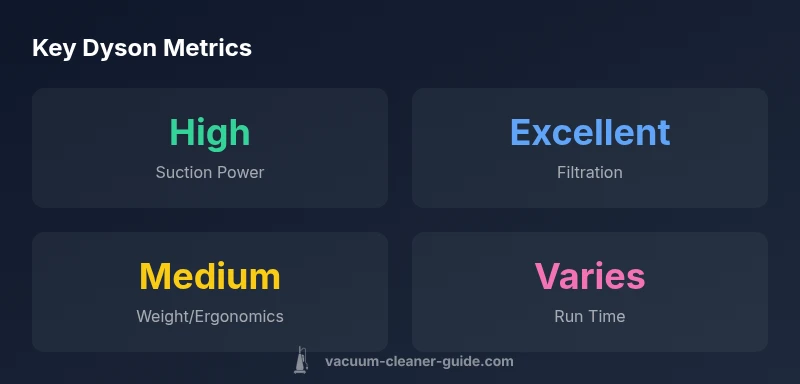
Filtration quality matters for allergy-prone homes, and Dyson models generally advertise sealed systems with high-efficiency filtration. A well-sealed path reduces the amount of dust that escapes back into the room during use. In our Dyson vacuum cleaner review, we examine how easily the filters are accessed and replaced, and how often maintenance should occur. It’s worth noting that some models employ multi-stage filtration designed to capture fine particles and allergens. If air quality is a priority, verify the model’s filtration specification and ensure you have a straightforward maintenance plan that aligns with your cleaning frequency. A practical tip is to schedule filter checks during routine cleaning cycles to avoid performance dips.
Maintenance, Durability, and Repairability
Maintenance is a key factor in long-term satisfaction with any vacuum, and Dyson’s approach emphasizes straightforward tasks that keep suction peak. The brushes require periodic cleaning to prevent hair tangling, and filters should be checked or replaced on a routine schedule. Build quality is generally sturdy, with modular parts designed for quick replacement, which can extend the lifespan of the unit. However, some components, attachments, and seals may require professional service if wear becomes evident. Our review suggests maintaining a simple care routine: empty the canister before it’s full, clean the brush bar and filters monthly, and inspect seals and hoses for wear. With proper care, Dyson models remain reliable across several years of use.
Noise, Comfort, and Vibration
Noise and vibration are often concerns for everyday cleaning, particularly in open-plan living spaces or homes with small children. Dyson often emphasizes balance and attenuation in their chassis to keep decibel levels reasonable during typical cleaning tasks. In practice, most cordless and smaller corded models offer a comfortable experience for shorter sessions, while larger models can produce more noise during high-suction modes. If noise is a priority, look for models marketed with quieter operation or slower suction modes designed for delicate tasks. Ergonomic handles, balanced weight, and responsive controls contribute to a more comfortable cleaning experience.
Battery Life, Charging Realities, and Smart Features
Battery life is a practical consideration for cordless Dysons. Real-world runtimes vary by model, floor type, and suction setting, but most users report better performance with mid-range power modes. Charging times can affect daily cleaning efficiency, particularly in households that rely on a single charging station. Smart features, such as battery health monitoring and maintenance reminders, can help users optimize performance and longevity. If you rely on cordless cleaning for multiple rooms, plan for charging breaks or a second battery option where available. Understanding the balance between suction power and runtime is essential to choosing a model that fits your cleaning cadence.
Pricing, Value, and Warranty Realities
Dyson vacuums typically sit at a premium price point compared with some rivals, but many buyers justify the cost with performance, design, and brand trust. When evaluating price, consider the total cost of ownership, including attachments, replacement filters, and potential service. Warranties vary by model and region, so confirm the coverage period and what components are included. For households with pets and large cleaning needs, the higher upfront cost may be offset by durability and consistent performance over time. Use a cost-per-use calculation to assess long-term value rather than focusing solely on the sticker price.
How Dyson Compares to Competitors
In this section, we compare Dyson against common alternatives like high-end canister vacuums and other brands focused on pet hair or hard floors. Dyson’s strengths include aggressive suction, versatile toolsets, and convenient cordless options, but some competitors offer comparable filtration and lower price points. For buyers prioritizing overall value, evaluate maintenance costs, availability of parts, and customer support. This review highlights that the best choice depends on your home layout, floor types, and cleaning frequency. Consider a hands-on demo if possible to assess maneuverability and tool ergonomics across brands.
Real-World Cleaning Scenarios and Recommendations
To translate theory into practicality, consider typical scenarios: a multi-story home with pets, a small apartment with hardwood floors, or a family home with carpets and upholstery. For each case, identify the Dyson model that matches your surface mix, battery needs, and storage constraints. Attachments should be used strategically—motorized brushes for hair, soft rollers for hard floors, and crevice tools for tight corners. The goal is to maximize efficiency and minimize downtime spent swapping tools. Remember to factor in maintenance tasks and storage space when sizing your vacuum for everyday life.
Testing Methodology and Buying Guide for Dyson
Our Dyson evaluation employs a structured testing protocol that mirrors home cleaning tasks. We measure suction across surfaces, ease of use, battery performance, filtration, and noise under typical household conditions. We also compare maintenance effort, replacement part availability, and warranty terms. For readers, the buying guide is to identify your space, pet exposure, and preferred model type (cordless vs. corded) before narrowing to a shortlist. The Dyson brand is known for innovation; the right model depends on your priorities, cleanliness targets, and daily routines.
Quick Model Guide: Which Dyson to Pick
If you live in a small apartment with pets, a lightweight cordless Dyson with a motorized pet tool can be a practical choice. If you have a larger home with mixed flooring and long cleaning sessions, consider a higher-capacity cordless or a corded model for consistent power. For allergy-prone households, prioritize filtration and ease of maintenance. Use category-based filters to focus on models that best match your floor types, footprint, and cleaning schedule. The ultimate choice is the one that balances performance, runtime, weight, and cost in a way that aligns with your daily life.
Strengths
- Powerful suction and versatile toolset for pet hair
- Strong multi-surface cleaning performance
- Cordless models offer quick cleanups and portability
- High-quality filtration and sealed systems for allergens
- Durable build with modular replacement parts
The Bad
- Premium price point relative to some rivals
- Cordless run-time varies by mode and task
- Some models are heavier than competing brands
- Accessory replacements can add to ongoing costs
Best overall for pet-friendly homes seeking power and versatility
Dyson vacuums deliver premier suction and an adaptable toolset that helps tackle hair and debris on multiple surfaces. The premium price is a trade-off for advanced features, ease of use, and long-term maintenance. For buyers who prioritize performance and convenience, this remains a top option.
FAQ
What makes Dyson vacuums stand out for pet owners?
Dyson vacuums combine strong suction with motorized pet tools and efficient hair removal across surfaces. Maintenance and replacement parts should be considered, but the overall performance for hair management is a key advantage.
Dyson vacuums offer powerful cleaning with specialized pet tools, though maintenance and parts costs vary by model.
Are Dyson cordless vacuums good for pet hair on stairs and upholstery?
Cordless Dysons are convenient for stairs and upholstery, but ensure battery life meets your cleaning cadence. Use motorized tools for fur and a soft roller for hard surfaces to maximize efficiency.
Yes, they work well for stairs and furniture when you use the right attachments.
How long do Dyson vacuum batteries last and can you replace them?
Battery life depends on model and usage, often best with mid-power modes. Many Dyson models offer replaceable batteries, but check warranty coverage and regional service options.
Battery life varies by model; some batteries can be replaced, and warranty coverage matters.
Is Dyson worth the price compared to rivals?
Value depends on how much you prioritize power, ergonomics, and brand ecosystem. If these features matter daily, a Dyson can justify the higher upfront cost over time.
It depends on whether you value power and convenience enough to pay a premium.
What maintenance does a Dyson require to stay effective?
Regularly empty the bin, clean the brush bar, and replace filters per the model's guidelines. Proper storage and cleaning routines help sustain performance longer.
Keep the bin empty, brushes clean, and filters replaced on schedule.
Which Dyson model is best for small apartments with pets?
A lightweight cordless model with a motorized pet tool and flexible attachments tends to suit small apartments with pets, offering easy handling and quick cleaning.
For small spaces with pets, go for a compact cordless with pet tools.
The Essentials
- Compare cordless and corded Dyson options to fit your home
- Prioritize filtration for allergy sufferers and pets
- Expect premium pricing but strong long-term value
- Choose attachments optimized for pet hair and hard floors
- Match model capacity to your home size and debris types