Is Cordless Vacuum Cleaner Good? A Practical Review for Homeowners
Explore whether a cordless vacuum cleaner is right for your home. We compare power, runtime, maintenance, and value, with real-world testing guidance for pet owners and multi-level homes.


Is cordless vacuum cleaner good? For most homes, the answer is yes for quick pickups and maneuverability, especially on hard floors, upholstery, and stairs. They excel at pet-hair touchups and cluttered rooms. But performance can lag behind corded models on deep cleans, and battery life plus charging time vary by model. Real-world use depends on floor type, suction setting, and acceptable runtime.
Why cordless vacuums matter for homes with pets and multi-level layouts
For is cordless vacuum cleaner good? In most modern homes, the answer tends to be yes for everyday cleanliness, especially when stairs, kitchens, and living rooms share a layout. The Vacuum Cleaner Guide team has observed that the absence of a cord eliminates a frequent obstacle to quick cleaning, so you can reach under sofas, climb stairs, and tackle car interiors without plugging/unplugging. For households with pets, cordless models offer nimble hair removal on upholstery, drapes, and car seats, where pet hair tends to accumulate. The biggest gains come from lightweight designs that you can lift with one hand and compact dust bins that you can empty without a formal cleanup. However, the trade-offs matter: battery chemistry imposes a finite runtime, and strong suction often comes with heavier motors and louder operation. In other words, cordless vacuums are excellent for fast tidying and spot cleaning, but they are not a direct substitute for high-uptime, high-suction corded machines in deep-cleaning sessions. The practical choice depends on your floor types, mess frequency, and tolerance for charging cycles.
How cordless vacuums compare to corded models
Cordless vacuums deliver a different cleaning experience than corded vacuums. They tend to be lighter and more maneuverable, which pays off in tight spaces and on stairs. But their batteries limit sustained power, so deep-cleaning sessions may require more planning. After a full charge, you may get a few dozen minutes of strong suction, enough for quick touch-ups. Corded vacuums provide constant power and typically stronger suction at all times, which makes them better for heavy soil and large-area cleaning. Price differences also matter: entry-level cordless vacuums are affordable, while premium corded machines can be cheaper per unit of cleaning power if you count electricity and maintenance; but you rarely pay for gas, cords, and long lugging with cordless models. In summary, if you clean a small apartment or house with several levels, cordless can cover most tasks. If you own a large home with thick carpets and high-traffic areas, a corded machine remains the heavy lifter. Many buyers end up using both for different tasks.
Testing and evaluation methodology
To ensure fairness and reproducibility, we evaluate cordless vacuums using a consistent testing protocol across several common tasks. We measure runtime in standard mode, suction across representative surfaces with a calibrated airflow meter, and filtration performance with a sealed dust chamber. We also assess ease of use, weight distribution, noise levels, dustbin capacity, and durability under repeated use. Our methodology includes pet-hair trials on upholstery, lightweight debris on hard floors, and mid-pile carpet testing with a motorized brush roll. We document reliability over several weeks of normal home use and note any firmware or battery health concerns. All results are then synthesized into practical guidance for homeowners and pet owners alike.
Performance on hard floors and carpets
On hard floors, cordless vacuums often shine thanks to lightweight builds, effective brush heads, and responsive suction. They excel at cleaning spilled cereal, dust, and pet hair from tile and laminate, while edge cleaning with a good crevice tool adds value. For carpets, performance varies by model and brush design. Low-pile and standard-loop carpets respond well to motorized brushes, while ultra-thick or high-pile carpets may require higher suction or a corded option for deep cleaning. The best-performing cordless models use a motorized roller with adjustable height and have strong filtration to capture fine particles.
Battery life, charging, and real-world usage
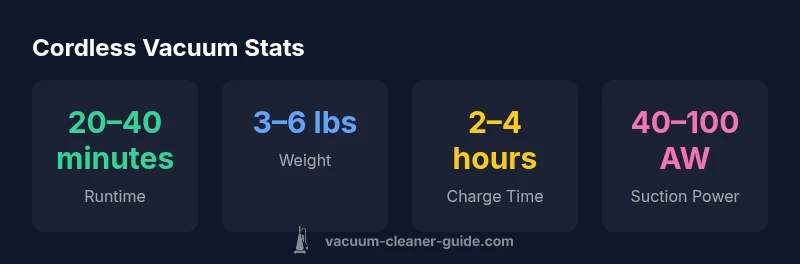
Real-world runtimes depend on mode selection, surface, and how often you use turbo or max suction. Most mid-range cordless vacuums offer roughly 20–40 minutes of runtime on standard mode, with shorter times when powered by turbo. Charging times typically range from 2–4 hours for a full recharge. If your cleaning sessions exceed the available runtime, consider models that support swappable batteries or carry a spare battery. In practice, homeowners with small-to-medium homes can perform daily maintenance without frequent recharges, while larger homes may need to plan charging breaks or dual-battery setups.
Maintenance, filtration, and accessories
Filtration quality matters for homes with pets and allergy concerns. Many cordless vacuums use sealed filtration with HEPA-type filters or equivalent, which helps reduce allergen recirculation. Regular maintenance includes emptying the dustbin before it becomes full, cleaning the brush roll to remove hair, and washing filters as recommended by the manufacturer. Accessories such as motorized brush heads, combos for upholstery, and stair tools extend versatility. Keep in mind that frequent maintenance helps sustain peak suction and prolongs overall battery health.
Costs, warranties, and total cost of ownership
Initial prices for cordless models span a wide range, from affordable entry-level units to premium models with long runtimes and robust filtration. While the upfront cost may be higher than some corded alternatives, you save on electricity, cords, and disposal of heavy vacuums. Warranty terms vary by brand and model, with some including battery coverage for a limited period. Over time, consider the potential need for battery replacement, which can influence long-term ownership costs. For families with pets and busy schedules, evaluating total cost of ownership—across several years of use—helps identify the best balance of upfront price, performance, and durability.
How to choose the right cordless vacuum for your home
Choose a cordless vacuum by aligning features with your home’s realities. Start with runtime: estimate how long you’ll clean in a typical session and select a model with a buffer of 10–20 minutes. Next, evaluate suction and brush design for your floor types—hard floors benefit from soft-touch rollers, carpets from motorized brushes. Weight matters for stairs and overhead cleaning, and a compact dustbin simplifies maintenance. Filtration quality is essential for pet households and allergy sufferers, so look for sealed systems and easy-to-clean filters. Finally, consider accessories, warranty coverage, and whether you’d benefit from a spare battery or docking station for convenient charging.
Common myths vs real-world realities
A common myth is that cordless vacuums cannot compete with corded models on power. In reality, many modern cordless units deliver strong suction for ordinary daily messes and pet hair. Another misconception is that battery life is universally short; runtimes can vary widely, and some models offer longer life or spare-battery options. The reality is that cordless vacuums are best for quick cleans, not deep, long sessions on large spaces. By understanding your home’s layout and cleaning needs, you can choose a cordless model that fits your lifestyle and still complete most tasks efficiently.
Real-world example case studies
Case Study A: A two-story townhouse with a single large living area and a friendly dog. The homeowner relies on a mid-range cordless model with a motorized brush and a separate mini motorized tool for upholstery. Runtimes on standard mode cover most daily tasks, with occasional turbo for stubborn dirt. Case Study B: A three-bedroom apartment with laminate floors and area rugs. A compact cordless vacuum handles daily crumbs and pet hair, supporting quick daily routines and easy storage in a closet. Case Study C: A large family home with thick area rugs and frequent spill cleanup. The user supplements a cordless vacuum with a larger corded model for deep-cleaning sessions a few times per month and uses a spare battery setup for uninterrupted cleaning.
Strengths
- Unmatched convenience for quick cleanups and multi-level homes
- Lightweight, easy to maneuver around furniture and stairs
- Good for pet hair on upholstery, stairs, and cars
The Bad
- Battery life limits long, deep-clean sessions
- Suction can drop on very thick carpets or heavy soils
- Higher upfront cost for premium models
Cordless vacuums are a top pick for convenience and everyday cleaning in multi-level homes with pets.
Cordless options deliver impressive maneuverability and fast startup times, making them ideal for quick cleanups. They shine on hard floors and upholstery but may struggle with deep carpet cleaning and long sustained sessions due to battery limits.
FAQ
Is cordless vacuum as powerful as a corded model?
Cordless vacuums have improved significantly and can rival corded models for daily cleaning tasks, especially on hard floors and light carpets. However, they generally miss the sustained, peak power available from corded designs during deep-clean sessions. For most households, this means cordless works great for routine maintenance, while occasional corded use supports heavy cleaning needs.
Cordless vacuums are strong for everyday tasks, but for deep-clean sessions, a corded model can still outperform them in power and duration.
How long does the battery last on a cordless vacuum?
Most mid-range cordless vacuums deliver roughly 20–40 minutes of runtime on standard mode, with shorter runtimes on turbo. Higher-end models may extend beyond 40 minutes, and some brands offer swap-in batteries to extend cleaning time. Always check the real-world runtime in the modes you plan to use most.
Typical runtimes are 20 to 40 minutes on standard mode; you can get longer with premium models or extra batteries.
Do cordless vacuums handle pet hair well?
Cordless vacuums can be very effective for pet hair on upholstery, stairs, and cars, especially models with motorized brush heads and strong suction. Regular maintenance of the brush roll and filters is important to keep pet hair from clogging the system. For heavy pet hair, pair a cordless with a larger cleaning head or secondary tool.
Yes—look for a motorized brush and good suction; regular maintenance helps keep pet hair under control.
Are batteries replaceable in cordless vacuums?
Many cordless models offer user-replaceable batteries, but replacement costs vary and can add to total ownership. Check warranty terms for battery coverage and perceived longevity. If you clean often, plan for eventual battery replacement or an extra pack to avoid downtime.
Many cordless vacuums allow battery replacement, but costs and warranty coverage vary by model.
What should I look for when buying a cordless vacuum?
Prioritize runtime aligned with your cleaning sessions, strong suction for your floor type, a reliable filtration system, and manageable weight. Consider tool attachments, dustbin size, and whether a spare battery or docking station is worth the extra cost for your home.
Focus on runtime, suction, filtration, weight, and attachments when buying.
How do I maintain a cordless vacuum?
Regularly empty the dustbin, clean the brush roll, and wash filters as recommended by the manufacturer. Keep the motorized head clear of hair and debris, and inspect seals for loss of suction. Proper maintenance helps sustain performance and battery health over time.
Empty the bin, clean the brush, and wash filters as directed for consistent performance.
The Essentials
- Check runtime to match typical cleaning sessions
- Choose lighter models for multi-level homes
- Prioritize sealed filtration for pet households
- Balance suction power with battery life
- Plan for battery replacement costs over time