Best Vacuum Shop Near Me: Find Local Vacuum Stores in 2026
Learn how to locate a trustworthy vacuum shop near you, compare stock, warranties, and service, and choose the best local retailer for pet-hair, hardwood, and carpet vacuums.


Here’s how to locate a reliable vacuum shop near you: use map and brand store locators to find nearby retailers; review in-store inventories for corded, cordless, canister, and pet-hair models; call ahead to confirm stock and warranties; compare prices, service plans, and return policies; read local reviews focusing on knowledge and customer support.
Finding Local Vacuum Shops: The Basics
When you search for a vacuum shop near me, the goal is to locate retailers who stock a broad range of models, offer knowledgeable staff, and provide reliable after-sales service. Start with trusted sources like map-based search results, brand-authorized store locators, and retailer directories. The Vacuum Cleaner Guide team emphasizes using multiple channels to verify proximity, hours, and the ability to demo or test models. Local knowledge matters: neighborhood dealers often stock specific models tailored to pet owners, hardwood floors, and high-traffic households. In practice, a quick search can reveal independent shops, brand-authorized retailers, and large electronics stores. Narrow your options by distance, available brands, and the willingness of staff to answer technical questions. In parallel, check customer reviews focusing on service quality, parts availability, and responsiveness. A short call before visiting can save time.
Inventory Depth: What to Look For
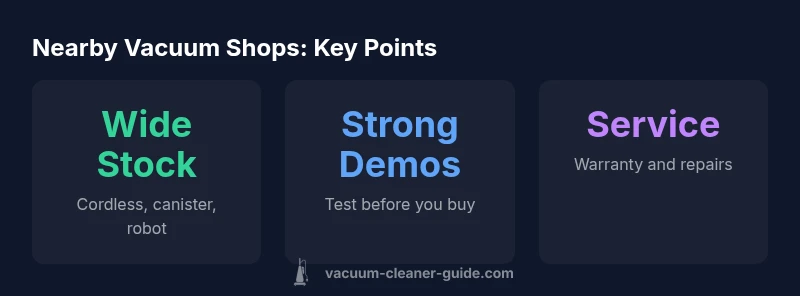
A well-stocked shop should cover the core categories most homeowners need: cordless stick vacuums for quick cleanups, canister vacuums for deep cleaning, and robot vacuums for automated maintenance. Pet-hair vacuums are a bonus if you have shedding animals, and floor-type compatibility matters for carpets vs. hard surfaces. Some shops specialize in premium brands with extensive service networks, while others excel at value-focused options. When evaluating inventory, ask a staff member about the breadth of flagship models, available attachments, and spare-part availability. In-store demos are especially useful for testing suction power, maneuverability, noise levels, and ease of use. If your home has stairs or electronics in tight spaces, confirm that the store carries compact or lightweight options. Vacuum cleaners are long-term investments; prioritize the shops that can support your preferred makes and model lines over time.
Warranties, Repairs, and After-Sales Support
Warranties protect your purchase and give you confidence in a local retailer. Look for at least a baseline warranty period that covers parts and labor, and inquire about extended warranty options for the model you want. Ask about turnaround times for common repairs, availability of genuine parts, and access to authorized technicians. A strong local shop should offer repair services, parts stock, and maintenance advice beyond the sale. Check if they provide in-home service or courier-based repairs for heavier units. Reading the fine print on warranty exclusions is crucial; some limits may apply to accessory wear or environmental conditions. In general, shops with clear, transferable warranties and reliable repair paths offer peace of mind that online orders cannot guarantee.
In-Store Demos and Hands-On Testing
In-person testing is the most valuable step when buying a vacuum locally. Prioritize shops that encourage hands-on trials with several models across price points. Test suction on different floor types, check ease of cleaning under furniture, and compare weight and maneuverability. If you have a pet or allergy concerns, evaluate the vacuum’s filtration and noise levels. Bring your typical debris profile (pet hair, dust, fine dirt) to see how models handle it. Some stores offer live demonstrations or guided sessions; take notes on filter maintenance, bagless vs. bagged options, and accessory usefulness. A thorough in-store test helps you avoid post-purchase disappointment when you realize a certain design doesn’t fit your home.
Brand Ecosystems: Dyson, Miele, Shark, and More
Different brands bring different strengths. Dyson often emphasizes powerful suction and innovative design, while Miele tends to offer durable construction and strong filtration. Shark commonly balances price and performance with versatile attachments, and other brands focus on pet-hair performance or ergonomic design. When shopping near you, consider which ecosystems align with your needs: warranties, service networks, availability of replacement parts, and the ease of finding compatible accessories. Local shops sometimes provide exclusive bundles or in-store demonstrations that highlight brand-specific features. Understanding brand strengths helps you build a cohesive set of tools across cleaning tasks, from everyday maintenance to heavy-duty deep cleaning.
Price, Promotions, and Financing Options
Prices vary widely by retailer, promotions, and bundled offers. Local shops may offer seasonal discounts, package deals with attachments, or loyalty programs. Compare the sticker price with the value of included accessories and extended warranties. If a model is out of stock, ask about rain checks or ETA for the next shipment. Financing options, if available, can ease larger purchases but be mindful of interest terms and repayment timelines. It’s wise to request price-matching policies if you’ve found the same model at another nearby retailer. A local store with fair pricing, transparent policies, and helpful staff is often worth the premium for the post-purchase experience.
Online Tools and Local Reviews: Making the Most of Digital Research
Digital tools can enhance your local shopping experience. Use maps to verify proximity and hours, but don’t rely on a single source for inventory. Read recent reviews focusing on staff knowledge, stock accuracy, and service turnaround. Some stores publish live inventory counts or call-ahead options; take advantage of those to confirm product availability before visiting. Filtering reviews by issues—such as warranty claims or repair turnaround—helps you gauge reliability. If you’re unsure about a model, ask for hands-on demonstrations or loaner units when possible. Local conversations often supplement online information, providing a realistic view of what to expect when you step into the shop near you.
Local Shop vs. Online Shopping: Weighing the Trade-Offs
Choosing between local shops and online orders depends on your priorities. Local shops excel at hands-on testing, immediate assistance, and easier returns or exchanges, while online marketplaces may offer broader selection and potentially lower prices. If you value post-purchase support and in-person demonstrations, a nearby retailer becomes attractive. For rare or discontinued models, online channels can offer a wider pool of stock but may require longer wait times for repairs or parts. The best approach is a hybrid: visit a local shop for evaluation and then complete the final purchase online if a better price or availability emerges, ensuring the local shop can fulfill the sale and service commitments.
Quick Checklist for Your Visit
Before heading out, prepare a short checklist: a list of required features (battery life, filtration, attachments), a budget range, and any model you’ve already shortlisted. Bring measurements of your cleaning areas, note the types of floors, and consider noise tolerance. Write down questions about warranties, repair turnaround, and availability of spare parts. During the visit, take notes, compare at least three models side by side, and request a test run on your own flooring surfaces. Afterward, revisit your comparisons and decide whether to buy locally or online based on service quality and long-term value.
Comparison of local shop types for vacuum purchases
| Shop Type | In-Stock Models | Warranty Options | Repair Turnaround | Return Policy |
|---|---|---|---|---|
| Nearby independent shop | 5–40 models | 12–24 months | 1–2 weeks | 14–30 days |
| Brand-authorized retailer | 10–60 models | 12–36 months | 3–7 days | 30 days |
| Big-box retailer | 15–50 models | 6–24 months | 1–2 weeks | 15–60 days |
FAQ
What should I ask a vacuum shop before buying?
Ask about model availability, in-store demos, warranty terms, repair turnaround, and spare-part accessibility. Clarify return policies and price-match options. A knowledgeable associate will walk you through model differences and help align choices with your home’s floors and pet-hair needs.
Ask about stock, demos, warranties, repairs, and returns. A knowledgeable associate will explain model differences and help you pick the right one for your home.
How important is warranty when buying a vacuum?
Warranty terms reflect post-purchase support. Prioritize at least a year of coverage with options for extensions. Understand what is covered and any exclusions for filters, wear parts, or accessories.
Warranties matter for post-purchase care. Look for at least a year of coverage and clear terms.
Can I test vacuums in-store?
Yes. Ask to test several models on your floor types, surfaces, and debris profile. In-store testing helps verify suction, maneuverability, and noise to ensure comfort and efficiency.
Absolutely—test several models on your floors to see which feels right for you.
Are local shops better for pet-hair vacuums?
Local shops often provide expert guidance on pet-hair performance, attachments, and parts. They can show you models with strong filtration and specialized brush heads that suit homes with pets.
Yes—local shops can guide you to the best pet-hair models and compatible attachments.
How do I evaluate price vs service?
Weigh sticker price against bundle value, warranty length, and after-sales support. A slightly higher upfront price may yield better long-term value if service and parts access are strong.
Balance price with what you get in service and warranty over time.
“Choosing a vacuum shop near you is about stocking breadth, service quality, and after-sales care; a knowledgeable retailer can save you time and ensure compatibility with your home.”
The Essentials
- Visit nearby shops for hands-on testing and immediate support
- Prioritize strong warranties and transparent repair paths
- Compare inventory breadth across cordless, canister, and pet-hair models
- Leverage in-store demos to validate fit for your home