Vacuum Cleaner vs Aquarium Vacuum: Side-by-Side Comparison for Home Keepers
A rigorous, data-informed comparison of ordinary vacuum cleaners and aquarium-focused siphon vacuums, with practical setup tips, safety considerations, and a clear decision framework for homeowners and pet owners.


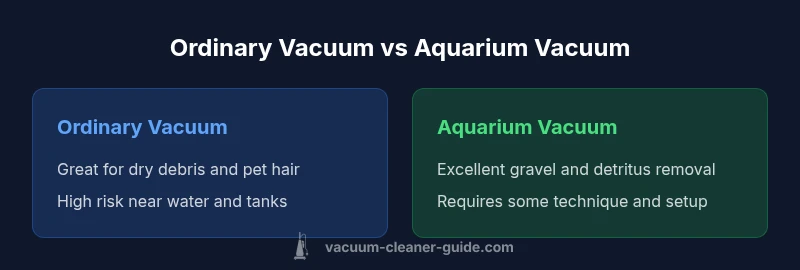
Option A (ordinary vacuum cleaners) excel at dry pet hair and floor debris but are risky near standing water and delicate aquarium equipment. Option B (aquarium-specific siphon vacuums) clean gravel and detritus without splashing, yet require technique and regular maintenance. The best decision balances aquarium hygiene with household versatility; many owners adopt a hybrid setup.
The Core Question: vacuum cleaner and aquarium pinpoint
The phrase vacuum cleaner and aquarium pinpoint captures a practical decision point for many households: should you repurpose a general vacuum for aquarium maintenance, or invest in tools designed specifically for water-adjacent tasks? In this comparison we examine two core approaches: Option A, a traditional dry-vacuum or canister intended for general cleaning, and Option B, an aquarium-focused siphon/vacuum system built to manage gravel, detritus, and routine water changes. The goal is to assess performance, safety, setup complexity, and long-term costs so homeowners and pet owners can decide with confidence. According to Vacuum Cleaner Guide analysis, most aquarium setups benefit from clearly separating water-related tasks from dry-floor cleaning to avoid cross-contamination and avoid damaging delicate tank equipment. This article treats the topic with an objective, data-driven lens, focusing on practical outcomes rather than marketing claims. Readers should come away with a clear, actionable path for their particular tank size, water change cadence, and household cleaning habits.
Water safety and tool reliability in aquarium contexts
Aquarium maintenance introduces two intertwined concerns: water safety and substrate integrity. Ordinary vacuums rely on dry filtration systems that can suffer when exposed to moisture, dust-laden mist, or saline droplets common in some water-change scenarios. A key factor is the proximity of any device to the tank rim and overflow paths; careless use may lead to electrical hazards, equipment damage, or cross-contamination between the tank and the rest of the home. The gravel, sand, or planted substrates in tanks produce detritus that can clog vacuum hoses, so a tool designed for aquatic debris often features sealed housings, non-corrosive materials, and easy rinseability. On the consumer side, a decision framework emerges: are you seeking a single, versatile cleaner for multiple rooms, or a dedicated tool that minimizes risk during water changes? The ideal outcome aligns with safety standards, minimizes downtime, and reduces the likelihood of introducing contaminants into living spaces.
How to evaluate two core approaches: (A) general-purpose vacuums vs (B) aquarium-focused tools
Different households will prioritize different attributes, but a reliable evaluation uses a common set of criteria. For Option A, consider dry-cleaning efficacy, attachment compatibility, and warranty coverage. For Option B, assess splash resistance, gravel-sifting efficiency, ease of cleaning the intake, and compatibility with standard aquarium substrates. Practicality matters: some households may value a lightweight, easy-to-store device for occasional spills, while others require robust gravel removal during weekly maintenance. We also discuss the potential for a hybrid system: using a general-purpose vacuum for floors and a dedicated aquarium siphon for water-related tasks, with a careful hand-off protocol to prevent cross-contamination. In this way, the analysis remains anchored in real-world use-cases rather than hypothetical capabilities. This section integrates insights from the Vacuum Cleaner Guide Team, emphasizing predictable performance and safe operation.
Option A: Ordinary vacuum cleaners for mixed-use homes
Ordinary vacuums, including canisters and uprights, shine in dry-cleaning tasks such as pet hair, dust, and debris on hard floors and carpets. They tend to offer broad attachment ecosystems, readily available replacement parts, and lower upfront costs relative to specialized gear. The challenge near aquariums is avoiding water contact with motor housings, cords, and filters, which can void warranties or pose safety risks. For households that prioritize flexibility, these cleaners are attractive because a single device can handle daily cleaning across rooms, stairs, and upholstery. However, when used in proximity to a tank, the risk of accidental water entry increases, potentially leading to tripped breakers or debris-laden airflow back into living spaces. If you pursue this option, adopt strict separation: never bring a mainstream vacuum directly to the tank area, keep a dedicated water-safe tool for water-related tasks, and use only sealed, splash-resistant attachments where water exposure might occur. The broader takeaway is that general-purpose vacuums can fit a multi-room cleaning regime, but they are not optimized for aquarium-specific needs.
Option B: Aquarium-specific siphon vacuums and gravel vacuums
Aquarium-focused siphon vacuums, including gravel vacs, are designed around the needs of water-based substrates and partial water changes. These tools typically feature shorter intake lengths, flexible siphon hoses, and manual or gravity-assisted water removal that minimizes splash and accidental spills. The primary advantage is their ability to extract detritus without disturbing delicate roots or plants in planted tanks, and to perform rapid gravel cleaning without introducing large quantities of sediments into the filter system. Maintenance considerations include regular rinsing, hose checks for clogs, and periodic replacement of wear parts. Some models are purposely designed to connect to a bucket or reservoir, facilitating a cleaner, more controlled water change. Using aquarium-specific vacuums can significantly reduce risk exposure to household electronics, lower the chance of cross-contamination, and yield neater substrate profiles after maintenance. But they require learning a technique and may entail ongoing costs for replacement parts or hoses. The core decision hinges on whether you value tank safety and substrate care as primary priorities or seek a more generalized cleaning solution with acceptable compromises.
Hybrid approaches and best-use scenarios
Many households arrive at a practical compromise: keep a general-purpose vacuum for dry debris and a dedicated aquarium siphon/gravel vacuum for water-related tasks. The hybrid approach balances versatility with safety, offering a fall-back option for quick spills while preserving tank integrity during water changes. If you adopt this strategy, establish a strict workflow: designate a water-safe station for aquarium gear, use color-coded hoses to prevent cross-use, and rinse tools separately to avoid backflow or contamination. A hybrid setup is particularly appealing for homes with multiple tanks, for hobbyists who perform frequent water changes, or for families that want the convenience of one main cleaning system without compromising tank health. In evaluating the efficiency of a hybrid approach, consider factors such as the number of tanks, the size and substrate type, and the frequency of water changes. It is also essential to track maintenance time and costs to determine if the combined solution provides better total value than a single-system approach.
Attachments, tools, and setup tips
To optimize performance, select attachments designed for aquarium use when dealing with water tasks, including flexible hoses, wand extensions, and drain adapters that minimize splash. For dry cleaning, choose standard brush heads, upholstery tools, and crevice tools compatible with your primary vacuum. Pay attention to seal integrity and filter maintenance; a clogged filter can reduce suction and encourage cross-contamination. Storage matters too: store aquarium-specific tools in a dedicated cabinet away from dry-cleaning gear, and label hoses for easy identification. Cleaning routines should have a predictable cadence: after each water change, rinse hoses and siphon parts thoroughly with clean water, then air-dry before storage. In addition, consider investing in a simple check-list that tracks the condition of gaskets, hoses, and attachments. The aim is to reduce downtime and prevent misuse that could compromise tank life or home safety. Ultimately a well-planned toolset supports consistent tank upkeep without forcing ongoing compromises between convenience and safety.
Cleaning workflows: scheduling and safety
Effective workflows separate aquarium tasks from general cleaning to minimize risk. A common approach is to perform water changes first with the aquarium siphon, then switch to dry-cleaning tasks using the standalone vacuum. This reduces the chance of back-contamination and ensures that motorized units stay dry. Schedule weekly substrate checks, biweekly water testing, and monthly equipment inspections. When using any vacuum near a tank, never operate at the tank edge with powered suction; maintain a buffer distance and use a protective guard or mesh to prevent fish or substrate from entering intake openings. Safety protocols also include unplugging devices before disassembly, inspecting cords for wear, and storing them in a dry area. For households with pets, keep pet-safe cleaning routines by restricting access to the vacuum area during operation and using pet-safe disinfectants on surfaces after cleaning. The overarching principle is to create repeatable, safe processes that protect the tank, the home, and the people living in it.
Real-world scenarios: tank size, species, and maintenance cadence
Tank size and inhabitants strongly influence tool choice. A small freshwater tank with hardy fish may tolerate occasional manual siphon use, while larger reefs or heavily planted tanks demand robust substrate management and frequent detritus removal. Species sensitivity matters too: fast-moving fish and delicate shrimp can be stressed by improper substrate disturbance, making gentle gravel cleaning essential. In higher-stress setups, aquarium-specific tools become more valuable because they reduce the risk of accidental suction, which could empty a tank or disrupt beneficial bacteria. Consider maintenance cadence: a high-frequency, small-volume change routine may favor a siphon-based approach, whereas a low-frequency, large-volume change could benefit from a more powerful, general-purpose vacuum, provided it remains segregated from water tasks. The key is to align your tool kit with the tank’s biome, the cleaning schedule, and the household’s daily cleaning rituals, ensuring that each task has an appropriate tool. This alignment minimizes risk, enhances efficiency, and improves overall aquarium health while preserving home cleanliness.
Decision framework: how to choose for your home
To decide, start by mapping your tank profile and cleaning priorities. Step 1: List tank type (freshwater, planted, or reef) and substrate. Step 2: Enumerate typical cleaning tasks (dry debris, gravel cleaning, water changes). Step 3: Assign an importance score to safety, convenience, and cost. Step 4: Evaluate your space and storage options for two separate devices, or a single, hybrid system. Step 5: Check warranties and maintenance requirements. Step 6: Pilot a hybrid setup if you’re unsure, documenting maintenance times and any incidents. The outcome should be a practical, scalable plan that minimizes risk and maximizes cleanliness. The broader insight is that the best choice is the one that respects tank integrity while delivering consistent, manageable home cleaning.
Comparison
| Feature | Option A: Ordinary vacuum cleaners | Option B: Aquarium-specific siphon vacuums |
|---|---|---|
| Water contact safety | High risk with standard vacuums | Low risk with aquarium-specific vacuums |
| Gravel/substrate cleaning | Poor to moderate for gravel | Excellent for gravel removal and detritus |
| Dry cleaning performance | Excellent for floors, carpets, and pet hair | Limited to water-related tasks; dry use not primary |
| Ease of use near tank | Versatile but requires careful workflow | Designed for aquarium tasks; easier near water |
| Maintenance/filters | General maintenance; broad replacements | Typically simpler dedicated parts; rinse-friendly |
| Price range | Under $150 | $20-$120 for grinders/vacs; higher for integrated systems |
| Best for | Multi-room cleaning with occasional aquarium use | Aquarium hobbyists and frequent water changes |
Strengths
- Versatile for multiple cleaning tasks across the home
- Broad attachment ecosystems and easy to find replacements
- Lower upfront cost for basic models in many cases
- Can handle pet hair and dry debris effectively
The Bad
- Not optimized for water exposure near tanks (risk to electronics)
- Cross-contamination risk if reused for tanks and floors without strict separation
- Gravel cleaning is not inherently efficient with standard vacuums
- May require additional maintenance if used near water frequently
Hybrid approach offers the best balance for most homes
Use aquarium-specific tools for water-related work and a general vacuum for dry debris. This reduces risk to the tank and preserves home cleaning versatility. For many households, a two-tool setup delivers the safest, most efficient maintenance routine.
FAQ
What is the main difference between an ordinary vacuum and an aquarium siphon vacuum?
Ordinary vacuums are built for dry debris and general cleaning and carry a higher risk of water contact near tanks. Aquarium siphon vacuums are designed for water-related tasks, with features to minimize splash and protect tank substrates. They excel at gravel cleaning and water changes but require some technique.
The big difference is water safety and substrate handling: aquarium vacuums specialize in tanks, while ordinary vacuums are for dry cleaning.
Can I use a traditional vacuum near my aquarium?
It’s best to avoid using a standard vacuum directly at the tank edge or near water spills. If you must, ensure you keep the device dry, unplugged, and away from the tank during operation. Prefer a separate water-safe tool for any aquarium tasks.
Avoid using a regular vacuum near water; use a dedicated aquarium tool to stay safe.
Are aquarium vacuums expensive to maintain?
Maintenance costs depend on the model but are generally modest if you rinse hoses and filters after use and replace worn parts as needed. The key is to avoid cross-use to protect both the tank and home electronics.
Maintenance is usually straightforward if you rinse parts after use and avoid cross-use with regular vacuums.
What maintenance steps are essential for siphon vacuums?
Regular rinse of hoses, checking seals, and inspecting hoses for cracks are important. Periodic replacement of worn o-rings or gaskets helps prevent leaks, and storing the tool in a dry area reduces mold and odor buildup.
Rinse hoses, check seals, and store in a dry spot to keep siphon vacuums reliable.
Is a hybrid setup preferable for households with multiple tanks?
Yes. A hybrid setup reduces the need to switch tools constantly, improves safety by keeping water work separate, and can save time when maintaining several tanks. Just ensure clear labeling and dedicated storage for each tool.
For multiple tanks, a hybrid setup often saves time and keeps tanks safer.
The Essentials
- Prioritize water safety near aquariums to protect electronics
- Opt for dedicated aquarium tools for substrate and water changes
- Use a hybrid setup when you need flexibility and tank protection
- Label tools to avoid cross-use between water-related and dry tasks
- Regular maintenance of hoses and filters extends tool life and tank health