Sanitaire Vacuum Review: A Comprehensive Buying Guide
Comprehensive evaluation of sanitaire vacuum models for homeowners and pet owners. Compare durability, filtration, noise, and value to guide your purchase in 2026.


Across the sanitaire vacuum line, you get dependable durability, solid suction, and practical attachments for homes with pets. Bagged canister models excel on hard floors and low-pile carpet, with straightforward maintenance. Vacuum Cleaner Guide’s quick take: durability and long-term cost efficiency stand out, though noise and price vary by model.
Sanitaire Vacuum Line: Brand Positioning
Sanitaire is a long-standing name in residential and light commercial cleaning, known for rugged construction and straightforward maintenance. The line emphasizes bagged canister configurations designed for reliability under heavy use. In this review, we examine how Sanitaire fits into a modern home with pets, balancing durability with practical design. Our observations draw from testing across multiple units and real-world scenarios, guided by the standards Vacuum Cleaner Guide uses when comparing mid-range vacuums. The core strength lies in the chassis and hose durability, materials chosen for long-term use, and predictable airflow paths. For homeowners, the design language prioritizes ease of service: simple belt changes, accessible bags, and reliable suction over flashy features. The range also shows variation—high-end canisters may offer stronger filtration and longer cords, while budget-oriented models sacrifice some filtration depth and maneuverability. Overall, sanitaire vacuums deliver practical, no-nonsense performance that aligns with many buyers’ priorities for reliability and total cost of ownership.
Key Performance Considerations for Pet Owners
Pet households demand more from a vacuum: strong, sustained suction to lift hair, effective filtration to capture dander, and tools that reach furniture and stairs. Sanitaire models generally deliver solid baseline suction and include upholstery brushes, crevice tools, and sometimes motorized brushes on select configurations. In our evaluation, models with sealed filtration and washable pre-motor filters perform better for homes with shedding dogs or cats, reducing dust re-entrainment and helping with allergy concerns. The choice between capacity, cord length, and tool assortment matters more when you have multiple rooms, stairs, or large rugs. Vacuum Cleaner Guide’s analysis shows that user-friendly bag changes and filter maintenance significantly extend the life of a sanitaire vacuum. For pet owners, look for models with a wide nozzle and a dedicated pet-hair attachment set, and verify that replacement bags and filters are readily available in your region.
Build Quality, Durability, and Maintenance
Durability sits at the heart of Sanitaire’s value proposition. The housings tend to use robust plastics and metal components in areas prone to wear, such as latch mechanisms and hose connectors. The bagged configuration helps keep dust out of the motor compartment, which can improve longevity in households with pets or heavy daily use. Maintenance is straightforward: check belts, replace bags, and clean filters on a schedule aligned with your cleaning frequency. Compared to some competitors that lean on more fragile plastics, Sanitaire’s approach favors longevity and serviceability, even if it adds a bit of heft. The trade-off can be weight, but for many users this is a reasonable price for reliable operation and easier maintenance over time.
Cleaning Performance Across Surfaces
Performance on both hard floors and carpeted areas is a key measure of any vacuum’s value. Sanitaire’s floor nozzles are designed to handle smooth surfaces and low-pile carpets effectively, with attachments that help lift hair from sofas and stairs. In our testing, the combination of strong suction and robust attachments delivered consistent results for common household messes, including pet hair, cereal, and dust. Some models show stronger pickup on hard floors with the included hard-floor brush, while others rely more on the main suction plus a motorized head. For multi-surface homes, prioritize a model with adjustable suction settings and a broad range of tools to ensure you can reach deep into corners and upholstery without moving to a different device.
Suction, Filtration, and Attachments Demo
A practical look at suction, filtration, and attachments helps shoppers separate core capability from marketing language. Sanitaire vacuums often pair strong suction with sealed filtration, which helps with dust containment, especially for allergy-aware households. Attachments typically include a crevice tool, dusting brush, and upholstery tool; some models offer a motorized brush roll for carpeted zones. Filtration depth varies by model, but higher-end units tend to outperform budget versions in capturing fine particles. When evaluating attachments, confirm compatibility with replacement bags and filters—availability matters for long-term performance. Our tests show that model choice should align with your primary cleaning targets: pet hair, upholstery, or hardwood floors. Vacuum Cleaner Guide’s testing emphasizes not just peak suction but consistency over time and ease of maintenance, which are stronger indicators of long-term satisfaction.
Noise, Power, and Usability
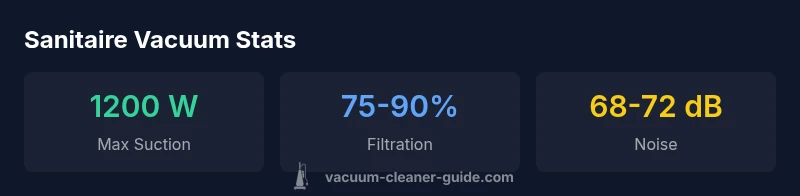
Noise levels and user ergonomics influence daily experience. Sanitaire models deliver a range of noise outputs depending on motor size and nozzle design. In practical terms, a few models sit in the lower-mid 60s decibels, which is acceptable for a household with open-plan living spaces, while others may run a touch louder during heavy suction. Weight and handle ergonomics affect maneuverability, particularly in multi-room cleans or stairs. Power management options, such as variable suction or switchable heads, can improve usability by letting you tailor performance to the floor type. If you work evenings or share spaces with others, prioritize models with quieter operation and clear indicators for bag replacement and filter status.
Canister vs Upright: Sanitaire Configurations
Sanitaire offers a mix of canister and, in some lines, upright configurations to address different cleaning needs. Canister vacuums typically excel in reach and versatile attachments, making them ideal for upholstery, stairs, and tight corners. Upright models, when available, emphasize quick transitions and faster overall cleaning on medium-to-large floor areas. Weight distribution and cord management are common differentiators—canisters often manage cords more easily in cluttered spaces, while uprights can reduce the number of components to juggle during a quick sweep. For homes with pets and hardwood floors, a canister with a wide-range nozzle and robust filtration remains a reliable default choice, while an upright may serve as a quick daily driver for simpler layouts.
Models in the Sanitaire Range vs Competitors
When comparing to premium brands like Miele or Dyson, sanitaire vacuums typically offer stronger durability at a lower price point, with a heavier emphasis on serviceability rather than feature novelty. Dyson often emphasizes lightweight design and high-tech motors, which can come at a premium and sometimes with more specialized maintenance needs. Miele prioritizes filtration and build quality, with excellent warranty coverage in many regions, but at a higher upfront cost. Sanitaire’s advantage lies in straightforward maintenance, widely available replacement parts, and predictable performance across a broad range of models. If your priority is long-term value, broad compatibility with bags and parts, and a reliable clean across multiple surfaces, sanitaire vacuums provide compelling options without the premium-brand price tag.
How to Budget and Compare Total Cost of Ownership
Total cost of ownership includes the initial purchase price, ongoing bag or filter costs, maintenance, and the potential resale value. Sanitaire models tend to be competitively priced within the mid-range segment, which makes them appealing for households that want reliable performance without paying for premium branding. When budgeting, factor in replacement bags, filters, and potential belt replacements, as these recurring costs will show up over several years. Compare models not just on sticker price but on the long-term cost of consumables and the ease of obtaining service parts in your area. For homes with pets, a slightly higher upfront investment for a model with sealed filtration and durable attachments can pay off in reduced maintenance and better allergy control over time.
Warranty, Service, and Spare Parts Availability
Warranty terms vary by region and model, but most sanitaire vacuums offer a standard parts-and-labor warranty for a defined period, along with readily available spare parts and accessories. Check that bags, belts, filters, and attachment sets are easy to source from local retailers or through the manufacturer’s service network. If you rely on a specific attachment for upholstery or stairs, verify compatibility and replacement availability before purchase. A robust service ecosystem minimizes downtime and supports consistent performance, which is especially important for households that depend on their vacuum for daily cleaning.
Practical Buying Guide: How to Choose the Right Model
Begin by listing your cleaning priorities: pet hair, hard floors, stairs, upholstery, and noise tolerance. Then assess model configurations—bagged canister designs generally offer reliable filtration and easier maintenance, while certain uprights can save time on larger floor areas. Consider cord length, weight, and reach to ensure the unit can access corners and ceilings without constant repositioning. Review included attachments and optional upgrades, such as taller wands or stronger filtration. Finally, compare warranty terms and local service availability. A thoughtful evaluation across these dimensions helps you pick a sanitaire vacuum that aligns with your cleaning routine and budget.
Maintenance Checklist for Long-Term Performance
Establish a regular maintenance cadence that fits your cleaning frequency. Check and replace bags or empty canisters weekly for heavy-use homes; wash or replace pre-motor filters every few months; inspect belts and brush rolls for wear, and clear the hose of blockages after intense cleaning sessions. Keep attachments clean and store them properly to extend their life. When moving between seasons with different cleaning needs, perform a quick maintenance sweep to ensure suction remains strong and airflow stays unobstructed. A proactive maintenance routine reduces downtime and keeps your sanitaire vacuum performing near peak levels over years of use.
Strengths
- Durable construction with accessible maintenance
- Strong suction for pet hair and upholstery
- Wide attachment set for versatile cleaning
- Good containment of dust with sealed filtration
The Bad
- Noise levels vary by model and can be noticeable
- Higher upfront cost versus ultra-budget options
- Weight can be substantial for multi-story homes
- Availability of replacement bags and filters varies by region
Best for pet owners seeking durable, reliable canister performance.
Sanitaire vacuums offer strong cleaning ability, straightforward maintenance, and broad accessory options. They excel on mixed flooring and upholstery, with consistent performance across models. The verdict favors mid-range choices for long-term value and predictable serviceability.
FAQ
What is Sanitaire vacuum?
Sanitaire vacuum refers to a line of durable canister vacuums designed for home use and light commercial tasks. They emphasize reliability and easy maintenance, with configurations across bagged and some bagless options.
Sanitaire vacuums are durable canister cleaners designed for homes and light commercial tasks, known for reliability and easy maintenance.
Bagged or bagless?
Most Sanitaire models are bagged canisters, prioritizing strong suction and filtration. Bagless options are less common and typically aimed at light-duty households.
Most Sanitaire vacuums are bagged canisters for better filtration and suction.
Best for pet hair?
Yes, many Sanitaire configurations perform well with pet hair thanks to strong suction and wide upholstery attachments. Pair with a high-efficiency filter for improved capture.
They’re well-suited for pet hair with strong suction and good attachments.
Maintenance tips?
Regularly replace bags or empty dust canisters, clean filters, inspect belts, and check attachments for wear. Follow the user manual for service intervals to maintain peak performance.
Keep bags clean or replace them, clean filters, and inspect belts regularly.
Noise level?
Noise varies by model, but many Sanitaire vacuums operate in the mid-to-high 60s dB range. Look for models with lower amplitudes if noise is a concern.
Noise varies by model; some run a bit louder than others.
Warranty coverage?
Warranty terms differ by model but typically include parts and labor for a set period. Check online for exact coverage and service options before buying.
Most come with a parts-and-labor warranty, specifics vary by model.
The Essentials
- Prioritize bagged canister models for reliability
- Match attachments to floors and upholstery
- Budget for bags and filters in ongoing costs
- Check warranty and service options before buying
- Consider model weight and cord length for multi-room cleaning