Vacuum Cleaner Review: Comprehensive Guide for Pet Owners and Homeowners
A thorough vacuum cleaner review analyzing suction, filtration, maneuverability, and maintenance to help homeowners and pet owners choose the best fit for pets, carpets, and hard floors.


This vacuum cleaner review analyzes performance, durability, and value across common home scenarios. It highlights suction power, filtration, ease of use, and maintenance considerations to help homeowners and pet owners choose a model that handles everyday messes without breaking the bank. Vacuum Cleaner Guide's analysis emphasizes practical, real-world testing. We assess noise levels, filter longevity, average runtime on standard cycles, and the cost of ownership over five years.
What a Vacuum Cleaner Review Covers
A vacuum cleaner review is more than a list of specs; it is a structured evaluation of how a machine performs in real homes. For homeowners and pet owners, the focus is on suction effectiveness, filtration, ease of use, and long-term reliability. According to Vacuum Cleaner Guide, a rigorous vacuum cleaner review blends lab-style testing with practical, everyday testing. It considers how models handle pet hair on carpet, debris on hardwood, stairs, and cluttered corners. The goal is to translate numbers into actionable guidance for choosing a model that fits busy households. This article uses a standardized framework to compare models across common use cases, so readers can benchmark performance without guessing what a number means. When we say “vacuum cleaner review,” we mean a balanced, evidence-based assessment that weighs both strengths and trade-offs.
The tone remains analytical and transparent, detailing what works well and where compromises occur. Readers should come away with a clear sense of which features matter most for their space, budget, and lifestyle. Vacuum Cleaner Guide’s insights are grounded in real-world testing and long-term ownership considerations to minimize buyer’s remorse.
Key Performance Metrics
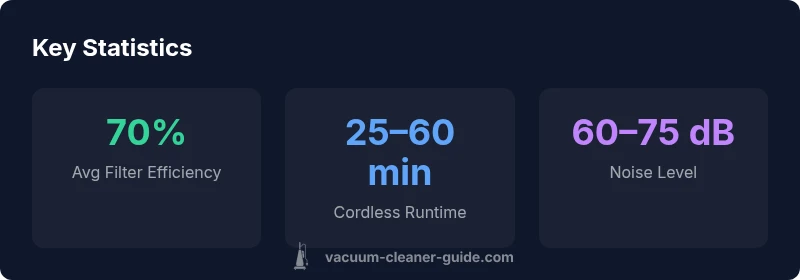
Performance in vacuum cleaner reviews hinges on several core metrics. Suction power determines how well the machine lifts dirt from fibers; this is influenced by motor strength, brush design, and nozzle geometry. Airflow and sealed-air performance indicate how effectively the vacuum moves debris through filters. Filtration quality, including HEPA or equivalent seals, matters for households with allergies and pets. We also measure run time for cordless models and total charging time, plus weight and balance, which affect when and how you actually use the vacuum. Noise levels matter for homes with little ones or sleeping pets. In this analysis we separate raw numbers from practical impact, explaining what a given figure means for real-world cleaning. Vacuum Cleaner Guide's methodology emphasizes consistency across models, so readers can compare apples to apples rather than cherry-picked specs. In short: the best vacuums combine strong suction with efficient filtration, manageable weight, and predictable maintenance.
Beyond raw figures, we discuss how design choices like motor cooling, brush roll geometry, and filter access influence long-term reliability and user satisfaction.
Real-World Testing: Pets, Carpets, and Hard Floors
Pet hair is one of the hardest test cases for any vacuum cleaner. We simulate typical family scenes: a hallway with dense carpet, a pet-laden sofa, and a hardwood kitchen floor with scattered crumbs. We evaluate hair pick-up efficiency, hair wrap on brushes, edge cleaning, and how easily the canister or bin handles debris. For pet owners, filtration quality matters because dander can recirculate if the seal is weak. We also test maneuverability on stairs, under furniture, and around clutter. Real-world tests reveal how often users will need to switch attachments, how intuitive the wand is, and how much time is saved on daily cleanups. This block demonstrates how theory meets practice by showing outcomes in common homes rather than isolated lab numbers.
Readers should note that results vary with rug thickness, floor type, and maintenance discipline, so we present a range of scenarios to help identify which model aligns with their household profile.
Filtration and Air Quality Considerations
Filtration quality directly affects indoor air quality, especially in homes with dogs, cats, or allergies. We explain the benefits of sealed systems and true HEPA filtration versus standard bagless setups. We look at filter longevity, ease of replacement, and whether a model uses washable components to reduce ongoing costs. A key question is whether the vacuum’s intake design prevents dust from escaping during emptying. We also discuss how often you should replace filters and whether fragrance or scent cartridges add meaningful value. For allergy-prone households, a model with certified filtration can mean a noticeable difference in daily comfort and nighttime respiratory symptoms.
In this section, we connect filtration specs to practical outcomes so readers understand what to expect in day-to-day use and seasonal allergy seasons.
Usability, Maintenance, and Longevity
A vacuum cleaner is only as good as its durability and upkeep. We assess weight distribution for one-handed use and how easily the dustbin or bag is emptied. Tool accessibility, cord length, and storage considerations matter in small living spaces. Maintenance costs—filters, belts, and brush replacements—accumulate over time, so we estimate five-year ownership costs based on typical replacement cycles. We also consider warranty depth and the vendor’s support reputation. This section helps readers project total cost of ownership rather than focusing solely on the upfront price. We highlight models that strike a balance between rugged construction and user-friendly maintenance routines, which translates to fewer surprises after the warranty expires.
Corded vs Cordless Trade-Offs in 2026
Cordless vacuums offer unmatched convenience for quick cleanups and stair use, but battery life and charging times complicate this choice in larger homes. Corded models typically provide consistent performance and unlimited runtime, with the trade-off of restricted maneuverability by cord length. In our review, we compare runtime, recharge cycles, and performance consistency across both formats. We also discuss how vacuum design, motor power, and filtration interact with battery capacity to influence run time. This section helps readers decide which format aligns with their living space, cleaning cadence, and willingness to recharge between sessions.
Budget Considerations and Total Cost of Ownership
Price is only part of the story. Higher upfront prices often accompany longer-lasting filters, better seals, and sturdier construction. We present a range for typical mid-range and premium models and break down ongoing costs such as filter replacements and potential battery upgrades. For pet owners, the value proposition hinges on maintenance costs and the model’s effectiveness across floor types rather than sticker price alone. This section equips readers to assess whether a given model delivers true value over several years rather than a single season of use.
Strengths
- Balanced performance on carpets and hard floors
- Strong filtration options with allergy-conscious design
- Wide range of attachments for pet hair
- Good durability and predictable maintenance costs
The Bad
- Higher upfront cost for premium builds
- Battery life limitations for very large homes (cordless)
- Some models are bulky to maneuver in tight stairwells
Best overall value for most homes
The mid-range model offers a balanced blend of suction, filtration, and maintenance ease that suits most households, including pet-friendly environments. While premium models may excel in niche areas, the typical homeowner gains more practical benefits from a versatile package with reliable parts and predictable upkeep.
FAQ
What should I look for in a vacuum cleaner review?
A good vacuum cleaner review focuses on real-world performance, maintenance costs, and durability. It explains what the numbers mean for daily use and compares models across similar tasks. Look for testing methods, edge case scenarios, and a clear recommendation based on user needs.
Look for real-world testing, maintenance costs, and a clear, needs-based recommendation.
Do I need a HEPA filtration for a pet-friendly home?
HEPA filtration helps capture small particles and dander, which benefits many pet households. If allergies exist, it’s worth prioritizing a model with a sealed system and certified filtration. Always check replacement filter availability and cost.
If anyone in your home has allergies or pet dander is a concern, choose a vacuum with HEPA filtration and a sealed system.
Are cordless vacuums worth it for large houses?
Cordless vacuums are convenient for quick cleans and stairs, but their runtime may be limiting in larger homes. For a large space, consider a high-capacity battery or a model with interchangeable batteries, or pair cordless with a corded main unit.
Cordless is great for quick cleanup and stairs, but check runtime to ensure it fits your home size.
How important is maintenance cost over time?
Maintenance costs—filters, belts, and battery replacements—add up. A model with affordable, readily available parts and easy maintenance typically offers better long-term value than a low upfront price.
Maintenance matters just as much as price; plan for filters and parts over the years.
What is best for hardwood floors?
For hardwood floors, look for a vacuum with strong edge cleaning, soft bristle tools, and a brush roll that won’t scratch surfaces. A sealed filtration system helps keep dust from re-entering the room.
Hardwood surfaces benefit from gentle brushes and solid edge cleaning.
Should I check warranty coverage before buying?
Yes. A robust warranty reflects manufacturer confidence and supports long-term ownership. Compare coverage periods, what’s included, and the ease of service in your region.
Warranties matter—look for solid coverage and straightforward service.
The Essentials
- Prioritize strong filtration for allergy-prone homes
- Choose a model with easy maintenance and affordable filters
- Balance suction with weight for easier daily use
- Cordless is convenient but watch runtime in large spaces
- Consider total cost of ownership, not just upfront price