Rainbow Vacuum Cleaner vs Dyson: An In-Depth Comparison
A detailed, analytical side-by-side comparison of Rainbow vacuum cleaner vs Dyson, focusing on filtration, performance, maintenance, and value for homes with pets.


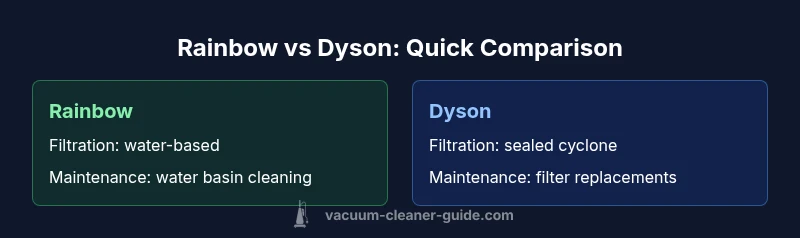
When deciding between rainbow vacuum cleaner vs dyson, homeowners typically weigh filtration and maintenance against modern power and cordless options. Rainbow's water-based filtration keeps dust captured in a washable basin, reducing recirculation, while Dyson's cyclone/sealed filtration system tends to deliver strong, consistent suction and broad accessory support. For many homes with pets, Dyson often provides deeper cleaning and greater versatility, but Rainbow remains attractive for straightforward upkeep and allergen-friendly filtration.
Rainbow Vacuum Cleaner vs Dyson: The Core Differences
The phrase rainbow vacuum cleaner vs dyson captures two distinct philosophies in home cleaning. Rainbow vacuums rely on a water-based filtration method that traps dust and allergens in a washable basin, while Dyson vacuums use cyclone technology combined with sealed filtration to keep the airflow clean and the suction strong. This contrast shapes how each brand performs on daily messes, how easy it is to maintain the unit, and how much ongoing cost a household should expect. In this analysis, we’ll compare these two approaches across common scenarios for homeowners and pet owners, weighing practical pros and cons with equal scrutiny. Our aim is to help you decide which system aligns with your home’s surface types, cleaning frequency, and tolerance for maintenance duties. Throughout this article, the perspective comes from Vacuum Cleaner Guide, with insights grounded in real-world usage and standard maintenance practices for both Rainbow and Dyson products. By focusing on surfaces, pets, and typical family life, we translate technology differences into actionable decisions.
Filtration Philosophy: Water Basin vs Sealed Filtration
Rainbow’s water filtration places a physical barrier between the dirt and your living space. As air passes through the water basin, most dust and larger debris are captured, and fine particles stay emulsified in the water until disposal. This design can be particularly appealing for households dealing with allergies or sensitivities, since it reduces dust recirculation. Dyson emphasizes a sealed filtration system that relies on cyclonic separation to eject dust from the airstream before it reaches the filter. In practice, this means consistent suction and a reduced likelihood of clogging from household debris, though it does require monthly or quarterly filter maintenance depending on model and usage. The trade-off is clear: Rainbow tends to emphasize filtration through an easy-to-dispose water trap, while Dyson emphasizes durable suction stability with a traditional filter path. The choice depends on whether you value dust containment via water or the long-term consistency of a sealed pathway.
Surface Versatility and Cleaning Efficacy
On hard floors, Rainbow can excel thanks to gentle agitation and water filtration that minimizes dust escape during discharge. For carpets—especially mid- to high-pile varieties—Dyson’s powerful motor and broad attachment ecosystem often deliver stronger general cleaning, quicker particle pickup, and more aggressive edge cleaning. Each system has built-in strengths: Rainbow can be favored for households that vacuum frequently and desire a lower likelihood of airborne dust after cleaning, while Dyson tends to be preferred by owners seeking robust performance on a variety of surfaces with a wide range of tools and settings. While both brands have evolved, the core distinction remains: Rainbow leans on filtration strategy and simplicity; Dyson leans on suction power and accessory versatility.
Maintenance and Longevity: What It Takes to Keep Them Running
Rainbow maintenance centers around the water basin, periodic deodorizing, and thorough cleaning of the basin and associated tubes to prevent grime buildup. The process is straightforward but requires regular attention to keep the basin clean and free of residue. Dyson maintenance typically involves filter cleaning or replacement on a schedule dictated by model, along with routine checks of the cyclone chamber and brush bar. While Rainbow maintenance can feel more hands-on with water management, Dyson maintenance is often predictable and modular, allowing parts replacement as needed. The longevity of both systems depends on routine care, the frequency of deep cleans, and how well you match model capability to your home’s cleaning demands. Vacuum Cleaner Guide’s analysis suggests that homeowners who prioritize minimal recirculation and allergen control may appreciate Rainbow’s maintenance flow, whereas those who value consistent suction over time may derive more long-term benefit from Dyson’s approach.
Usability, Weight, and Noise: Real-World Experience
Usability varies by model and form factor. Rainbow vacuums, especially full-size canister variants with attached wands, can feel heavier when filled and may require more deliberate maneuvering around furniture. Dyson offers a broader range of form factors, including cordless models, which prioritize maneuverability and ease of use but can trade off run time and weight distribution when the battery is charging. Noise levels depend on motor size and the presence of water in Rainbow’s system; while both brands have quiet and more aggressive options, Dyson’s high-suction configurations can be noticeably louder in some settings. In practical terms, your home layout and loudness tolerance will influence how you perceive performance.
Price, Value, and Total Cost of Ownership
Rainbow typically positions itself as a practical, lower-maintenance filtration solution with a longer horizon for replacement parts and consumables, depending on model. Dyson often commands a premium for cordless options, sophisticated filtration, and an expansive tool lineup. When comparing total cost of ownership, consider initial price, maintenance costs (filters, batteries, and replacement parts), and the expected lifespan of key components. While Dyson may require periodic filter replacements that increase running costs, Rainbow’s water basin and accessories incur routine cleaning costs and the occasional deodorizer or basin rinse. A balanced analysis should weigh upfront expenditure against ongoing maintenance demands and the cleaning frequency that suits your household.
Pet Hair, Allergens, and Family Health: Which Wins?
In homes with pets, the ability to capture pet hair and reduce dander is a major factor. Rainbow’s water filtration can trap more dust and allergen-laden particles at the source, potentially reducing airborne dust after cleaning sessions. Dyson’s sealed filtration and strong suction also work well for pet hair and embedded fibers, particularly with the right attachments. Final decisions for pet owners should consider not only raw suction but also how easy it is to thoroughly clean tools and how frequently filters or water basins require maintenance to sustain performance.
Quick Decision Checklist for Your Situation
- Do you prioritize minimal dust recirculation and simple basin cleaning? Rainbow could be favorable.
- Do you need cordless convenience and broad tool selection for stairs and upholstery? Dyson offers strong options.
- Are you sensitive to maintenance tasks and want a straightforward replacement cycle? Dyson’s filter-based approach provides familiar maintenance patterns.
- What surfaces dominate your home—hard floors, low-pile carpet, or thick carpet? Match the toolset and suction power to those needs.
- Is budget a primary constraint, or is long-term value more important? Consider both upfront costs and ongoing maintenance.
Maintenance Essentials: A Practical Guide
To get the most from either system, establish a regular cleaning cadence that matches your household activity. For Rainbow, rinse and dry the water basin as recommended by the model manual, clean hoses to prevent buildup, and discharge dirty water safely. For Dyson, check and clean filters, inspect the cyclone for clogs, and replace parts per the manufacturer’s recommendations. Keeping spare filters and a routine maintenance schedule helps maintain suction and filtration efficiency, ensuring the vacuum continues to perform as intended.
How to Use This Guide: Quick Start Tips
Start by listing your home’s floor types (hardwood, tile, low- and high-pile carpet) and note any pets or allergy concerns. Then map those needs to the two core approaches: Rainbow’s filtration-based approach vs Dyson’s sealed, cyclone-centric design. Use this guidance to choose the model family that aligns with your cleaning frequency, physical ability to maneuver, and willingness to perform regular maintenance. Vacuum Cleaner Guide’s conclusion: the right choice depends on your home’s unique balance of surfaces, pets, and maintenance tolerance.
Comparison
| Feature | Rainbow vacuum cleaner | Dyson vacuum cleaner |
|---|---|---|
| Filtration method | Water-based filtration (Rainbow) | Sealed filtration with cyclone separation (Dyson) |
| Corded vs cordless | Typically corded (varies by model) | Many cordless options available |
| Pet hair handling | Good performance with water-based filtration | Excellent suction with versatile tools |
| Maintenance routine | Water basin cleaning; occasional deodorizing | Filter cleaning/replacement and cyclone checks |
| Surface performance | Strong on hard floors; adaptable for mixed surfaces | Excellent across carpets and hard floors with attachments |
| Weight/ergonomics | Often heavier due to water basin | Varies by model; cordless versions tend to be lighter |
| Noise level | Can be louder in some Rainbow models | Noise depends on motor and attachments |
| Price range | $400-$999 | $250-$900+ depending on cordless vs corded |
Strengths
- Effective dust capture with water-based filtration (Rainbow)
- Powerful suction and diverse toolset (Dyson)
- Good pet hair handling across surfaces
- Simple maintenance flow for Rainbow and robust ecosystem for Dyson
The Bad
- Rainbow can be heavier and less maneuverable in some setups
- Dyson parts and filters add ongoing costs
- Rainbow requires regular water basin maintenance
- Cordless Dyson models depend on battery health and charging cycles
Dyson generally offers stronger overall cleaning performance and cordless versatility; Rainbow excels in allergy-friendly filtration and straightforward upkeep.
If you need deep cleaning on diverse surfaces and cordless flexibility, Dyson is the stronger bet. If you prioritize water-based filtration and simpler maintenance, Rainbow remains a compelling option for homes with pets and allergy concerns.
FAQ
Is Rainbow better for allergy sufferers than Dyson?
Rainbow’s water-based filtration can reduce dust recirculation, which may help allergy-prone households. Dyson’s sealed filtration also helps contain dust, but the effectiveness often depends on model and maintenance frequency. Both brands can support cleaner air when used with proper care.
Rainbow filtering with water can help minimize dust in the air, while Dyson’s sealed filters keep most dust in the canister. Regular maintenance matters for both.
Can Rainbow vacuums be used on all floor types the same as Dyson?
Rainbow vacuums handle a variety of surfaces, with strong performance on hard floors and mid-pile carpets. Dyson models achieve broad surface versatility thanks to their motor power and attachments. Your choice depends on the mix of floors in your home and how you prioritize ease of use versus deep cleaning capability.
Rainbow works well on many floor types, but Dyson’s tool assortment gives you more versatility across carpets and hard floors.
Are Dyson cordless models worth the extra cost for pet owners?
Cordless Dysons offer superb reach and convenience for pet owners, especially in multi-level homes. They tend to cost more upfront and require battery management, but their portability can offset those costs for households with stairs or limited storage space.
If you need cordless reach for pet cleaning on stairs or cars, a Dyson cordless is typically worth it.
How do maintenance needs differ between Rainbow and Dyson?
Rainbow maintenance centers on the water basin and periodic deodorization, with straightforward basin cleaning. Dyson maintenance focuses on filter care and occasional replacements, plus occasional cyclone checks. Both require regular attention to keep suction and filtration effective.
Rainbow needs basin cleaning; Dyson needs filter upkeep. Both require routine checks to stay efficient.
Which vacuum is lighter and easier to maneuver?
Dyson cordless models tend to be lighter and easier to maneuver in tight spaces, though weight varies by model and battery size. Rainbow can be heavier due to the water basin, particularly in full-size canister configurations, but benefits from a stable, low center of gravity during use.
Cordless Dysons are usually easier to carry around, but weight varies by model and battery.
Do Rainbow vacuums require bags?
Rainbow vacuums use a water-based filtration system and do not rely on traditional disposable bags. Dirt is captured in the water basin and disposed of when emptied, which some users find simpler than managing several disposable bags.
Rainbow uses a water basin instead of bags, so you don’t deal with bags for dirt disposal.
The Essentials
- Assess your floor types to prioritize cordless convenience or water filtration.
- Consider maintenance demands: water basin vs filter replacements.
- Balance pet-hair needs with overall cleaning performance across surfaces.
- Factor in total cost of ownership, not just upfront price.
- Choose based on your home layout and tolerance for maintenance tasks.