Is Miele Vacuum Cleaner Better Than Dyson? A Comparison
A data-driven comparison of Miele vs Dyson vacuum cleaners. Learn how build quality, performance, and ownership costs shape which brand is best for homes with pets and hard floors.


Is miele vacuum cleaner better than dyson? The short answer: it depends on your priorities. Dyson excels in cordless convenience and aggressive suction for quick cleanups, while Miele emphasizes durability, long-term reliability, and strong filtration. For owners who value build quality and resale value, Miele often leads; for those wanting lightweight cordless power and easy maintenance, Dyson usually wins.
Is this the right matchup for your home?
When evaluating whether a Miele vacuum cleaner is better than Dyson, homeowners must balance durability, filtration, and the cost of ownership against portability and cordless convenience. This guide uses a practical, data-informed lens to compare the two brands across real-world scenarios. If your home has pets or kids, the controls, filtration, and maintenance habits matter as much as raw suction. The central question, is miele vacuum cleaner better than dyson, becomes a question of priorities, not a single winner. To set expectations, we focus on widely available models, typical use-cases, and the long-term value you can expect from each brand, while avoiding marketing fluff. Throughout, Vacuum Cleaner Guide's analysis informs the context and recommendations.
Brand philosophies: durability vs versatility
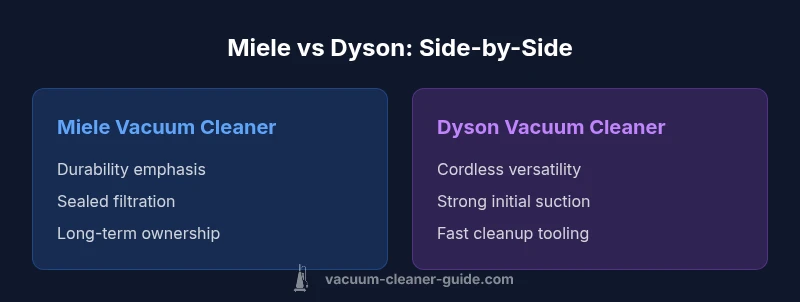
Miele emphasizes robust construction, sealed filtration, and predictable long-term performance. Dyson leans into modular design, aggressive suction, and a broad cordless lineup aimed at fast daily cleans. The Vacuum Cleaner Guide team notes that the two approaches serve different ownership models: Miele rewards those who keep a vacuum for many years; Dyson caters to households that prize adaptability and quick cleanups. This section frames which strengths matter most for your home: a dog-friendly living space with stairs, or a compact apartment needing fast, nimble cleaning.
Cleaning performance: suction, airflow, and filtration
Suction and filtration drive how effectively a vacuum handles pet hair, dust, and fine allergens. Dyson often highlights powerful suction and cyclone technology that stays strong across short bursts of cleaning, particularly on hard floors and mid-pile carpets. Miele, by contrast, emphasizes sealed systems and fiber filters that trap microns efficiently and maintain performance over time. The result is a practical difference: Dyson can feel punchy for quick cleans, while Miele tends to deliver steady performance with long-term filtration efficiency. For allergy-sensitive homes, sealed filtration and durable bags or filters are essential considerations.
Cordless vs corded: power delivery and convenience
Cordless models offer unmatched portability for spot-cleaning, stairs, and car interiors. Dyson pioneered modern cordless vacuuming with versatile battery packs, lightweight designs, and modular tools. Miele provides cordless options in some lines but remains strongest in corded, plug-in configurations that deliver reliable, constant suction without battery anxiety. Your choice here depends on how often you need mobility versus sustained power, how many outlets or chargers you’re willing to manage, and whether you prioritize a single, do-it-all main unit or a flexible family of cleaning tools.
Build quality, warranties, and service networks
Durability and service availability shape total cost of ownership. Miele vacuums are widely praised for sturdy housings, longevity, and generous warranties that support years of use. Dyson offers modern design with frequent model refreshes and a robust parts and service network, but some owners report shorter lifespans on certain cordless modules if parts wear or batteries degrade. The choice hinges on your risk tolerance for repairs and how important a broad service network is in your region. Vacuum Cleaner Guide emphasizes evaluating warranty terms and ease of access to replacement parts when you compare these brands.
Maintenance costs: filters, bags, and care
Maintenance costs accumulate through filters, bags, replacements, and potential repairs. Dyson models often require periodic filter replacements and filter cleaning, with expanding options at various price points. Miele units typically use durable filters and high-quality bags that last longer between changes, contributing to potentially lower ongoing costs. However, differences in availability by country and model line can shift the math. The key is to estimate annual maintenance costs based on your cleaning frequency and the family’s allergy needs. Vacuum Cleaner Guide notes that long-term costs can outweigh initial price differences for some households.
Noise, ergonomics, and daily usability
Even with strong suction, noise and ergonomics influence how pleasant a vacuum is to use daily. Dyson often emphasizes lighter weight and more compact form factors for quick cleanups. Miele tends to offer solid balance and even weight distribution, which can be advantageous during extended cleaning sessions. If you vacuum a multi-story home or have mobility considerations, test models for grip comfort, handle reach, and attachment accessibility. A model that feels natural in your hands will see more consistent use and better cleanliness outcomes over time.
Price, value, and ownership costs
Price begins the conversation, but total value ends it. Dyson’s upfront costs for premium cordless lines are typically higher, while Miele’s price point often reflects build quality and long-term durability. When evaluating total cost of ownership, include filters, bags, warranty coverage, and expected lifespan. In many households, the longer life and lower maintenance of Miele can offset higher upfront costs; in others, Dyson’s convenience and modern features justify the premium. Our analysis at Vacuum Cleaner Guide highlights that value is highly personal and tied to how you use the vacuum every week.
Real-world scenarios: pets, carpets, and hard floors
Pet owners frequently demand strong hair pickup, good filtration, and reliable maintenance. For many pet households, Miele’s sealed filtration and robust build offer long-term value, while Dyson’s cordless versatility makes quick daily cleanup easier on stairs and upholstery. For homes with dense carpet, both brands can perform well, but the long-term durability of Miele often reduces total ownership costs, particularly with high-traffic areas. For hard floors and delicate surfaces, Dyson’s tool assortment and adjustable suction provide flexibility, though Miele’s filtration keeps dust and allergens more consistently trapped.
Allergy considerations and filtration efficiency
Filtration plays a critical role for allergy sufferers. Miele’s sealed system with multi-stage filtration is designed to minimize dust escape, which helps keep indoor air cleaner over time. Dyson offers sealed filtration options in several models, with performance varying by filter type and use patterns. If you or a family member has allergies or asthma, prioritize models with certified filtration and easy-to-clean filters. Vacuum Cleaner Guide recommends considering a model with easy maintenance routines to sustain filtration performance.
How to choose: a practical decision framework
Start by listing your top priorities: cordless convenience, long-term durability, allergen control, or overall ownership cost. If portability and quick spot-cleaning dominate, Dyson is compelling. If you want a core workhorse with a proven track record for longevity and filtration, Miele is a strong candidate. Use a simple scoring approach across key criteria: suction reliability, filtration, maintenance, weight, and warranty. Finally, check local service availability and parts cost. This framework helps translate preferences into a clear winner in your home environment.
Comparison
| Feature | Miele Vacuum Cleaner | Dyson Vacuum Cleaner |
|---|---|---|
| Cordless Options | More limited cordless lineup; excels in corded versatility | Broad, popular cordless range with modular tools |
| Filtration & Allergens | Sealed systems with durable filtration; strong allergen control | Sealed filtration in many models; strong dust containment |
| Maintenance Costs | Long-lasting filters and bags; generally lower ongoing costs | Frequent filter replacements possible; higher ongoing costs |
| Build Quality & Warranty | Renowned for rugged construction and long warranties | Solid design with regular model updates and strong support |
| Noise & Ergonomics | Balanced weight; comfortable for longer sessions | Lightweight, compact designs; great for quick cleanups |
| Best For | Homes prioritizing durability and allergen control | Homes needing versatile, portable cleaning and speed |
| Price Range | Mid-to-high upfront with long-term value | High upfront for premium cordless models |
Strengths
- Strong long-term value and durability with Miele
- Excellent cordless versatility with Dyson
- Excellent filtration in both brands for cleaner air
- Solid service networks and parts availability
- Good selection of toolings for varied surfaces
The Bad
- Higher upfront cost for some Dyson models
- Miele may feel heavier to carry on stairs
- Maintenance frequency can vary by model
- Battery degradation can affect cordless models over time
Miele is favored for durability and long-term value; Dyson wins for cordless flexibility and convenience
Choose Miele if you prioritize lasting performance and filtration. Choose Dyson if you want the lightest, most versatile cordless experience.
FAQ
Is a Miele vacuum better for pet hair than Dyson?
For pet hair, both brands perform well, but Miele’s sealed filtration and durable construction tend to offer steadier results in high-traffic homes. Dyson’s cordless tools are convenient for quick spot-cleaning on stairs and upholstery. Your choice should weigh long-term maintenance against daily convenience.
Both brands handle pet hair well, with Miele offering steadier long-term filtration and Dyson giving you quick cordless cleanup.
Are Dyson cordless models as powerful as Miele canisters?
Cordless Dyson models provide impressive peak suction and convenience, but canisters from Miele can deliver consistent performance with fewer battery constraints. If you need sustained power for large cleaning sessions, Miele’s corded options often win out.
Dyson cordless is powerful and flexible, but Miele’s corded models offer steady, long-lasting performance.
Which is cheaper to own over the long term, a Miele or Dyson?
Long-term ownership costs depend on maintenance, filters, bags, and repairs. Miele often ends up with lower ongoing costs due to durable components, while Dyson may incur higher filter and battery replacement costs over time. Compare models and warranties to estimate total cost of ownership.
Long-term, Miele often costs less to own, but it depends on the model and maintenance needs.
Do Miele vacuums filtration outperform Dyson?
Both brands offer excellent filtration in many models. Miele emphasizes sealed filtration endurance, while Dyson provides efficient filtration in several cordless and corded models. If allergy control is a priority, choose models with certified filers and easy-to-clean components.
Both filter well; Miele has a slight edge in long-term sealed filtration.
Are Dyson vacuums easier to maintain than Miele?
Maintenance ease varies by model. Dyson tends to simplify maintenance with modular parts and visible filters, but some users report more frequent replacements. Miele requires fewer bag changes over time but can be heavier and slower to service in some regions.
Dyson makes maintenance feel simple, while Miele emphasizes durability and longer service life.
The Essentials
- Prioritize durability if you want long-term value
- Choose Dyson for cordless convenience and quick cleanups
- Filtration quality is strong in both brands
- Consider total ownership costs, not just upfront price