How Often Should You Buy a Vacuum Cleaner: A Practical Guide
Discover how often you should replace or upgrade your vacuum cleaner, with a data-driven approach for pet owners and homeowners. Learn practical timelines, maintenance tips, and upgrade prompts.


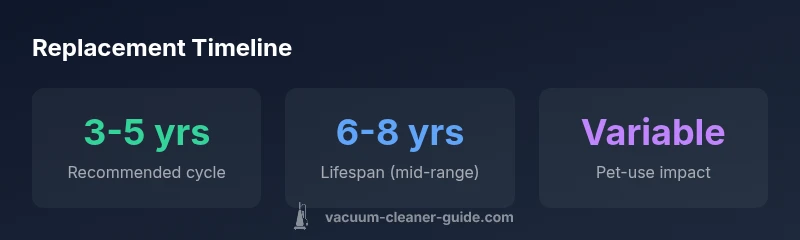
Identifying the exact replacement timing for a vacuum cleaner isn’t fixed. A practical rule is to reassess every 3-5 years, or sooner if performance drops. According to Vacuum Cleaner Guide, heavy use, pet hair, and aging components shorten the life, while diligent maintenance can extend it. If suction wanes, belts or seals fail, or repairs approach the cost of a new model, upgrading is often the smarter choice.
Why replacement timing matters
Replacement timing matters because suction efficiency, filtration, and energy costs change over time. In answering how often should you buy a vacuum cleaner, consider not just the price tag but the device’s ability to maintain performance across floors and pet hair. According to Vacuum Cleaner Guide, most households reassess their needs every 3-5 years, but pet ownership, allergy concerns, and heavy daily use can shorten that window. High-wear factors include clogged brushes, worn belts, degraded seals, and a motor that strains to pick up debris. Regular checks help you decide between repair and upgrade, avoiding both premature disposal and unnecessary expense. A systematic approach starts with a baseline test: compare current suction to the original performance, listen for unusual noises, and note any loss of suction on carpets or hard floors. If you notice significant degradation after routine maintenance, it's reasonable to plan for a replacement within the next 12-24 months rather than waiting until breakdown. In practice, think of this as a moving target that shifts with family size, flooring types, and cleaning frequency.
How usage patterns change the timing
Household size, lifestyle, and how you clean all influence when you should upgrade. A single person in a small apartment may ride out a 6-8 year life with minimal maintenance, while a family with kids and pets often reaches the 3-5 year slot sooner. Frequency of cleaning matters as well: daily vacuuming on multiple surfaces accelerates wear on belts, motors, and filters. Floor type also matters; high-pile carpets demand stronger suction and longer motor life than smooth floors. Finally, climate and allergen exposure affect filter and seal wear. If you notice frequent clogging, persistent odors, or reduced suction that persists after a filter change, it’s time to re-evaluate the need for a replacement or a model upgrade. This dynamic, data-driven view helps homeowners plan purchases around real usage rather than an arbitrary calendar.
Pet owners and allergies: special considerations
Pets bring extra hair, dander, and debris that climb into crevices and filters. In households with cats or dogs, you’ll typically see accelerated wear on brushes and seals and more frequent filter changes. For allergy sufferers, a vacuum with a sealed system, high-efficiency particulate air (HEPA) filtration, and robust edge cleaning is worth prioritizing, even if the machine is technically still functional. If you regularly vacuum furniture and stairs, expect the need to upgrade sooner than a non-pet household. The practical takeaway: invest in models designed for pet hair and easy maintenance, and budget for more frequent replacement or upgrades to keep air quality high without sacrificing performance.
When to repair vs replace: a practical framework
Many readers ask how often you should buy a vacuum cleaner, and the answer depends on how quickly repairs accumulate and how the total cost compares to a new purchase. Start by pricing out the needed repairs and compare that to a comparable new unit. If you’re near the middle of a warranty period, check what’s covered and factor in potential future maintenance. If repairs would exceed 50-60% of the cost of a new model, replace rather than repair. Also consider advances in filtration, energy efficiency, and brush design that can deliver better results with less effort. Finally, factor in downtime and energy costs; a newer model might save you money over time even if the upfront price is higher.
How to assess a vacuum before buying a new one
Before buying another vacuum, perform a practical health check on your current unit. Test suction on carpet and hard floors, inspect belts and brushes for wear, verify seals, and listen for unusual motor noises. Check the filters for clogging or discoloration, and note any persistent odors that won’t disappear after a deep clean. Use that evaluation to set a baseline for your next purchase: do you want better filtration, quieter operation, or lighter weight? This step helps you choose a model that actually improves your cleaning routine, not just a newer badge.
Maintenance that extends life: routines that matter
Maintenance buys you time and preserves performance. Clean the dustbin or bag, wash or replace filters on schedule, and check for hair wrap on the brush roll after every few uses. Keep brushes clear of hair and lint, test seals for cracks, and store the vacuum in a dry area. If you avoid clogging, maintain good suction, and replace worn belts promptly, your vacuum can stay efficient longer. Documentation of service intervals helps you compare against factory expectations and supports decisions when it’s time to upgrade.
Upgrading options: features to consider in 2026
Technology has shifted toward more versatile and efficient designs. If you’re upgrading, decide whether you want corded or cordless, bagged or bagless, and what filtration level you need. For pet owners and allergy sufferers, prioritize sealed systems and HEPA filtration, plus easy-to-clean components. Weight and maneuverability matter for multi-story homes, while smart features and warranty length can influence long-term satisfaction. Finally, consider the total cost of ownership, including parts, attachments, and replacement filters, to ensure the upgrade pays off over time.
Buying guidance by factor
| Aspect | Guidance | Notes |
|---|---|---|
| Replacement interval | 3-5 years | General guidance for most homes with typical use |
| Pet ownership impact | Shorter cycle (3-5 years) | Hair and debris accelerate wear on brushes/seals |
| Maintenance effect | Extends life | Regular maintenance can delay upgrades |
FAQ
How often should you replace a vacuum that’s still performing?
If performance declines and repairs add up, replacement is prudent. Consider total cost and warranty. Regular maintenance can delay the upgrade but persistent performance decline is a signal.
If it keeps losing suction and repairs pile up, it’s time to replace, but maintenance can buy you more time.
Does replacement frequency differ for pet owners?
Yes. Pet hair accelerates wear on brushes, seals, and filters. For homes with pets, aim for the 3-5 year range but be ready to upgrade sooner if you notice clogging, odors, or persistent allergen concerns.
Pet homes often need upgrades sooner due to hair and dander.
How can I tell if suction loss is due to wear or something simple?
Check filters, belts, brush roll, hose obstructions, and seals. If basic maintenance doesn't restore suction, wear or motor issues may be the cause.
Start with easy fixes; if suction doesn’t improve, it may be wear.
What about warranties and repair costs?
Warranties cover defects and certain parts; if repairs approach half the price of a new unit, replacement can be wiser. Always factor labor, parts, and expected remaining life.
Warranties matter, but weigh repair vs replacement.
Should I replace after a certain number of years even if it still works?
Not automatically. Use a combination of performance, maintenance history, and total cost of ownership. If energy efficiency or filtration has improved, upgrading may be worth it.
Don’t replace just because of age—base it on performance and cost.
“A vacuum that fits your lifestyle is worth more than a flashy model. Maintenance and proper use often determine its lifespan more than brand alone.”
The Essentials
- Reassess replacement timing every 3-5 years.
- Pet ownership often shortens the upgrade window.
- Maintenance extends life when done consistently.
- Repair costs vs. replacement: compare total cost of ownership.
- Upgrade for HEPA filtration and energy efficiency when needed.