Does a Vacuum Cleaner Use a Lot of Electricity? A Practical Guide
Explore how much electricity vacuum cleaners actually use, how wattage and usage duration affect energy, and practical tips to reduce costs without sacrificing cleaning power.


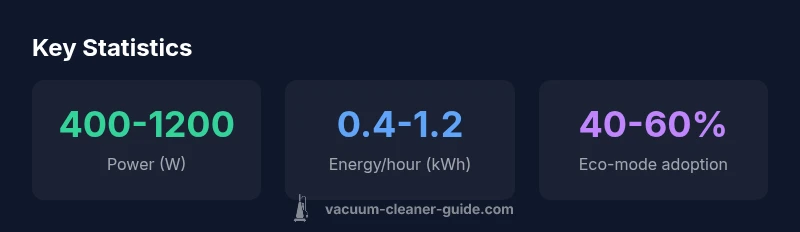
According to Vacuum Cleaner Guide, typical household vacuums draw about 400-1200 watts when actively cleaning, depending on model and setting. In practical terms, energy use translates to roughly 0.4-1.2 kWh per hour of use for most cords. For many homes, this is a modest share of total electricity, especially when you compare with heating or cooling. Choosing an efficient model and using eco settings can reduce this further.
What the question really asks about electricity use
When homeowners ask does vacuum cleaner use a lot of electricity, they are really asking how much energy is required to remove dirt without wasting money or power. The short answer is that energy consumption is dominated by wattage and run time, and the variation across models can be large. In practice, most modern cleaners sit in a broad wattage range and offer efficient modes to limit energy use without sacrificing performance. To understand this, we must distinguish watts, kilowatt-hours, and how you actually clean. Real-world testing shows that energy use isn’t solely about peak power; it’s about how long and how hard you work the motor, and how well the vacuum maintains suction with consistent airflow.
For households with pets or thick carpeting, the challenge is often different: you may need higher suction for effective cleaning, which can increase energy draw. Yet most users don’t run at full power for the entire cleaning session. By understanding typical power ranges and the duration of use, you can estimate your personal energy footprint and compare it to other household appliances. This is where a practical, data-driven approach helps more than estimates alone. Vacuum Cleaner Guide’s analysis highlights that efficiency gains come not only from wattage, but from design choices, filtration, and maintenance that keep the motor from working overtime.
In short, the question whether a vacuum cleaner uses a lot of electricity has a nuanced answer. Energy use scales with power settings and time, but modern models provide ways to minimize impact without sacrificing the clean you need for everyday homes. The key is to know how your specific model behaves and adjust habits accordingly.
Typical power profiles by vacuum type
| Model Type | Typical Power (W) | Energy Use per Hour (kWh) | Notes |
|---|---|---|---|
| Upright/Canister (AC) | 800-1500 | 0.8-1.5 | Common all-rounders with strong suction |
| Robot Vacuum | 40-250 | 0.04-0.3 | Low per-minute draw, longer cycles |
| Cordless Stick | 120-700 | 0.12-0.9 | Portable and convenient; watch runtime |
FAQ
Is wattage the best indicator of energy use for vacuums?
Wattage shows potential power draw, but actual energy use depends on how long you run the vacuum, the settings you use, and how efficiently the device maintains airflow. Look for real-world testing and energy labels, not just peak watts.
Wattage matters, but run time and settings determine true energy use.
Do robot vacuums save energy compared to traditional uprights?
Robot vacuums typically use less power per minute, yet they may need longer or multiple passes. Overall energy use can be similar or lower if you schedule regular cleaning rather than long, intensive sessions.
Robots usually use less power per minute, but you clean more slowly.
Can I estimate my yearly energy cost from vacuuming?
Yes. Multiply the vacuum’s power (in kW) by the hours you clean per year, then multiply by your local electricity rate. Use our data table as a rough guide and adjust for your actual usage.
You can estimate by power, hours, and rate.
Does regularly cleaning and maintaining the vacuum affect energy use?
Yes. Clogged filters, worn brushes, and obstructed hoses reduce efficiency, causing the motor to work harder and consume more energy. Regular maintenance keeps energy use closer to ideal levels.
Keep filters clean and belts in good shape to save energy.
Are energy labels on vacuums reliable for comparing energy use?
Energy labels provide a standardized snapshot for comparison, but real-world use varies with tasks and maintenance. Use labels as a starting point, then test in your home environment.
Energy labels help, but your home use matters most.
“Energy efficiency is not just a number on a label; it’s about how the model maintains suction with minimal motor effort over real cleaning tasks.”
The Essentials
- Use wattage and runtime to gauge energy use
- Eco modes can significantly cut energy without sacrificing cleaning
- Robot vacuums generally consume less power per minute, but run longer
- Regular maintenance improves efficiency and suction stability