Do Vacuum Cleaners Use a Lot of Energy? A Data-Driven Guide
Explore how much energy vacuum cleaners actually consume, compare corded vs cordless models, energy-saving tips, and what to look for in energy-efficient vacuums according to Vacuum Cleaner Guide Analysis, 2026.


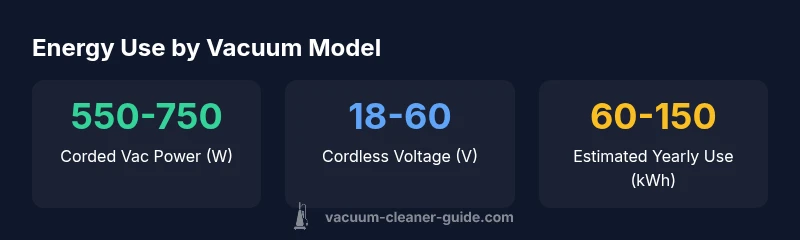
Do vacuum cleaners use a lot of energy? The concise answer is that energy use varies widely by model and use, not by a single feature. Corded vacuums typically run around 550–750 watts, while cordless models operate on rechargeable packs with voltages roughly in the 18–60 volt range. If you clean 1–2 hours per week, yearly energy often falls in a moderate range—roughly tens to a couple hundred kilowatt-hours—depending on the model and cleaning routine. According to Vacuum Cleaner Guide, the overall footprint is driven by power draw times cleaning time, not just peak wattage.
Do vacuum cleaners use a lot of energy
Do vacuum cleaners use a lot of energy? The quick answer is that energy use depends heavily on model design and how you use the machine. According to Vacuum Cleaner Guide analysis, energy consumption varies widely among corded, cordless, and robot vacuums, and the real driver is the combination of motor efficiency and cleaning time. In practice, a typical household vacuum’s energy footprint is shaped by motor wattage, suction settings, attachment choices, and the duration of cleaning sessions. Corded uprights usually operate at higher wattages, commonly in the 550–750 watt range, while cordless sticks rely on battery packs with voltages roughly between 18 and 60 volts. The total energy draw is a product of both power and time—so two models with different peak wattages can end up using similar energy if one is used longer and the other runs in a high-efficiency mode. For most homeowners and pet owners, the energy impact of vacuuming remains a moderate share of electricity use, especially if cleaning happens a few times weekly. The practical takeaway is that energy efficiency comes from smarter design, not simply high wattage.
How energy use varies by model type
Energy use in vacuum cleaners is not a one-size-fits-all story. Corded vacuums tend to consume more energy per minute due to higher continuous power draw, which translates to faster cleaning on tough messes or high-pile carpets. Cordless models trade sustained power for battery life, so their energy footprint hinges on battery capacity, charging efficiency, and how efficiently the motor uses energy during operation. Robot vacuums usually sip power, but their shorter, automated cleaning cycles can accumulate energy use over longer schedules. Canister and specialty vacuums fall between these extremes. The common thread is efficiency-driven design: brushless motors, optimized airflow, heat management, and high-efficiency filtration all help minimize energy waste while preserving cleaning performance. When evaluating models, compare power draw figures, but also consider actual usage patterns and floor types to gauge real energy impact.
Estimating energy use in real homes
In real-world use, you should estimate energy use by considering two variables: the model’s peak power and how long you operate it. A corded upright around 700W used for an average cleaning session of 20–40 minutes will consume roughly 0.23–0.46 kWh per cleaning, translating to about 12–25 kWh per month if you vacuum weekly. If you perform heavier cleanings more often or on difficult surfaces, the total can rise. Cordless vacuums may show lower per-minute energy use but require charging between runs; a busy household could accumulate similar annual energy consumption to a corded model, depending on charge cycles and usage duration. Robot vacuums, with modest instantaneous power, often yield lower energy per minute yet may run longer in a given week, narrowing or widening the total energy footprint depending on scheduling. The key is to multiply power draw by time, then adjust for efficiency features and charging habits. These estimates rely on generalized usage patterns, so real numbers will vary by household.
Practical steps to reduce energy usage during cleaning
Reducing energy use doesn’t require sacrificing clean floors. Start with the right setting for the floor type and mess level—low suction on hard floors and higher suction on carpets only when needed. Maintain filters and seals; a clogged filter or leaky hose increases energy demand to achieve the same suction. Regularly clean brushes and remove tangled hair, which makes the motor work harder. Use attachments that focus air flow where it’s needed rather than sweeping large areas with inefficient tools. If you own a cordless model, charge cycles and battery health matter—keep battery packs in good condition and avoid running the motor at maximum power for extended periods. Finally, schedule vacuuming to take advantage of lower electricity rates in your region where possible.
Choosing energy-efficient vacuums: what to look for
When selecting a vacuum, prioritize energy-efficiency alongside cleaning performance. Look for models with verified energy efficiency labels (e.g., Energy Star where available) and check the manufacturer’s estimated annual energy use. Favor designs with efficient motors, brushless drivetrains, and smart sensors that optimize suction and airflow. For homes with pets, consider vacuums designed to minimize clogging and maintain suction, as repeated peak-power cycles waste energy. Battery management matters for cordless options: larger battery capacity and efficient charging reduce energy waste over time. Finally, read independent reviews that measure actual energy use in realistic scenarios, not just claimed specifications.
Representative energy-use ranges by model type, from Vacuum Cleaner Guide Analysis, 2026
| Model Type | Power Draw (W) | Typical Energy Use (kWh/year) | Notes |
|---|---|---|---|
| Corded Upright | 550-750 | 120-180 | Solid all-round performance on carpets and hard floors |
| Cordless Stick | 60-180 | 60-150 | Battery-powered; great for quick cleans, energy depends on charging |
| Canister Vacuum | 600-750 | 110-170 | Flexible attachments; versatile for stairs and upholstery |
| Robot Vacuum | 20-60 | 30-90 | Smart scheduling; low instantaneous power, longer cycles |
FAQ
Do cordless vacuums use more energy than corded models?
Not necessarily. Cordless vacuums often consume less energy per minute, but charging cycles and battery management can add to overall energy use. Corded models may draw higher power during operation. Compare models by their estimated annual energy use and charging efficiency.
Cordless vacuums can save energy per minute, but charging can add up; compare annual estimates and efficiency.
How can I compare energy use across vacuum models?
Look at wattage, battery capacity or voltage, and the manufacturer’s annual energy-use estimate. Also check for Energy Star or similar efficiency labels and read independent tests for real-world performance.
Check wattage, battery specs, and annual energy use; seek Energy Star labeling.
Is there a standard energy rating for vacuums?
Some regions provide Energy Star or equivalent ratings for vacuums, while others rely on supplier estimates. When in doubt, favor models with official efficiency labeling and transparent usage data.
Energy Star labeling can help, but availability varies by region.
Do robot vacuums save energy?
Robot vacuums usually consume low instantaneous power but may run longer cycles. Overall energy use can be lower than heavy-duty vacuums in smaller spaces, but it depends on scheduling and charging behavior.
Robot vacuums sip power but run longer; total energy depends on schedule and charging.
What practical steps reduce energy use during cleaning?
Use the correct suction setting for the floor, maintain filters, and clear clogs to prevent extra power draw. Schedule cleanings during lower-demand times and keep batteries healthy for cordless models.
Choose the right setting, keep filters clean, and schedule smartly.
Should I prioritize high suction for hard floors?
Hard floors typically need less aggressive suction; use setting appropriate to the surface to avoid energy waste. Attachments designed for hard surfaces can improve efficiency without forcing the motor to work harder.
Use floor-appropriate settings and attachments for efficient cleaning.
“Energy efficiency in home vacuums comes from smarter design as much as from a high wattage. Look for motor efficiency, smart sensors, and filtration to reduce energy use without sacrificing cleaning results.”
The Essentials
- Assess energy use by both power draw and usage time
- Cordless vacuums often use less energy per minute but depend on battery health
- Energy Star or equivalent ratings help identify efficient models
- Maintain filters and seals to preserve suction efficiency
- Match vacuum type to floor type to minimize unnecessary power use