Difference Between Vacuum Cleaner and Blower
Explore the difference between vacuum cleaner and blower, covering function, use cases, safety, and maintenance to help homeowners choose the right tool for indoor cleaning and outdoor tasks.


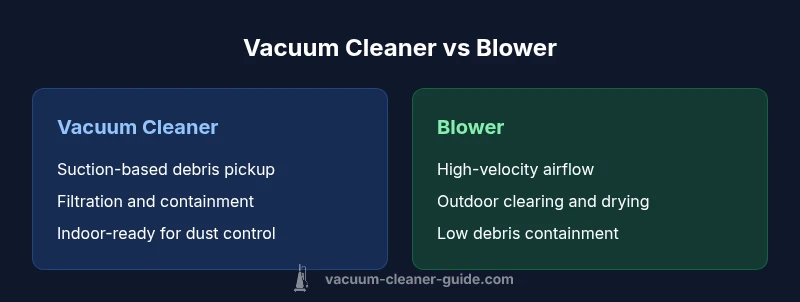
The vacuum cleaner and blower serve different jobs: suction-based dirt pickup versus forced air movement. For indoor cleaning and air quality, the vacuum cleaner wins; for drying, ventilation, or outdoor clearing, the blower shines. The distinction matters for safety and efficiency, as each tool is optimized for a specific task and environment.
What sets a vacuum cleaner apart from a blower
Although both devices rely on a motor and airflow, their fundamental purpose is different. The difference between vacuum cleaner and blower is rooted in the direction and purpose of the airflow: a vacuum cleaner draws air in through a nozzle, creating suction that lifts dirt into a collection bag or filter; a blower pushes air out, creating a high-velocity jet to move loose debris, dry surfaces, or ventilate spaces. For homeowners and workshop workers evaluating tools, this distinction guides both task selection and safety considerations. According to Vacuum Cleaner Guide, understanding whether you need to collect material or move air determines which tool to buy and how to use it responsibly. In the modern home, the vacuum cleaner is the workhorse for cleaning floors, upholstery, and stairs, while a blower occupies a more specialized role, often used for outdoor cleanup and quick drying after spills. The goal of this article is to unpack the technical differences, illustrate practical use cases, and provide guidance on selecting the right tool for 2026 home improvement tasks.
How suction works inside a vacuum cleaner
A vacuum cleaner creates suction by drawing air through an intake path and across a moving impeller or fan. As air moves, dirt and dust are carried with it and directed toward a collection bag, canister, or filter. The filtration stage is critical: HEPA-grade filters, pleated cartridges, or bag systems trap microscopic particles, improving indoor air quality for sensitive households. The design of the nozzle, wand, and attachments determines how effectively you can lift debris from carpets, stairs, or upholstery. Regular maintenance—emptying the bag or bin, cleaning filters, and inspecting hoses—preserves suction power and efficiency. For households with pets or allergy concerns, a vacuum with a sealed filtration system minimizes re-entrainment and helps keep indoor air clean. In this context, the difference between vacuum cleaner and blower becomes a practical decision about which tool aligns with your goals: clean surfaces and minimize dust, or move air without collecting material.
How a blower generates high-velocity air
Blowers operate on the principle of moving air rather than lifting debris into a collection system. They use a turbine or impeller to accelerate air and expel it through a nozzle or duct, creating a jet of high-speed air. There is typically little or no filtration for debris, so blowers excel at moving dust off surfaces, drying wet floors after spills, or clearing loose materials like leaves and sawdust. Because their purpose is air movement, blowers prioritize volume and speed over containment. This makes them ideal for ventilation, carpentry workshops, or outdoor cleanup where dispersing material is advantageous. When used indoors, blowers should be employed with caution to avoid circulating dust and irritants; many models include flow-control features to minimize backdrafts and re-entrainment. The key is to match the tool to the task: a blower for air movement and drying, a vacuum cleaner for debris removal and filtration.
Core specs that matter: suction power vs airflow
Two metrics dominate the decision between a vacuum cleaner and a blower: suction power and airflow. Suction power, often described in terms of air watts or water lift, measures how effectively a vacuum pulls material from surfaces. Airflow, measured in cubic feet per minute (CFM) or cubic meters per hour, indicates how much air the device can move and how quickly it can clear or dry an area. Filtration quality and dust containment are critical for indoor use, particularly for allergy-prone households or pet owners. Blowers emphasize airflow and velocity, which drive their effectiveness at dispersing debris, drying surfaces, and ventilating spaces. Noise levels and energy efficiency are practical considerations in both cases. When evaluating a model, look for a balance: strong suction for cleaning and a reliable filtration system for air quality; a blower with sufficient CFM for fast air movement when air displacement is the priority. The ongoing goal is to align performance metrics with the intended tasks, ensuring safety and efficiency in daily use.
Indoor use cases: cleaning, pet hair, upholstery
Inside homes, a vacuum cleaner is designed to pull up a variety of debris from different surfaces. Carpets, hard floors, furniture, and upholstery all benefit from suction power and specialized attachments such as crevice tools, brush heads, and HEPA filters. Pet owners often seek vacuums with strong suction, turbo brushes, and sealed filters to capture fur and dander while maintaining good indoor air quality. Maintenance and regular filter replacement play a large role in preserving suction and effectiveness. While blowers can be used indoors, they are generally limited to tasks where debris can be safely moved away from living areas or surfaces that benefit from drying rather than debris collection. In residential settings, prioritizing a high-quality vacuum with efficient filtration provides both cleanliness and healthier indoor air.
Outdoor and workshop use cases: debris clearing and drying
Blowers excel in outdoor tasks and workshops where airflow is needed to clear leaves, sawdust, or lightweight debris. They are also valuable for rapid surface drying after spills or rain, helping to prevent mold growth and slippery conditions. In carpentry or renovation projects, a blower can expedite clean-up by moving dust away from the work area, especially when combined with proper ventilation and dust collection strategies. The trade-off is that blowers generally do not collect debris, so additional tools are required for cleanup. Understanding these use cases helps homeowners and professionals decide whether a blower should sit alongside or instead of a vacuum cleaner in their toolkit.
Safety considerations and maintenance basics
Safety starts with choosing the right tool for the job. Indoor use of a blower should be avoided or tightly controlled to minimize dust dispersal; ensure good ventilation and wear a mask where appropriate. For vacuums, check filtration seals and replace worn filters or bags to sustain suction and protect indoor air quality. Electrical safety is universal: never operate near standing water, avoid damaged cables, and follow manufacturer guidelines for voltage and plug types. Regular maintenance—cleaning hoses, inspecting attachments, and clearing clogs—extends the life of either device. Finally, store tools in a dry, accessible place to prevent damage and ensure quick readiness for the next task.
Buying guidance: attachments, power, and portability
Selecting the right tool depends on your typical tasks. For indoor cleaning, prioritize a vacuum with strong suction, robust filtration, and a diverse set of attachments for stairs and furniture. Pay attention to cord length or battery life for cordless models, as well as weight and maneuverability. For outdoor or workshop use, prioritize blower performance, durability, and appropriate nozzles for leaves, dust, and wet surfaces. Consider noise levels and energy efficiency, especially for home environments with daytime use. By focusing on use-case alignment, you can choose a device that minimizes effort and maximizes results, while avoiding unnecessary overlap between tools.
Common myths and misconceptions
A common misconception is that more power always means better performance for every task. In reality, the best tool depends on the job: high suction but poor filtration can worsen indoor air quality, while a powerful blower can spread dust indoors if not used properly. Another myth is that blowers can substitute for vacuums in all cleaning scenarios; while a blower can dry a surface quickly, it will not collect dirt efficiently. Finally, some homeowners assume that cordless models always outperform corded variants; while cordless options offer portability, cordless power often comes with trade-offs in sustained performance. Understanding these nuances helps users avoid costly mistakes and select tools that meet their needs.
Comparison
| Feature | Vacuum Cleaner | Blower |
|---|---|---|
| Primary function | Suction-based dirt pickup and filtration | Airflow-based debris movement and drying |
| Typical power source | Electric motor driving suction and filtration | Electric or gas-driven turbine with discharge |
| Best use case | Indoor cleaning, pet hair, upholstery, floors | Outdoor debris clearing, drying, venting, mold prevention |
| Filtration/collection | Integrated bag/HEPA filtration, debris collection | Little to no debris collection; may expel dust |
| Noise and energy | Generally steadier noise with variable energy use | Often louder at high air flow; energy use depends on model |
| Safety considerations | Keep away from standing water; filter maintenance | Avoid indoor use where dust can be stirred without containment |
Strengths
- Vacuum cleaners remove debris and dust efficiently indoors
- Blowers provide fast drying and clearing of large areas
- Each tool specializes in a specific job, reducing wear on other equipment
- Many models are portable and easy to store
The Bad
- Vacuum cleaners require bags, filters, and maintenance
- Blowers may spread dust if used improperly indoors
- Blowers can be loud and less energy efficient
- Vacuum cleaners can be heavy and less suitable for outdoor clearing
Vacuum cleaners are the overall better choice for homes; blowers excel for drying and outdoor debris clearance
For indoor cleaning and improving air quality, choose a vacuum with good filtration. Use a blower when you need air movement, fast drying, or outdoor debris clearance, keeping safety in mind.
FAQ
What is the main difference between a vacuum cleaner and a blower?
The main difference is direction and purpose: suction versus forced air. A vacuum cleaner collects debris, improving indoor cleanliness, while a blower moves air to clear or dry surfaces. Each tool is optimized for its specific task.
The vacuum cleaner picks up debris; the blower moves air. Use the vacuum for cleaning, the blower for drying or outdoor clearing.
Can a blower be used indoors?
Blowers can be used indoors only with strict dust control and ventilation; otherwise they can spread dust and irritants. For typical indoor cleaning, a vacuum is safer and more effective.
Blowers indoors require good ventilation and dust control; a vacuum is usually safer for indoor cleaning.
Are there tools that combine both functions?
Some models offer a blow option or accessories that channel air for movement, but true dual-function devices are uncommon. Most users benefit from separate vacuum and blower tools tailored to different tasks.
There are some combo attachments, but most people pair a vacuum with a separate blower.
Which is safer for dust-sensitive households?
A sealed vacuum with a high-quality filtration system is safer for dust-sensitive households, as it captures particles rather than dispersing them. Blowers tend to spread dust unless used with containment.
Vacuum with good filtration is best for dust sensitivity; avoid indoor blowers where dust can spread.
What should I consider when buying one?
Consider the primary use, required filtration, noise level, and maintenance costs. Check attachments and hose reach for versatile cleaning, and weigh corded versus cordless options for convenience.
Think about your main tasks, filtration needs, and how loud the device can be. Attachments and range matter a lot.
How do noise and energy usage compare?
Noise and energy usage vary widely by model. Vacuums balance suction and filtration with moderate noise; blowers emphasize airflow, which can be louder and energy-intensive at high speeds.
Expect blower models to be louder at high airflow; check energy use for longer tasks.
The Essentials
- Define the task: suction vs airflow
- Choose indoors for vacuums; outdoors for blowers
- Prioritize filtration for health, noise for comfort
- Evaluate attachments, power, and maintenance