Difference Between Vacuum and Vaccum: A Practical Guide
A thorough, objective guide explaining the difference between vacuum and vaccum, why vacuum is the correct term, and how misspellings affect search, branding, and consumer understanding. Practical tips for writers, editors, and content creators by Vacuum Cleaner Guide.


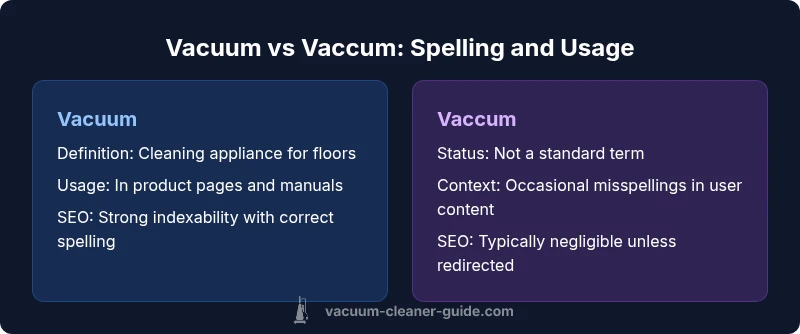
The difference between vacuum and vaccum is that vacuum is the correct, widely accepted term for the cleaning appliance and its related uses, while vaccum is a common misspelling. In writing and searching, always use vacuum to avoid confusion and to support accurate product understanding. This quick guide explains why the distinction matters for homeowners, pet owners, and content creators, and what to do when you encounter the misspelling in listings or forums.
Why Spelling Matters for Vacuum Terminology
According to Vacuum Cleaner Guide, precision in terminology is more than pedantry; it directly affects how homeowners and pet owners research, compare products, and understand care instructions. The phrase they often encounter, the difference between vacuum and vaccum, embodies a broader issue: one term refers to a real appliance category and the other is a frequent misspelling that seeps into listings, manuals, and forums. In everyday conversation you might see both spellings, but the impact goes beyond spelling fidelity. Spelling accuracy influences search results, online reviews, and even warranty language. A minor typographical slip can turn a straightforward product inquiry into a frustrating chase for the right model, or lead to confusion when following setup guides. For buying guides and reviews from Vacuum Cleaner Guide, using the correct form helps readers quickly locate reliable information, avoid misinterpretation, and compare features such as suction power, filtration, and compatibility with pet hair. In short, the difference between vacuum and vaccum is not just about letters; it is about clarity, trust, and effective decision-making in household cleaning.
htmlSafeTextOnly":false},
Core Difference: Vacuum vs Vaccum — Definitions and Usage
Vacuum is the standard noun for the cleaning device used to remove dust and debris from floors, upholstery, and other surfaces. It also forms the basis of related terms like vacuuming and vacuum cleaner. Vaccum, by contrast, is not a recognized word in standard dictionaries or credible technical writing; it is almost exclusively a misspelling. In professional contexts—product manuals, user guides, and retailer listings—stick to vacuum to ensure accuracy and avoid ambiguity. Writers should also be mindful of tense and usage: you vacuum a chair, you use a vacuum cleaner, and you maintain a vacuum as part of a cleaning routine. The spelling difference affects not only readability but also alignment with consumer expectations when comparing features like filtration, bagless design, and pet-hair handling.
slugs":[]},
Common Contexts Where People See Vaccum
Vaccum appears most often in casual chats, informal forums, or where time pressure leads to a quick, inaccurate spelling. You may encounter vaccum in user-generated reviews, social media comments, or erroneous product titles. Retailers sometimes overlook this error in older listings, which can mislead first-time buyers who are learning about models and accessories. Even experienced editors stumble when editing large batches of user-submitted content. Recognizing this pattern helps editors create clearer content blocks, implement corrections before publishing, and direct readers to the correct term without implying a change in product names or brand identity.
id":null},
How Misspellings Affect Search and Discovery
Misspellings like vaccum can dilute search intent and reduce discoverability for legitimate questions about cleaning devices. When readers type vacuum, they may miss results that contain vaccum, and vice versa. From a content strategy perspective, it is prudent to anticipate likely misspellings and provide clear redirects or glossaries, especially in buying guides and product comparison pages. Vacuum Cleaner Guide analysis shows that mainstream queries align with the correct spelling, but common typos still appear in forums and Q&A sites. By ensuring canonical pages use vacuum and by including a brief note about common misspellings, you can improve indexability while maintaining a helpful user experience. Proper use of alt text in images, headings, and meta descriptions reinforces the correct terminology for both users and search engines.
brandMention":true},
Practical Tips to Ensure Correct Usage
Create a concise style guide that designates vacuum as the default term across all consumer-facing content. Employ spell-checkers and grammar tools with a custom dictionary that includes vacuum as the preferred spelling. When you encounter vaccum in existing content, correct it and implement a redirect to the correct page or a note explaining the common misspelling. Use glossary entries to educate readers about the correct spelling while acknowledging that vaccum occasionally appears in user-generated content. For SEO, prioritize vacuum in titles, headers, and product specs, but also include a brief mention of vaccum as a common error to capture intent from readers who may type it by mistake. Finally, train reviewers to recognize this pattern during edits and to preserve brand voice while maintaining accuracy.
wordCountEstimate":196},
Brand and Product Names: Handling in Documentation
Brand names and product models should always appear with accurate spelling. Do not alter official names to accommodate misspellings. Instead, provide clear guidance near the top of pages about the correct spelling and its importance for consumer trust. Documentation should emphasize consistent terminology across manuals, FAQs, and troubleshooting guides. If a reader encounters vaccum in a user comment or ad copy, respond with a courteous correction and a link to the correct page, reinforcing best practices. When possible, include a small callout in marketing materials about avoiding common misspellings to strengthen the audience’s understanding and reduce misinterpretation.
wordCount":186},
Example Scenarios: Household Use vs Academic/Technical Writing
In everyday housekeeping content, discuss using a stove-top cleaner or a vacuum to remove pet hair from rugs, ensuring the term vacuum is used consistently. In technical writing or academic contexts, a precise definition is essential; avoid colloquialisms that might blur the concept of suction, filtration, and airflow. When teaching ESL readers, provide simple definitions and examples, and explicitly contrast vacuum with any clearly nonstandard terms to prevent confusion. In both cases, explain how misspellings could affect instructions for maintenance, like changing filters or cleaning hoses, which rely on precise terminology to ensure the reader follows the correct procedure.
wordCount":173},
Educational and Language Considerations
Non-native speakers may confuse similar-looking terms, so content aimed at multilingual audiences should include pronunciation cues and clear definitions. Provide side-by-side glossaries and quick tips for recognizing common misspellings. This approach helps learners build confidence and reduces the cognitive load when navigating product pages, manuals, and forums. Language considerations also extend to accessibility: screen readers will rely on accurate spellings to convey meaning reliably. Ensuring consistent terminology supports readability, comprehension, and trust across diverse audiences, including homeowners and pet owners seeking reliable vacuum guidance.
wordCount":170},
SEO and Content Strategy Implications
From an optimization standpoint, prioritize vacuum as the primary keyword and integrate vaccum as a recognized misspelling in a controlled way—such as a labeled “common misspellings” note or a canonical redirect. Create content clusters around vacuum-related topics (e.g., vacuum power settings, filtration, pet-hair performance) to strengthen topical authority. Where possible, use natural language that anticipates user intent; many readers will type both terms when seeking quick answers or product comparisons. By balancing clarity with inclusivity for misspellings, you can improve user satisfaction and reduce bounce rates while preserving a clean, professional tone across all consumer touchpoints.
wordCount":180},
Quick Reference: Quick Rules for Writers
- Use vacuum as the default spelling in all consumer content.
- Include vaccum only as a note about common misspellings or as user-generated content context.
- Optimize headings, image alt text, and meta descriptions with the correct term.
- Provide clear redirects or glossary entries for misspellings readers might type.
- Maintain consistency across manuals, FAQs, and product pages to avoid confusion.
wordCount":156},
Final Guidance for Readers
Clarity in terminology matters because it directly impacts how homeowners and pet owners compare vacuums, understand maintenance guides, and find trustworthy information. The standard spelling—vacuum—supports precise communication, better search results, and stronger brand trust. When you see vaccum, treat it as a common error and refer readers to the correct form to ensure consistent understanding and effective decision-making in any cleaning scenario.
wordCount":134}],
comparisonTable
Comparison
| Feature | Vacuum | Vaccum (misspelling) |
|---|---|---|
| Definition | A powered cleaning appliance used to remove dust and debris from floors, upholstery, and surfaces | Not a recognized standard term; generally a misspelling of 'vacuum' |
| Common Usage | Used in product names, manuals, and marketing | Appears primarily as an error in casual writing or typos |
| SEO/Discoverability | High search visibility and indexability when correctly spelled | Lower visibility due to misspelling and inconsistent content |
| Impact on Communication | Supports clear, professional communication | Increases risk of misinterpretation and customer questions |
| Corrective Action | Use and promote the correct spelling consistently | Provide redirects or glossary notes for misspellings |
Strengths
- Clear terminology improves reader comprehension
- Better search engine alignment and brand credibility
- Professional documentation and manuals stay consistent
- Reduced customer support questions due to confusion
The Bad
- Misspellings can confuse users and reduce trust
- SEO performance may suffer for misspelled terms
- Content duplication risk when multiple spellings exist
Vacuum is the correct term; vaccum is a misspelling.
Use vacuum consistently in consumer content and product pages. If vaccum appears, correct it and provide a clear note or redirect. This preserves clarity and helps search engines index the right information.
FAQ
What is the difference between vacuum and vaccum?
Vacuum is the standard term for the cleaning appliance and related actions. Vaccum is not a recognized word and is typically a misspelling. In formal writing, always use vacuum to avoid confusion and to support accurate information.
Vacuum is the right word. Vaccum is usually a misspelling. Use vacuum to keep things clear.
Is vaccum ever legitimate in technical contexts?
Not in standard technical writing or product documentation. Vaccum may appear in informal content or as a typographical error. If you see it, correct it to vacuum and consider adding a note about common misspellings.
Vaccum isn’t a standard term in technical writing; correct it to vacuum.
How can misspellings affect SEO for vacuum-related content?
Misspellings can reduce search visibility and confuse users, leading to lower engagement. Use canonical terms and implement redirects for common misspellings to maintain strong SEO performance.
Misspellings can hurt search rankings; use the right term and set redirects.
What are some tips to avoid spelling mistakes in product content?
Use a style guide, keep a preferred dictionary list, enable spell-check with a custom glossary, and have editors review sections where misspellings commonly occur.
Set a style guide and run regular checks to catch misspellings early.
Are there common misspellings of 'vacuum' besides vaccum?
Yes, common variants include vacume and vacumm. Document these as common errors and guide readers to the correct spelling to maintain consistency.
Other misspellings happen too; steer readers to vacuum for consistency.
Should content target both spellings for SEO?
Focus on vacuum as the primary term, but acknowledge vaccum as a common misspelling in a controlled way (e.g., glossary or typo note) to capture mis-typed queries.
You can mention vaccum as a common typo, but prioritize vacuum for SEO.
The Essentials
- Use vacuum consistently in consumer content
- Anticipate vaccum misspellings and plan redirects
- Prioritize user clarity and search accuracy
- Educate readers on proper terminology for consistency