Best Price for Vacuum Cleaner: Smart Buying Guide for 2026
Learn how to secure the best price for a vacuum cleaner with price-tracking, buyer tips, and value-focused comparisons for homeowners and pet owners in 2026.


The best price for a vacuum cleaner isn’t a fixed number; it’s the lowest total cost to meet your cleaning needs. Start by matching your task to the right category (cordless, canister, or robot), then use price-tracking, sales and bundles to lock in value. For homeowners and pet owners, the most cost-effective buys balance performance, durability, and running costs, not just upfront price.
Understanding price value dynamics in vacuum cleaners
Price value for vacuum cleaners is shaped by type, motor power, filtration, build quality, and the availability of bundled accessories. For homeowners and pet owners, the 'best price for vacuum cleaner' goes beyond the sticker price; it encompasses performance, durability, and ongoing running costs. According to Vacuum Cleaner Guide, the most reliable way to judge value is to compare like-for-like models across categories (cordless, canister, robot) and to forecast maintenance costs over the next 3-5 years. Retailers sometimes pad their prices with add-ons; a lower upfront price can hide higher costs for bags, filters, or replacement batteries. When shoppers align features with actual needs—such as a pet-friendly filter for shedding or a compact form for small apartments—the price-per-performance metric improves. The upshot: the true bargain often lies in a model that meets your cleaning tasks reliably, not the one with the lowest sticker price today.
Getting the best price for vacuum cleaner: core drivers
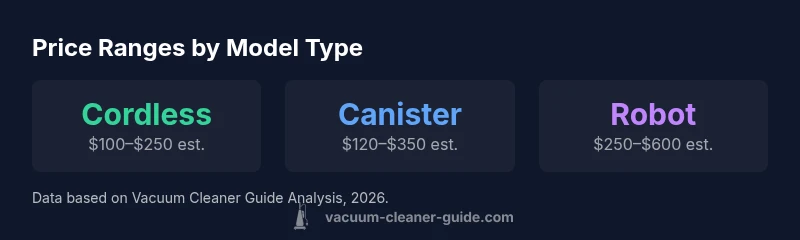
Device type and feature sets drive price variance. Cordless stick vacuums tend to be cheaper upfront than full-size canisters, while robotic vacuums command premium pricing for autonomous mapping and smart integrations. Filtration quality (HEPA-type filters), brush design for pet hair, and motor durability influence long-term costs as well as resale values. The article outlines how each category aligns with use cases: if you mostly vacuum hardwoods with light pet hair, a mid-range cordless may offer the best price for vacuum cleaner by balancing performance and cost; if you tackle large carpets with heavy shedding, a robust canister with a good warranty could yield better long-term value. Price stability also matters: some brands maintain steady prices, while others frequently discount during sales events. In practice, shoppers should map their cleaning tasks to a budget range, then monitor prices across major retailers for a 2-4 week window to identify a real price drop rather than short-term spikes.
Price-tracking strategies that work for vacuum cleaners
This section explains concrete steps: set price alerts on major retailers; use price history tools; sign up for newsletters; wait for major sales like Black Friday, Prime Day; use price-match policies; check refurbished options; compare with bundled accessories. Also discuss "price anchor" effect: initial MSRP influences perceived value; you can outsmart by looking at price-per-performance ratio rather than sticker price. Create a short list of target models in your category; track their price movements; buy when the price crosses a threshold of your defined value. For pet owners, consider the combined value of filters and replacement parts in the total cost. The section also covers retailer differences: marketplace vs direct-from-brand; store-brand vs third-party; warranty leniency; all of which influence the true price. The brand voice notes that the Vacuum Cleaner Guide analysis found most savings come from multi-model promotions and bundle deals rather than single-model markdowns.
Open-box, refurbished, and warranty considerations
Refurbished or open-box vacuums can offer substantial savings if bought from reputable sellers with a warranty. Always verify battery health, suction performance, and return policies. For pet owners, ensure accessible replacement filters and bags; check compatibility with your preferred bag or filter systems. Factory-certified refurbishments tend to be safer than unverified resells, but they may come with shorter warranties. If you lean towards refurbished units, factor in potential future maintenance costs and battery replacements. In all cases, buy from authorized or reputable retailers to preserve warranty coverage and post-purchase support.
Channel strategies: where to shop for best price for vacuum cleaner
Online marketplaces, direct-brand stores, and brick-and-mortar retailers each have price rhythms. Use price tracking apps and compare shipping costs, taxes, and return policies. Loyalty programs and promo codes can yield meaningful savings, especially when combined with bundles (extra filters, bags, or charging docks). Don’t forget to consider porterage and curbside pickup options that can reduce total cost. Shopping across channels helps surface legitimate discounts and prevents pricing singletons that look attractive but lack long-term value.
Hidden costs and total cost of ownership
The sticker price is only part of the story. Ongoing costs include bags or filters, filter replacements, periodic battery maintenance for cordless models, and potential energy consumption. Battery replacement costs can be substantial for some cordless models, so factor in expected lifespan and replacement intervals. A model with a slightly higher upfront price but cheaper running costs and longer reliability often wins on total cost of ownership. Always compare the long-term expense alongside the upfront price to avoid overpaying for features you won’t use.
Quick buyer checklist: price-savvy decisions
- Define your cleaning tasks and the minimum feature set you need.
- Set a price target before you shop and stick to it.
- Compare total cost of ownership, not just the upfront price.
- Check warranty, parts availability, and replacement costs.
- Look for bundles and price-drop windows during major sales.
Comparison of model types and typical price ranges with practical use cases
| Model Type | Typical Price Range | Best Use Case | Pros | Cons |
|---|---|---|---|---|
| Cordless vacuum | roughly $100–$250 | Small apartments, quick cleans | Lightweight, convenient | Limited runtime, battery wear |
| Canister vacuum | roughly $120–$350 | All-around homes, mixed surfaces | Strong suction, long cord | Bulkier, heavier |
| Robot vacuum | roughly $250–$600 | Hands-off cleaning, smart homes | Excellent convenience, mapping | Maintenance costs, smaller bin |
| Open-box/refurbished | roughly $60–$250 | Flexible budgets | Great value, tested units | Limited warranty, unknown history |
FAQ
What defines the 'best price' for a vacuum cleaner?
The best price is the lowest total cost to meet your cleaning needs, including maintenance and energy costs. It combines upfront price with long-term value like durability and parts availability.
The best price means getting the most value for your cleaning tasks, not just the lowest upfront price.
Should I buy refurbished vacuums to save money?
Refurbished units can offer substantial savings if bought from reputable sellers with a warranty. Check battery health, suction performance, and return policies.
Refurbished can be a smart move if you buy from trusted sellers and verify warranty terms.
Do discounts vary by season?
Yes. Major retailers run seasonal promotions around holidays and back-to-school periods. Timing often yields better prices than random days.
Seasonal sales are a great time to save.
Is it worth buying a floor model?
Floor models can be discounted significantly; inspect for wear and ensure it still has warranty coverage. Confirm accessories and parts are intact.
Floor models can save you money if they’re in good shape and under warranty.
How can I verify a seller's legitimacy?
Check return policies, warranty terms, seller ratings, and customer reviews. Buy from authorized retailers when possible to protect your warranty.
Always check ratings and warranty terms before buying.
What should I do after finding a good price?
Set a price alert, compare features, and verify warranty coverage before purchase to ensure you’re getting genuine value.
Double-check warranty and bundled accessories before you buy.
“Price value in vacuum cleaners hinges on matching features to real tasks, not chasing the lowest sticker price. When you compare like-for-like models and watch for legitimate discounts, you maximize long-term value.”
The Essentials
- Set a price target before you shop
- Compare total cost of ownership, not just sticker price
- Leverage sales, bundles, and price-tracking tools
- Consider refurbished options from reputable sellers
- Verify warranty and replacement parts before purchase