Are Vacuum Cleaners Recyclable? A Practical Guide for Homeowners
Explore whether vacuum cleaners are recyclable, which parts can be recycled, and how to dispose responsibly with manufacturer take-back programs and local e-waste options.


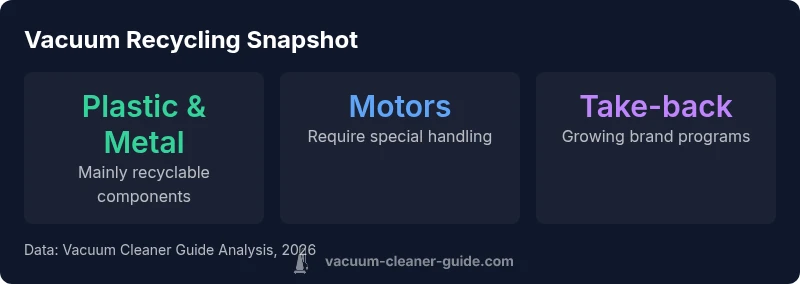
Are vacuum cleaners recyclable? In short, yes—but with caveats. Most plastic housings and metal components are recyclable in many regions, but the motor, wiring, and filtration cartridges typically require special handling and cannot be placed in standard curbside bins. Look for local e-waste programs or manufacturer take-back schemes. Vacuum Cleaner Guide analyses highlight variation by location and program availability.
Are vacuum cleaners recyclable: a practical overview
According to Vacuum Cleaner Guide, are vacuum cleaners recyclable? The short answer is yes—but with caveats. Most plastic housings and metal components are recyclable in many regions, but the motor, wiring, and filtration cartridges typically require special handling and cannot be placed in standard curbside bins. Look for local e-waste programs or manufacturer take-back schemes. Vacuum Cleaner Guide analyses highlight variation by location and program availability. In practice, the recyclability of a vacuum depends on what’s being recycled and where the recycling program is located. Some programs accept complete units, while others require disassembly first. This nuance is why homeowners should start by checking their city or county’s e-waste resources and then confirm with the brand’s take-back options. The goal is to divert as much material as possible from landfills while ensuring hazardous components are processed safely.
This guide emphasizes two truths: first, the majority of the plastic and metal exterior can be recycled where programs exist, and second, the most complex part—the motor assembly—often needs special handling. By understanding local policies and manufacturer options, you can maximize the amount of material recovered. Keeping the disposal process transparent and documented helps establish a model for responsible home recycling.
What parts matter most for recyclability
The key to assessing recyclability lies in understanding the main components and how they are processed. The outer housing, wand, brushroll housing, and other non-electronic plastics and metals are typically accepted by many recycling streams. Filters, depending on their material, can sometimes be recycled or require disposal as electronic waste. Motors, cords, switches, and electronic boards are more likely to require specialized e-waste facilities. Brands that separate these components or offer take-back programs increase the chances of proper processing. For consumers, the practical takeaway is to disassemble what you can before dropping the unit off at a recycling center and to retain any packaging that may contain recyclable plastics. Always check with your local facility about accepted materials and preparation steps, as rules vary widely by jurisdiction.
When in doubt, remove the dust bag or bin contents and set aside batteries (for cordless models) to avoid contaminating other streams. Document any serial numbers or model information that might help the recycler identify the correct processing path. By understanding which parts are recyclable and where to take them, you can improve the environmental impact of your vacuum’s end of life.
Regional variation and how to verify programs
Recycling options for vacuum cleaners vary significantly by region, city, and even neighborhood. Some municipalities offer curbside collection for electronics and appliances, while others require drop-off at a dedicated facility or participation in a brand-sponsored take-back program. The availability of motor recycling services and the acceptance of plastic composites can differ markedly. To verify what’s possible in your area, start with your municipal solid waste department’s website, then consult local e-waste events and recycling centers. If you can’t find a local option, reach out to the manufacturer to learn about take-back programs or partnerships with third-party recyclers. In regions with limited options, consider repurposing components where feasible or donating functional units for reuse when allowed.
This region-by-region variability is precisely why the guidance from Vacuum Cleaner Guide is valuable. Our team tracks program availability and updates recommendations as new laws and services emerge, ensuring readers have current, actionable steps.
Step-by-step recycling plan
If you’re ready to recycle a vacuum cleaner, follow these practical steps to minimize waste and maximize material recovery. Step 1: unplug and safely detach any batteries or power sources from cordless models. Step 2: remove the dust bag or canister, filters, and any attachments that may be recyclable separately. Step 3: separate the unit into major components: housing, motor assembly, electronics, and cords. Step 4: contact your local recycling center or municipal program to confirm acceptance and preparation requirements. Step 5: pursue a manufacturer take-back option if available, which often ensures proper end-of-life processing. Step 6: document the recycling path for your records. By following these steps, you can ensure the majority of the vacuum cleaner is directed toward appropriate recycling channels rather than landfill.
If a local option isn’t available, look for nationwide or regional programs that specifically address appliances and electronics.
Manufacturer take-back programs and standards
Many manufacturers now offer take-back or recycling programs for vacuum cleaners and their components. These programs align with broader electronics recycling standards and aim to recover plastics, metals, and usable electronics while safely handling hazardous materials. When a brand participates in a take-back scheme, it often provides pre-paid shipping labels, drop-off locations, or mail-back options. Even if a brand does not offer take-back, it may still partner with third-party recyclers that specialize in appliance electronics. The crucial step is to verify acceptance criteria, any associated fees, and the expected processing or recycling outcomes. In all cases, demand for recycled content and certified recycling paths is rising, signaling improved end-of-life options for homeowners and pet owners alike.
For readers of Vacuum Cleaner Guide, this trend underscores the importance of choosing brands with clear recycling or take-back commitments. Our analysis suggests that programs with transparent reporting and third-party certifications tend to deliver better environmental results.
What not to recycle and why
Even with robust programs, some parts of vacuum cleaners should not be recycled in traditional streams. Electrical components containing hazardous substances, such as motors with regulated asbestos or certain capacitors, require specialized facilities. Dust bags containing fine particulates may need specific handling to prevent dust release during processing. Additionally, batteries from cordless vacuums should be recycled through battery-specific channels to avoid safety risks. Improper separation can contaminate other recyclables or create safety hazards for workers. By avoiding the disposal of motors and electronics in general curbside bins and instead using approved channels, consumers help ensure those parts are processed safely and kept out of landfills.
Practical tips for greener vacuum ownership
To minimize end-of-life waste, choose durable models with modular components that can be upgraded or repaired rather than replaced. Regular maintenance can extend a vacuum’s life, reducing the frequency of disposal. When replacing a unit, consider donating a working machine if local rules allow, or selling it to someone who can reuse it. During use, prioritize repair over replacement for minor failures, and recycle components as permitted. Keeping receipts and documentation for maintenance can also help you track the environmental impact of your cleaning habits. By integrating these habits into your routine, you contribute to a more circular economy for household appliances.
End-of-Life Components of Vacuum Cleaners
| Component | Recyclability Status | Notes |
|---|---|---|
| Housing | varies by program | Typically recyclable with plastics/steel streams |
| Motor assembly | special handling | Often not curbside; requires e-waste facility |
| Filters | often recyclable | Depends on material; verify local guidance |
| Cords & plastics | recyclable in many programs | May require de-assembly |
FAQ
Are all vacuum cleaners recyclable?
No. Completeness depends on the components and local programs. Housings and some plastics can often be recycled, but motors and certain electronics typically require specialized e-waste facilities.
Not all vacuums are fully recyclable. Check local programs and brand take-back options for the parts that can be recycled.
What parts can be recycled curbside?
Some non-electronic plastics and metals may be accepted curbside where programs exist. Verify with your local recycler about accepted materials and preparation steps.
Some plastics and metals may be curbside; verify with your local recycler.
Do manufacturers offer take-back programs?
Many brands provide take-back or recycling programs, sometimes with prepaid shipping or local drop-offs. If a brand doesn’t offer one, third-party recyclers may fill the gap.
Many brands offer take-back programs; if not, third-party recyclers are an option.
How should I prepare a vacuum for recycling?
Unplug, remove batteries if cordless, take out dust bags/filters, and separate major components before sending to the approved facility.
Unplug it, remove batteries if any, and separate major parts before recycling.
Are robot vacuums recyclable?
Robot vacuums follow the same principles: many components are recyclable, but motors and complex electronics require proper e-waste processing.
Robot vacuums have recyclable parts, but require proper processing for motors and electronics.
What about HEPA filters and bags?
HEPA filters often require facility-specific disposal; bags and some filters may be recyclable in select programs. Check guidance from the recycler.
HEPA filters may need special disposal; check local guidance.
“Recycling vacuum cleaners isn’t a one-size-fits-all process; consumers should check local programs and manufacturer take-back options to ensure responsible end-of-life handling.”
The Essentials
- Understand regional recycling options before disposal
- Disassemble and separate components to improve recyclability
- Prioritize manufacturer take-back programs when available
- Avoid disposing motors and electronics in curbside bins