How to Use a Wet and Dry Vacuum Cleaner: A Step-by-Step Guide
Learn safe, effective techniques for operating a wet and dry vacuum cleaner, including setup, mode switching, and maintenance tips for homes with pets and hardwood floors.


This guide shows you how to use a wet and dry vacuum cleaner safely and effectively. You’ll learn how to select the right mode, prepare the area, perform basic cleaning steps on carpets and hard floors, and perform safe disposal and maintenance to extend the vacuum’s life. We also cover safety warnings and common mistakes to avoid.
Practical overview: how to use a wet and dry vacuum cleaner safely and effectively
If you’re wondering how to use wet and dry vacuum cleaner, start with a clear plan for both liquids and dry debris. Wet/dry vacuums (shop vacs) combine two cleaning modes in one unit, but they require careful handling to avoid damage or injury. According to Vacuum Cleaner Guide, the safest approach begins with unplugging the unit, inspecting hoses and attachments, and reading the manual before use. The key distinctions are wet mode for liquids and dry mode for solids; using the wrong setting can clog the filter or damage the motor. A proper float switch and high-quality filters help prevent overflow and improve suction longevity. Always wear eye protection and gloves when dealing with liquids or unknown sludge. In this guide you’ll learn best practices for beginners and experienced users alike, with practical tips, photos, and step-by-step guidance. By following these recommendations, you’ll reduce the risk of electrical shock, water intrusion, or simply missed debris. Vacuum Cleaner Guide’s team emphasizes the importance of gradual, deliberate steps and quality attachments for reliable performance. When you store the unit, keep it dry, upright, and away from heat to preserve seals and gaskets over time. The goal is to achieve clean results without compromising safety or the vacuum itself. As you progress, you’ll gain confidence handling both liquids and solids with a single tool.
wordCount_approximate: 0
Tools & Materials
- Wet/Dry Vacuum Cleaner (shop vac)(Ensure model supports both wet and dry modes and check the cord condition)
- Hose and Extension Wand(Use for reaching corners; avoid kinks)
- Floor Nozzles for Wet and Dry Use(Attach the correct nozzle for the surface you’re cleaning)
- Foam Wet Filter (for liquids)(Use in wet mode; replace after heavy use)
- Cartridge or HEPA Filter (for dry mode)(Keeps dust down and protects motor when dry cleaning)
- GFCI Outlet or Ground Fault Interrupter(Always plug into a protected outlet when liquids are present)
- Protective Gear (gloves and safety glasses)(Wear when dealing with unknown liquids or debris)
- Buckets, rags, and absorbent pads(Helpful for initial spill containment)
Steps
Estimated time: 45-60 minutes
- 1
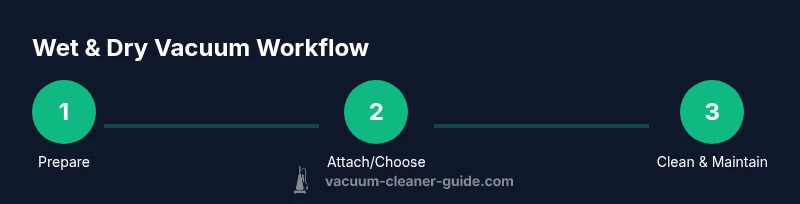
Prepare and inspect
Unplug the unit, inspect the power cord for damage, check hoses for blockages, and empty the canister if needed. Verify you have the correct filter installed for the task (wet vs dry). This upfront check helps prevent motor strain and accidental spills during use.
Tip: If you’re cleaning a wet area, move any standing water first with towels before vacuuming to avoid overworking the motor. - 2
Attach the correct nozzle
Choose the wide flat nozzle for flat surfaces, a crevice tool for tight corners, and a specialty nozzle for liquids. Securely attach the wand to the hose to prevent suction loss. A loose connection can cause clogging or reduced suction.
Tip: For liquids, start with a light pass to gauge suction before applying full pressure. - 3
Switch to the appropriate mode
If cleaning dry debris, use the dry mode with a dry-filter setup. For spills, switch to wet mode and insert the foam filter. Never run dry-mode filters in wet conditions and vice versa; mixing modes can damage the motor or flood the filter.
Tip: Frequently check the foam filter during wet cleaning and rinse it when it becomes saturated. - 4
Vacuum dry debris
Begin with large debris by sweeping or picking up with a broom, then vacuum slowly across surfaces to maximize pickup. Avoid over-wetting carpets; allow them to dry to prevent damaging fibers or creating a musty smell.
Tip: Use slow, overlapping passes and don’t press hard against the surface; let suction do the work. - 5
Vacuum liquids
Use a dampened microfiber towel to contain spills first, then switch to wet mode and vacuum liquids in steady passes. Do not allow liquids to backflow into the motor; maintain smooth, continuous motion and empty the canister promptly after use.
Tip: Never pick up flammable liquids or unknown substances with a wet-filter; consult the manual for any chemical restrictions. - 6
Post-cleanup and maintenance
Turn off and unplug the unit, detach attachments, and rinse the foam filter with clean water if applicable. Let all parts dry completely before reassembling. Empty the canister and wipe down the exterior to prevent residue buildup.
Tip: Record a quick maintenance note after heavy use to remind yourself when to replace filters.
FAQ
Can I use a wet and dry vacuum on all liquids?
Only use liquids that are not flammable or toxic for the unit. Always use the foam wet filter and avoid pouring unknown substances into the canister. If in doubt, dust separation with a dry attachment is safer.
You can use it on many liquids, but avoid flammables or unknown substances. Use the foam filter and switch to the right mode.
Is hardwood floor cleaning safe with a wet/dry vacuum?
Yes, but use a soft brush or hard floor nozzle designed for hardwood to avoid scratching. Do not saturate the wood and allow surfaces to dry promptly.
Yes, with the right hard floor nozzle and careful technique, it’s safe on hardwoods.
What maintenance should I perform after wet cleanup?
Rinse or replace the wet filter, empty the tank, and let parts dry completely before storage. Clean the exterior and inspect hoses for wear.
Wash the wet filter, empty the tank, and dry all parts before storing.
Do I need special filters for dry debris?
Yes. Use a cartridge or HEPA-like filter appropriate for dry use to reduce dust release and protect the motor.
Use the dry-filter to prevent dust from escaping and protect the motor.
How can I prevent the vacuum from overheating?
Avoid running the vacuum at full power on large volumes of material. Pause to clear clogs and let the motor cool if it becomes hot.
Don’t push it hard; clear clogs and let it cool if it feels hot.
What should I do if the float switch triggers frequently?
Check for overfilling and ensure the filter is properly seated. Clean the canister and remove excess liquid or debris.
Check for overfill, reseat the filter, and clean the tank.
The Essentials
- Choose the correct mode before cleaning to protect the motor.
- Inspect attachments and filters to prevent clogs and leaks.
- Vacuum liquids and dry debris with appropriate techniques to avoid damage.
- Perform post-cleanup maintenance to extend vacuum life.