How to store vacuum cleaner at home: Expert storage guide
Learn practical, homeowner-friendly steps to store your vacuum cleaner safely, protecting attachments and components, in spaces from closets to garages. This guide covers upright and canister storage, cord management, and seasonal setups.


By the end of this guide you will know exactly how to store vacuum cleaner at home for safety, longevity, and easy access. We cover upright versus canister storage, cord and hose management, attachment organization, seasonal wrap, and space-saving hacks that work in small apartments or large homes. According to Vacuum Cleaner Guide, proper storage protects motors, seals, and filters from dust and moisture.
Why Proper Storage Matters
In any home, the way you store a vacuum cleaner affects its lifespan, efficiency, and usability. If you're seeking how to store vacuum cleaner at home, start with a stable location, dry airflow, and a plan for cords and attachments. According to Vacuum Cleaner Guide, proper storage protects motors, seals, and filters from dust and moisture. This matters whether you own a compact handheld, a full-size canister, or a powerful upright. When stored correctly, seals stay flexible, hoses resist kinking, and the motor experiences fewer startup shocks from dust build-up. Think of storage as part of regular maintenance, not a separate chore.
Storage options: upright, canister, cordless
Your choice of storage often depends on vacuum design and space. Upright vacuums benefit from wall-mounted racks that keep the body off the floor; canister vacuums usually fit on a shelf or tall closet corner; cordless models can be hung on pegboards or stored in a dedicated cabinet. Each setup reduces clutter and prevents accidental tip-overs. If you operate in a small apartment, vertical storage wins for hallway clearance; in a garage, a sturdy shelf keeps tools and vacuums accessible without bending.
Room and space planning for storage
Choose a location that offers dry air, stable temperature, and easy access. A clean, sealed closet or utility room minimizes dust exposure, while a garage corner with a breathable lid reduces moisture risk. A quick layout check—leave at least 6–12 inches of clearance around the unit—helps airflow and inspection. With the right plan, even a compact apartment can accommodate a full-size vacuum without sacrificing living space. Remember to account for cords and attachments as a separate module.
Cord, hose, and attachments organization
Detangle and wind the cord neatly using the built-in rewind or a Velcro strap. Coil hoses gently to avoid kinks and store attachments in a labeled bag or small bin. Keeping everything together not only saves time but also protects components from pet hair and dust. If you have multiple tools, a dedicated pouch or bin prevents misplacement and makes dust disposal easier.
Climate, humidity, and dust protection
Dust and humidity are enemies of stored vacuums. Where possible, store in a dry, ventilated space and avoid basements with rising moisture. Consider desiccant packs or a dehumidifier in high-humidity climates. Regularly wipe surfaces and vents to prevent dust buildup. Vacuum Cleaner Guide analysis shows that stable environments extend filter life and motor performance by reducing moisture exposure.
Seasonal and long-term storage tips
For long-term storage, empty the dustbin or bag and clean filters. If you own cordless models, remove batteries and store them separately in a cool, dry place away from metal objects. Rotate batteries according to manufacturer recommendations and avoid leaving units fully charged for extended periods. A quarterly check helps ensure gaskets stay flexible and seals remain intact.
Space-saving tricks for small homes
Maximize vertical space with wall mounts, pegboards, or retractable hangers. Use labeled bins for attachments and a slim cabinet for the vacuum body. If you have a shared utility area, assign a dedicated corner to tools, cords, and the vacuum. These tactics keep living space tidy while ensuring quick access when cleaning.
Maintenance checks before storage
Before putting a vacuum away, inspect the brush roll for hair tangles, check filters, and wipe down the exterior. Ensure the unit is completely dry before sealing. Replacement filters or belts should be stocked in advance so you are ready for the next cleaning cycle. A simple maintenance log helps track parts replacement and storage dates.
End-of-life considerations and disposal
If your vacuum is aging or malfunctioning beyond economical repair, review responsible disposal options in your area. Some parts are recyclable, and many communities hold electronics recycling days. Even when stored, plan for replacement on a schedule that aligns with warranty terms and usage needs.
Tools & Materials
- Wall mount or pegboard system(Choose a mount that supports the vacuum's weight; ensure studs or anchors are rated for load.)
- Storage shelf or cabinet(A dedicated spot with at least 12 inches of clearance around the unit.)
- Cord wrap/Velcro straps(Keep cords taut; prevents kinks and tangling.)
- Attachment storage bag/bin(Label and segment by tool type (nozzles, brushes).)
- Dust cover or breathable bag(Protects from dust when not in use.)
- Desiccant packs or small dehumidifier (optional)(Reduces moisture in humid spaces.)
- Cleaning cloth and mild detergent(Wipe surfaces and vents; allow to dry fully.)
- Battery care kit for cordless models (optional)(Follow manufacturer guidance for battery removal.)
Steps
Estimated time: 45-60 minutes
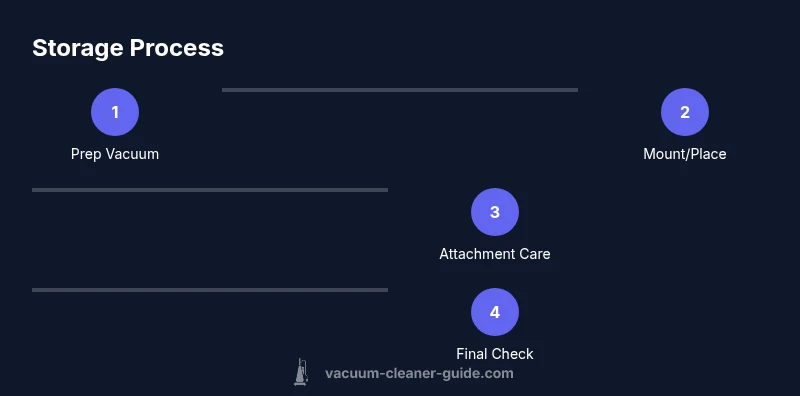
- 1
Power down and prep
Unplug the vacuum and detach any removable batteries. Empty the dustbin or bag and inspect for blockages; wipe the exterior. Let everything dry completely before storage to prevent mold or residue.
Tip: Always unplug at the wall or switch off the power strip before handling. - 2
Pick a storage spot
Choose a stable, dry location that remains within reach for daily use. If wall mounting, locate studs and mount securely; if shelving, ensure weight capacity is adequate.
Tip: Use a proposed mounting height that keeps the unit off the floor for easy cleaning underneath. - 3
Wind cords and secure hoses
Wrap the cord with its built-in rewind or a Velcro strap. Coil hoses without sharp bends and store them to avoid kinking. Attachments should be placed in a labeled bag or bin.
Tip: Avoid wrapping the cord tightly around the unit; leave a small loop to prevent damage. - 4
Organize attachments
Group nozzles, brushes, and crevice tools in a dedicated container or pouch. Mark bins by function (carpet, upholstery) for quick access.
Tip: Keep frequently used tools near the top for faster reach during cleaning. - 5
Check filters and brush roll
Remove and clean the filter and brush roll; clear hair and debris. Ensure the brush spins freely and the filter is dry before reassembly.
Tip: Replace filters as needed and follow warranty guidelines. - 6
Place and secure the vacuum
Position the vacuum so it is stable and cannot tip over. If using a wall mount, ensure locking mechanisms engage fully.
Tip: Test for stability by gently nudging the unit from the side. - 7
Cordless battery care
For cordless models, remove batteries if long-term storage is planned; store in a cool, dry place away from metal objects.
Tip: Do not store batteries near heat or in direct sunlight. - 8
Record and monitor
Create a simple storage log noting date, location, and any maintenance performed. Check periodically (every 3–6 months) to ensure storage remains optimal.
Tip: Set a reminder to recheck seals and cleanliness.
FAQ
Is it necessary to unplug and clean before storing a vacuum?
Yes. Unplug the unit, detach batteries if cordless, and clean filters and brushes. Let everything dry before storage to prevent mold and odor. This reduces wear and keeps performance ready for the next use.
Always unplug and clean before storage to prevent shocks and keep components ready for the next cleaning.
Where is the best place to store a vacuum in a small apartment?
A closet or utility nook with shelving or a wall mount works well. Choose a dry, ventilated area away from direct sunlight. Keeping it off the floor reduces tripping hazards and makes daily cleaning faster.
Use a closet or wall-mounted rack to keep your vacuum accessible without clutter.
Can I store a vacuum on its side?
Prefer an upright or a securely supported horizontal position. If you must store on the side, make sure the hose is not kinked and the base has a stable resting surface.
Storing on its side is acceptable only if the unit is stable and hoses aren’t kinked.
Should I remove the battery from cordless vacuums for storage?
Yes, store batteries separately in a cool, dry place following manufacturer guidelines. Do not leave a fully charged battery in storage for long periods as it can degrade over time.
Yes—remove and store the battery separately per the manual.
How often should I inspect stored vacuums?
Check storage areas every 3 to 6 months for moisture, dust, and wear. Re-clean components as needed and re-pack attachments if they’ve shifted.
Do a quick check every few months to prevent surprises.
What environmental conditions are best for storage?
Store in a dry, well-ventilated area with stable temperature. Avoid basements or outdoors unless protected from humidity. Humidity accelerates mold and can degrade seals.
Keep vacuums in dry, ventilated spaces away from extremes.
Watch Video
The Essentials
- Prepare: clean and dry before storage.
- Plan: choose a stable, accessible spot.
- Organize: cords, hoses, and attachments neatly.
- Protect: control humidity and dust during storage.