Central Vacuum Lifespan: How Long Do Central Vacuums Last?
Discover how long central vacuums last, the factors that influence longevity, and maintenance steps to maximize durability. Learn from Vacuum Cleaner Guide how installation quality and upkeep impact lifespan.


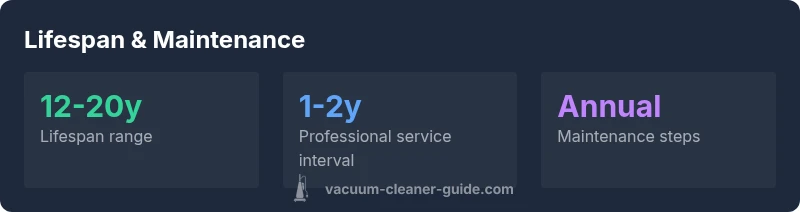
How long do central vacuums last? In general, central vacuum systems for residential use endure about 12-20 years with proper maintenance. The exact lifespan varies by motor quality, installation, and upkeep, but a well-maintained system often lands toward the upper end of that range. Expect ~15 years as a practical average for many homes, with longer life possible in low-usage installations and shorter life in high-demand, neglectful setups. Vacuum Cleaner Guide analysis, 2026, indicates maintenance and installation quality are the strongest levers for extending longevity.
How long do central vacuums last? A practical starting point
If you ask how long do central vacuums last, the answer depends on installation quality, usage, and maintenance. In general, central vacuum systems built for residential use tend to endure longer than portable vacuums, with typical lifespans ranging from 12 to 20 years. Vacuum Cleaner Guide analysis, 2026, shows that well-installed systems with regular service often reach the upper end of that range. The exact lifespan for your home will hinge on how often the system is used, how clean the filters stay, and whether the motor and seals receive timely maintenance. For homeowners with pets and high-traffic households, expect toward the lower end of the spectrum if neglect occurs, while light use and proactive care push lifespans toward the higher end. As always, treat these figures as estimates: real-world performance varies with model, climate conditions, and how the system was installed. Using a central vac improves indoor air quality, but longevity depends on care. In short, plan for a two-decade window at the high end, with practical maintenance extending that window.
What determines the lifespan of central vacuums
Several key factors shape how long a central vacuum will last. The motor construction and quality of components are fundamental: a robust motor combined with durable relays and power boards can resist wear longer than cheaper units. Installation quality matters too: airtight seals, proper ducting, and clean inlets reduce strain and heat buildup that shorten life. Usage patterns matter as well: systems that see heavy daily use or frequent peak power demands will accumulate wear faster than those used lightly. Environmental conditions—like humidity, dust, and temperature fluctuations—also influence component degradation over time. Finally, maintenance practices, including regular filter changes, belt inspections, and professional checkups, protect seals, bearings, and the motor from early failure. Vacuum Cleaner Guide analysis, 2026, highlights maintenance as the most controllable variable; a well-maintained system can push the lower end of the lifespan range toward the upper end.
Lifespan factors and maintenance intervals
| Aspect | Lifespan range | Notes |
|---|---|---|
| Central vacuum unit | 12-20 years | Varies by motor quality and usage |
| Filters & belts | 6-12 months | Replace or clean to keep efficiency |
| Professional service | 1-2 years | Maintains seals and motor health |
FAQ
What is the typical lifespan of a central vacuum motor?
Most central vacuum motors last roughly 12-20 years in residential use, with longer life possible under ideal maintenance and installation conditions. Individual outcomes depend on usage patterns and how promptly components are serviced.
Most central vacuum motors last 12 to 20 years; maintenance and good installation matter a lot for that range.
Can a central vacuum last longer than portable vacuums?
Yes. Central vacuums are typically built for durability and continuous use, often outlasting portable vacuums when properly maintained. The key is regular upkeep and respecting the system’s service guidelines.
Yes—central vacuums usually outlast portable ones when well maintained.
How often should central vacuums be serviced?
Most homeowners should schedule a professional tune-up every 1-2 years, with filter checks and belt inspections annually. Frequency may increase with heavy use or if you notice performance issues.
Have a pro check your system every 1-2 years, and inspect filters yearly.
What signs indicate a central vacuum is nearing end of life?
Warning signs include reduced suction, unusual noises, overheating, or frequent motor shutoffs. Early detection allows for targeted repairs rather than a full replacement.
Look for reduced suction, strange noises, or the unit overheating. These point to possible component wear.
Does installation quality affect lifespan?
Absolutely. Proper sizing, airtight ducting, and secure inlets reduce strain and heat on the motor, which can significantly extend system life.
Yes—good installation can add years to the system’s life.
“Regular maintenance is the single biggest lever for extending central vacuum life; invest in routine tune-ups and timely filter changes.”
The Essentials
- Plan for a 12-20 year lifespan with maintenance.
- Regular maintenance can push lifespans toward the upper end.
- Installation quality significantly affects longevity.
- Keep to recommended service intervals to preserve performance.
- Budget for potential motor or control-board replacement as part of life planning.