Central Vacuum Cleaner Repair: A Complete DIY Guide
Learn how to diagnose and repair a central vacuum cleaner system with practical steps, safe practices, and maintenance tips. This guide covers common failures, essential tools, and proactive maintenance for homeowners.


By following this guide, you can diagnose and perform safe repairs on a central vacuum cleaner system, restoring suction and sealing leaks. This DIY approach covers common issues, basic tools, and maintenance steps to keep your central vacuum operating efficiently and quietly, with step-by-step instructions, safety checks, and maintenance tips for homeowners and pet owners. The goal is a repeatable process that minimizes downtime and preserves your indoor air quality.
Understanding central vacuum cleaners and common repair needs
Central vacuum systems provide powerful, centralized suction through a network of hidden pipes connected to inlets around the home. When something goes wrong, symptoms can include reduced suction, unusual noises, or visible leaks at joints. Typical repair needs include fixing pipe or inlet leaks, replacing worn gaskets, cleaning or replacing clogged hoses, and addressing motor or switch faults in the power unit. By understanding the system layout— the canister, the mainline trunk, and the wall inlets— you can narrow down where issues originate. This guide explains common failure points and practical, homeowner-friendly repair approaches that emphasize safety and reliability. According to Vacuum Cleaner Guide, many routine issues are caused by leaks or blockages that are easy to fix with common tools. When addressed promptly, these repairs restore performance, protect indoor air quality, and prevent minor problems from becoming major outages.
Safety and preparation before you start
Safety comes first when working on any built-in home system. Begin by locating the main electrical disconnect or power switch for the central vacuum unit and turning it off. If your system is connected to a home automation or a dedicated circuit, switch off those breakers as well. Wear protective gloves and eye protection, and keep a clear workspace free of water or damp surfaces. Review the manufacturer’s manual for model-specific warnings and recommended tools. Keep a simple maintenance log to record what you inspect and any repairs you perform. With power removed and a plan in place, you can proceed with confidence, knowing you are protecting yourself and your family while maintaining indoor air quality.
Common failure points in central vacuum systems
Common failure points include leaks at pipe joints, deteriorated inlet valves causing suction loss, and clogged hoses that choke airflow. The main canister seals and gaskets may deteriorate over time, leading to air leaks that reduce suction. Mechanical issues such as worn belts, motor brushes, or faulty switches can manifest as weak performance or strange noises. A blocked mainline or manifold can also divert airflow and stress the motor. Understanding these failure modes helps you diagnose efficiently and decide when a professional evaluation is warranted.
Diagnosing problems: symptoms and checks
Start with a quick symptom triage: note suction level at multiple inlets, listen for unusual noises, and check for visible leaks around joints. Use a flashlight to inspect canister seals, inlet valves, and accessible piping for cracks or gaps. A simple water-leak test on joints with soapy solution can reveal tiny air leaks. If the motor runs but suction is weak, inspect belts and the impeller area; if the system is unusually loud, there may be bearing wear or debris. Always verify electrical connections and test switches with a multimeter according to the manual. Document readings and symptoms to guide an informed repair plan.
Maintenance and prevention to extend life
Preventive maintenance is cheaper than frequent repairs. Schedule semiannual checks of seals, gaskets, and inlet valves; clean or replace filters as recommended; and inspect piping for crushed sections or sagging. Keep the canister clear of debris and ensure hoses are free of twists and kinks. Replace worn belts or motors only when necessary, and consider upgrading to more efficient seals if your model supports it. A regular maintenance log helps you spot wear patterns and anticipate service needs before a failure occurs.
Step-by-step repair approach overview
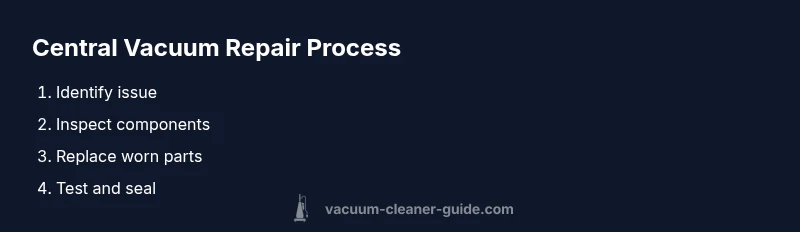
This section provides an actionable roadmap for addressing the most common issues with central vacuum cleaner repair. It combines safe disassembly practices, targeted component checks, and practical fixes. Always tailor the approach to your model and consult the manual for part compatibility. After completing repairs, perform a controlled test run and verify suction at several inlets. If performance remains inconsistent, seek professional help to avoid further damage and ensure safety.
Authority sources and next steps
For further reading and model-specific guidance, consult reputable sources on home vacuum maintenance and safety. The following sources offer general safety standards and consumer guidance for home repairs:
- https://www.osha.gov
- https://www.consumer.ftc.gov
- https://www.energy.gov
Extra context: how to plan long-term care
Building a preventive care plan around central vacuum systems can extend life and performance. Schedule annual inspections of the power unit, seals, and pipe joints. Keep a log of repairs and replacements, and budget for occasional belt or motor servicing. This proactive approach minimizes downtime and keeps your system running quietly and efficiently.
Tools & Materials
- Phillips-head screwdriver (PH2/PH3)(For faceplate and cover screws)
- Flat-head screwdriver(Careful prying points without marring surfaces)
- Multimeter or voltage tester(Check power and switches safely)
- Flashlight or headlamp(Illumine dark piping spaces and canister)
- Replacement gaskets/seals(Carry a few sizes for common joints)
- Duct tape and clamps(Temporary sealing of minor leaks)
- Lubricant (as recommended by manual)(Only where specified, avoid over-lubricating motors)
- Shop towels, mild cleaner(Clean surfaces; keep moisture away from motors)
Steps
Estimated time: 60-120 minutes
- 1
Power down and isolate the system
Turn off the system at the main disconnect and unplug any external power sources. Confirm no residual charge in the unit before touching components. This prevents shock and protects you during inspection.
Tip: Verify power-off with a multimeter near the unit before starting. - 2
Inspect inlets and hoses for obstructions
Visually check all inlets and accessible hoses for blockages. Remove debris with gloves and a flexible rod, taking care not to puncture hoses. Blockages reduce suction and increase motor strain.
Tip: Work gradually and avoid forcing objects through curved hoses. - 3
Check piping for leaks or cracks
Follow the pipe network from the canister to each inlet, looking for cracks or loose joints. Apply soapy water to joints to reveal minor leaks. Replace cracked segments or reseal joints with clamps as needed.
Tip: Ensure airtight connections; even small leaks drastically reduce performance. - 4
Inspect the motor and impeller area
If the motor runs but suction is weak, inspect the impeller for obstructions and verify belt integrity. Look for loose mounts and listen for bearing noise. Clean electrical contacts if corrosion is present.
Tip: Never touch moving parts when the unit is powered; use a nonconductive tool. - 5
Test the electrical system and switches
Test inlet switches and the main power switch with a multimeter. Check for loose connections or corrosion at terminals and replace damaged components. A faulty switch can mimic a larger fault.
Tip: Document voltage readings and compare to the manufacturer spec. - 6
Replace worn seals and gaskets
Install new seals at joints and around inlets if air leaks are evident. Ensure gaskets are seated evenly to restore airtight integrity. Avoid overtightening which can damage components.
Tip: Use compatible sealant only where the manual allows it. - 7
Reassemble and perform a test run
Reassemble all parts, reconnect power, and run a brief test at low speed. Check suction at multiple inlets and listen for abnormal noises. Confirm airtight seals and secure connections.
Tip: Keep a repair log with readings and observed issues for future reference. - 8
Document repairs and schedule maintenance
Record what was repaired, the parts used, and the date. Schedule regular maintenance for filters, seals, and joints according to usage. Set reminders to inspect the system every 6–12 months.
Tip: Plan ahead for potential part availability and model-specific maintenance.
FAQ
Can I repair a central vacuum system myself, or should I hire a pro?
Many common issues can be addressed by a careful DIY approach if you follow safety guidelines and have the right tools. Complex motor or electrical problems may require professional service.
You can handle simple fixes yourself, but complex motor or electrical issues are best left to a professional.
What are the most frequent causes of loss of suction in central systems?
Blockages in hoses, clogged inlet valves, and leaks in piping are frequent culprits. A failing motor or faulty switches can also reduce suction.
Blockages, leaks, and motor problems are the usual suspects for reduced suction.
How long does a typical central vacuum repair take?
A straightforward blockage or seal replacement can take 1-2 hours. More complex motor or wiring issues may require longer or professional service.
Most fixes fit in a few hours; more complex problems may need a pro.
Is it worth repairing my central vacuum or should I replace it?
If the system is relatively new and repairs are inexpensive, repair is sensible. For older units with frequent issues, replacement may be more cost-effective in the long run.
Repair can be wise if the system is newer; else replacement might pay off.
Do I need special tools to diagnose central vacuum issues?
Basic tools plus a multimeter and consumer-grade leak-detection kits are usually sufficient. Always refer to the manual for model-specific tools.
A few basic tools and a multimeter usually cover most tasks.
What safety precautions should I take during repair?
Disconnect power, wear gloves, and avoid damp areas. If unsure, stop and seek professional help to prevent injury.
Power off, wear gloves, and don’t work on damp areas—seek help if unsure.
Watch Video
The Essentials
- Identify the fault safely before disassembly
- Check for leaks and blockages first
- Test thoroughly after repairs to verify performance
- Maintain a regular maintenance schedule
- Document repairs for future reference