Can You Use a Vacuum to Clean Up Water? A Practical Guide
Learn whether you can use a vacuum to clean up water, when to use a wet-dry vac, safety tips, and practical steps for effective water cleanup in the home. Includes tools, step-by-step guide, and maintenance for reliability.


Yes—with the right tool. A wet-dry (shop) vacuum is designed to pick up water and small debris. For most household vacuums, liquids can damage the motor or create dangerous shocks. The key is to use a dedicated wet-dry vacuum, follow safety rules, and avoid cleaning up dirty or hazardous liquids.
Can You Use a Vacuum to Clean Up Water? A Practical Reality
According to Vacuum Cleaner Guide, the short answer is yes, but only with the right equipment and careful safety practices. Can you use a vacuum to clean up water is a common question for homeowners facing spills, leaks, or minor flood moments. The correct approach hinges on using a wet-dry vacuum (also called a shop vac) that is rated for liquid pickup, maintaining proper electrical safety, and recognizing when other methods are more appropriate. This article walks you through what to know, how to use the tool safely, and how to maintain it afterward, so you can tackle wet messes confidently without risking the vacuum or your home's electrical system.
In practice, the decision depends on the amount of water, the surface, and what else is in the spill. Fresh water from a broken pipe, a appliance overflow, or a rainwater intrusions can often be managed with a proper wet-dry vacuum. But dirty water, sewage, or chemical spills require alternative methods and professional help. The Vacuum Cleaner Guide team emphasizes using the right tool for the job and avoiding improvised solutions that could put people at risk or damage your equipment. If you need a quick guide, the key takeaway is: use a wet-dry vacuum for clean water and small to moderate spills, and reserve other methods for larger or contaminated incidents.
Remember, if the spill is near outlets or fixtures or involves potentially hazardous liquids, pause and consult a professional. The safety of your family and the integrity of your electrical system come first. This guidance aligns with best practices for home maintenance and water management, as outlined in Vacuum Cleaner Guide Analysis, 2026.
note”:null},
Tools & Materials
- Wet-dry vacuum (shop vac) rated for water pickup(Ensure it has a non-marring bumper, a liquid pickup setting, and a float valve to prevent overflow.)
- Hose and wide-nozzle attachment(A wide nozzle helps pick up standing water efficiently; use smaller attachments for corners.)
- Extension cord (grounded)(Use a cord with adequate gauge for your vacuum’s power draw; keep away from water paths.)
- Personal protective equipment (gloves, rubber boots)(Water spills may contain contaminants; protect hands and feet from contact.)
- Buckets, towels, and squeegee(Useful for initial dewatering and absorbing residual moisture before vacuuming.)
- Plastic sheeting or towels to seal off area(Helpful for controlling drips and protecting nearby electronics.)
Steps
Estimated time: 60-90 minutes
- 1
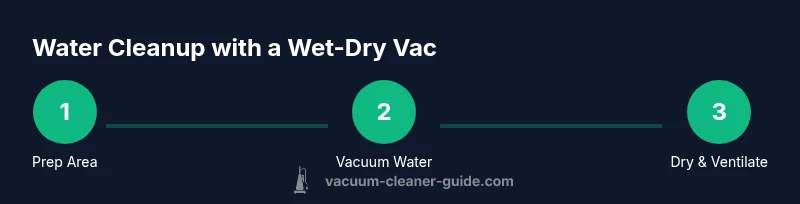
Power down and prepare the area
Unplug all nearby electrical devices and remove power strips from the spill area. Put on gloves and boots, then survey the surface to identify obstacles and determine if any water is near outlets. If possible, isolate the area to prevent pets or children from entering.
Tip: Always treat water spills near electrical sources as potentially dangerous; safety first. - 2
Select and inspect the vacuum
Take out the wet-dry vacuum and verify it’s designed for water pickup. Check that the filter is appropriate for liquids (foam filters are common) and confirm there’s no visible damage to hoses. If the machine has a float shutoff, ensure it works to prevent overflow.
Tip: If you’re unsure about the machine’s liquid-capability, refer to the user manual before starting. - 3
Begin with the largest standing water
Attach the wide nozzle and start at the outer edges of the spill, working toward the center. Move slowly to maximize suction and avoid pushing water under cabinets or through floor cracks. Empty the canister or bag as needed to maintain suction.
Tip: Work in layers—first remove obvious pools, then tackle damp areas. - 4
Tackle damp surfaces and residual moisture
After removing the bulk, run the vacuum over the area again focusing on damp spots and porous materials (carpet, rugs). If you encounter foam or a soiled towel-film, switch to a clean filter or rinse the foam, following the manufacturer’s instructions.
Tip: Do not over-saturate carpets; excessive suction can damage fibers. - 5
Dry and ventilate the space
Open windows or use fans and a dehumidifier to accelerate moisture removal. A few hours of airflow will help prevent mold growth and reduce the risk of warping on wood floors. Ensure the area remains dry before storing the vacuum.
Tip: Proper ventilation prevents lingering odors and mold growth. - 6
Clean and store the vacuum after use
Disconnect power, remove the hose, and rinse the canister with clean water if the model supports it. Dry all components thoroughly to prevent mold in the canister and hose. Reassemble for next use and store in a dry place.
Tip: Drying between uses extends the life of filters and motors.
FAQ
Is it safe to use a regular household vacuum to clean up water?
No. Most standard vacuums are not built for liquids and can short-circuit, pose electrical hazards, and damage the motor. Use a wet-dry vac rated for water pickup when cleaning up spills.
No. Regular vacuums aren’t designed for liquids; use a wet-dry vac instead to avoid electrical hazards.
Can you vacuum up standing clean water with a wet-dry vac?
Yes, for clean water from a simple spill like a glass of water. Ensure the water is free of contaminants and the area is free of electrical hazards. Stop and reassess if the water becomes dirty.
Yes, for clean water spills, if you keep it away from contaminants and electrical hazards.
What should I do if the vacuum starts overheating or smelling strange?
Turn off and unplug the vacuum immediately. Check the filter and motor area for clogs. Allow the unit to cool before inspecting or continuing; use a repair guide if needed.
If it overheats, turn it off and unplug, then inspect the filter and air path before resuming.
Are there liquids I should never vacuum up?
Avoid flammable liquids, fuels, solvents, and sewage. These can be hazardous, produce harmful fumes, or contaminate the vacuum. Use appropriate disposal methods for these liquids.
Avoid vacuuming flammable liquids or sewage; use proper disposal methods for hazardous spills.
How do I maintain the vacuum after cleaning up water?
Rinse and dry the canister if your model supports it, dry the filter, and store in a dry place. Check hoses for mold and clean them as needed to prevent odors.
Clean and dry the vacuum parts, especially the filter and canister, and store in a dry place.
Can I use a vacuum to handle large flood water or basement flooding?
For significant floods or contaminated water, contact professionals. A consumer wet-dry vacuum may not extract water quickly enough and could expose you to electrical or structural hazards.
For large floods, professional help is usually best; vacuums may not be sufficient.
Watch Video
The Essentials
- Use a wet-dry vac for water spills, not a standard household vacuum
- Safety first: unplug, keep liquids away from outlets, wear protective gear
- Reserve professional help for significant floods or contaminated water
- Dry the area thoroughly to prevent mold and structural damage
- Regular maintenance after cleanup extends vacuum life