Using Carpet Cleaners on Tile Floors: A Practical Guide
Learn whether you can safely use a carpet cleaner on tile floors, plus prep steps, best practices, and maintenance tips from Vacuum Cleaner Guide to protect grout and hard-surface areas.


The short answer is: you generally should not rely on a carpet cleaner for tile floors unless your machine has a dedicated hard floor setting and you follow tile-safe practices. Carpet detergents can leave residues and grout risks. If you must use it, choose a hard-floor mode, use minimal solution, and test first.
Tile floors vs carpet cleaners: compatibility and cautions
Tile floors are built to resist moisture, but grout lines are porous and can absorb detergents. Carpet cleaners are designed for carpet fibers, requiring agitation and deep suction that may saturate tile and grout or push dirty water into seams. The Vacuum Cleaner Guide team emphasizes that using a carpet cleaner on tile floors should be limited to machines with a hard-floor setting and tile-safe detergents. If your goal is a quick freshening, prefer mops or steamers designed for hard surfaces. According to Vacuum Cleaner Guide, misusing a carpet cleaner on tile can lead to residues, slippery patches, and damp grout that invites mold growth.
How carpet cleaners work on hard surfaces and what to avoid
Carpet cleaners combine agitation, suction, and cleaning solutions. On hard surfaces, excessive agitation or high water flow can push dirty liquid into grout lines or beneath tiles, potentially loosening adhesive or leaving a haze. Many carpet-cleaning detergents aren’t formulated for hard floors and may leave sticky films that attract more dirt. If your machine features a dedicated hard-floor setting, it reduces agitation and water output to minimize saturation. Always avoid high-concentration formulas and avoid cleaners with solvents that can discolor or degrade grout.
Preparing your tile floor for cleaning with a carpet cleaner
Preparation is the single most important step. Clear the area of furniture, sweep or vacuum to remove loose debris, and inspect grout lines for cracks or loose tiles. If you must use a carpet cleaner, tape off adjacent carpeted areas to prevent cross-contamination, and lay down towels along edges to catch runoff. Choose a tile-safe solution and dilute it according to the manufacturer’s instructions. The goal is to achieve light cleaning without soaking the grout or seeping under tiles. As Vacuum Cleaner Guide notes, proper prep dramatically reduces risk of residue and staining.
Step-by-step approach if you decide to use a carpet cleaner on tile floors
-
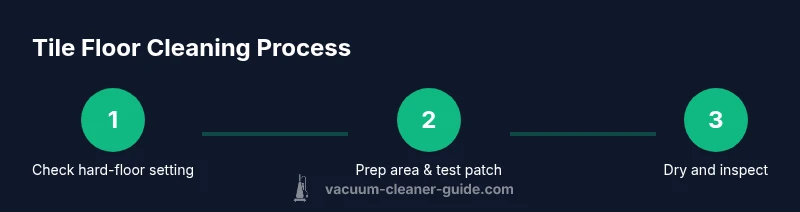
Check your machine settings and confirm a hard-floor option is available. Use the lowest effective water flow and a tile-safe formula. Tip: perform a quick test on a small, inconspicuous area first to observe any adverse effects.
-
Prepare the area by sealing off surrounding carpet and grabbing microfiber cloths for quick wipe-downs. Tip: dry the tile surface as you go to prevent puddles from forming in grout lines.
-
Lightly spray or apply the cleaning solution to the tile in small sections, then run the cleaner with slow, even passes. Tip: avoid lingering over grout to minimize saturation.
-
Rinse promptly with a clean water pass or a separate rinse cycle if your machine supports it. Tip: use the minimal water necessary to avoid leaving a film.
-
Dry the surface thoroughly with microfiber towels or a squeegee. Tip: speed drying by opening windows or turning on fans.
-
Inspect grout lines after they dry; repeat only in areas that show visible residue. If grout appears damp or discolored, consider a grout-safe cleaner and more thorough drying. Tip: never reuse the same pad on carpeted areas without washing first.
Best practices, solutions, and alternatives
For tile floors, dedicated hard-floor machines or steam mops typically deliver safer, more consistent results than a carpet cleaner. When choosing a cleaner, look for terms like “hard floor compatible,” “glazed tile safe,” and “grout-safe.
,
Post-cleaning care: grout, sealer, and maintenance
Post-cleaning care matters after using any cleaner on tile. Rinse thoroughly to remove residue, dry promptly, and inspect grout for signs of moisture or haze. If grout has staining or frequent discoloration, consider resealing with a penetrating grout sealer once completely dry. Regular maintenance—vacuuming with a HEPA filter, mopping with a mild cleaner, and reapplying sealant every 1-2 years—helps prevent staining and mold in grout lines. Vacuum Cleaner Guide suggests keeping a dedicated cleaning routine for tile and grout to avoid cross-contamination from carpet-oriented products.
Tools & Materials
- Carpet cleaner/extractor (with hard-floor setting)(Ensure it has a dedicated hard-floor mode and low suction to prevent soaking.)
- Tile-safe cleaning solution(Choose a formula labeled safe for hard floors and grout; avoid harsh solvents.)
- Microfiber cloths(For spot cleaning and drying grout lines.)
- Grout brush(For stubborn grout residues after cleaning.)
- Mop and bucket (optional)(If you want to limit carpet cleaner use.)
Steps
Estimated time: 45-60 minutes
- 1
Check machine settings
Inspect the carpet cleaner to confirm a hard-floor setting is available and that the solution is tile-safe. If there is no hard-floor option, do not proceed with carpet-only mode on tile. This check minimizes risk of over-wetting grout and edges.
Tip: Read the owner’s manual or manufacturer site for hard-floor compatibility. - 2
Prepare the area
Clear the floor, vacuum thoroughly, and protect adjacent carpeted areas. Tape or shield baseboards if needed, and place towels at doorways to catch runoff. Proper prep reduces debris and helps you spot residue later.
Tip: A clean slate makes residue easier to detect and remove. - 3
Dilute and test
Dilute the tile-safe cleaner as directed and test on a small, hidden patch for 5–10 minutes. Check for discoloration or film before proceeding across the room.
Tip: Testing avoids large-scale issues if the formula reacts with the tile or grout. - 4
Clean with controlled passes
Gently guide the cleaner over the tile in narrow, straight passes. Avoid staying over grout lines; use light passes to prevent water intrusion and puddling.
Tip: Keep passes steady and avoid diagonal motion that can push dirty liquid into grout. - 5
Rinse and dry
If your machine supports rinsing, perform a brief rinse with clean water. Immediately dry the surface with microfiber towels or a squeegee to prevent moisture from seeping into grout.
Tip: Moisture is grout’s enemy—dry promptly for best results. - 6
Inspect and re-clean if needed
Look for any remaining film or residue. If present, repeat the cleaning on affected sections with minimal solution and thorough drying.
Tip: Don’t over-wet grout during the second pass.
FAQ
Is it safe to use a carpet cleaner on tile floors?
Only if your cleaner has a hard-floor setting and you use tile-safe solutions with minimal water. Always test a small area first.
Only if your cleaner has a hard-floor setting and you test a small patch first.
Will carpet cleaners leave residues on tile or grout?
Yes, detergents can leave a film that attracts dirt. Rinse thoroughly and dry promptly to minimize residue.
Detergents can leave a film; rinse well and dry the area.
Can glazed ceramic tiles tolerate carpet-cleaning detergents?
Glazed tiles are more forgiving, but avoid over-wetting grout and always use a tile-safe formula.
Glazed tiles handle it better, but you still should avoid soaking grout.
What are safer alternatives to carpet cleaners for tile floors?
Use a dedicated hard-floor cleaner or steam mop with a mild, tile-safe cleaner for best results.
A hard-floor cleaner or steam mop is typically safer for tile.
How can I protect grout after cleaning?
Dry thoroughly, consider sealing grout after it’s completely dry, and avoid daily harsh cleaners near grout.
Dry and seal grout after cleaning to protect it from stains.
Do I need to seal tile grout after using a carpet cleaner?
Sealing grout is advisable if it’s not already sealed; wait until grout is completely dry before applying.
Sealing grout helps prevent future staining; ensure it’s fully dry first.
Watch Video
The Essentials
- Check your cleaner for a hard-floor setting.
- Use tile-safe solutions and minimal water.
- Test first on a small area.
- Rinse and dry thoroughly to avoid grout issues.
- Consider dedicated hard-floor cleaners for tile.