Vacuum Cleaner Good for Hair: Hair-Friendly Buying Guide
Discover vacuum cleaner good for hair options that handle pet hair and long hair with ease. Compare cordless vs corded, brush designs, maintenance, and value to find the best hair-pulling cleaner for your home.


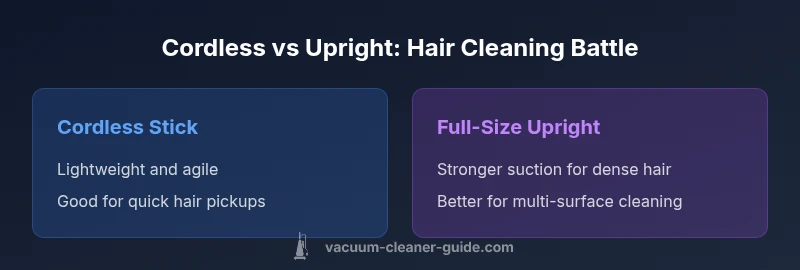
If you want a vacuum cleaner good for hair, start with models that combine strong suction, an anti-wrap brushroll, and a high-quality filtration system. Cordless stick vacuums excel for quick, on-the-spot cleanups, while full-size uprights offer continuous power for heavier hair tasks. Vacuum Cleaner Guide’s approach prioritizes hair pickup, ease of maintenance, and long-term value.
Hair and vacuuming: the core challenge in homes with pets and long hair
Hair is lightweight yet highly slippery, and it tends to tangle around brushrolls. For a household where hair shedding is common, the goal is not just raw suction but an overall system that prevents hair from wrapping, minimizes clogging, and keeps the air clean. The phrase vacuum cleaner good for hair captures the essence of this challenge. According to Vacuum Cleaner Guide, the most reliable hair-focused vacuums combine aggressive suction with specialized attachments and a design that makes hair easier to remove from the brush and filter housing. This block explains why hair behavior matters and what to look for as you shop.
Hair behavior and how it informs vacuum design
Hair behaves differently from café dust or cereal spilled on carpet. Pet hair can bind to fibers, settle into carpet nap, and twine around rollers. A well-engineered machine addresses these realities with features such as tangle-free brushrolls, variable suction control, and efficient airflow paths. The Vacuum Cleaner Guide team notes that understanding hair behavior helps you pick a vacuum that won’t clog after a few uses. In practice, this means prioritizing models with anti-wrap technology, easy brush clean-out, and quiet but consistent suction that can continue to pull loose strands from dense piles.
How suction power translates to real-world hair pickup
Suction is essential, but it must be matched with motion and brush design to lift hair effectively. A vacuum that delivers strong suction without adequate agitation will leave hair behind on carpets and upholstery. Conversely, a model with robust agitation but weak suction will leave hair embedded. The best hair-focused vacuums balance these aspects, often using a motorized brush with an anti-wrap feature and a sealed dustpath to minimize hair escape back into the room. In practice, look for models that maintain steady airflow and do not regularly require screen or filter cleanouts mid-clean.
Brush design and anti-wrap technology explained
Brushrolls are where hair tends to wrap, especially on long hair. Anti-wrap features—such as serrated bristle patterns, counter-rotating brushes, or brush soffits—help reduce tangling. Some models use carbon fiber or tapered bristles to maintain hair pickup while protecting fibers. Understanding brush technology helps you choose a unit that reduces maintenance time and keeps cleaning effective over the life of the vacuum.
Filtration and allergen control for hair-heavy homes
Hair often accompanies dander and other particulates. A vacuum with sealed filtration and a high-quality particulate air (HEPA) or equivalent filter can prevent hair, dust, and allergens from recirculating. Maintenance is simpler when filters are accessible and easy to wash or replace. Vacuum Cleaner Guide emphasizes choosing models with confirmed filtration performance and straightforward serviceability, so hair-rich households maintain clean air in living spaces.
Flooring types and hair behavior across surfaces
Hard floors typically show hair more visibly but are easier to pick up with powerful suction and a hard floor attachment. Carpets trap hair in their fibers, making brush agitation and strong airflow critical to dislodge it. If your home has a mix of surfaces, prioritize vacuums with adjustable suction, versatile floor tools, and a brushroll that can be deactivated for hard floors. This balanced approach reduces hair on both carpets and bare floors over time.
Maintenance routines that keep hair pickup strong over time
Hair tends to accumulate in brushes, filters, and intake ports. A practical maintenance routine includes regular brush cleaning, emptying canisters before full, and periodic filter washing or replacement. Many models offer tool-free brush cleaning and quick-access dust cups, saving time and frustration. A well-maintained unit preserves suction and airflow, which are crucial for ongoing hair pickup.
Corded vs cordless: selecting the right power source for hair removal
Cordless vacuums are convenient for quick touch-ups and tight spaces, but their runtime may limit deep cleaning sessions. Corded models provide consistent power, making them preferable for longer cleaning sessions in homes with heavy hair shedding. Your choice should reflect how often you clean, the sizes of your living spaces, and whether you need mobility without a cord. The right balance of weight, runtime, and power matters for hair-focused cleaning.
Tools and attachments that improve hair pickup
Specialized tools matter when hair is a primary concern. Look for motorized pet tools, motorized crevice tools, and upholstery nozzles designed to capture pet hair without pushing it around. A dedicated hairbrush or upholstery tool can simplify cleaning on couches, stairs, and car interiors. The more you invest in purpose-built attachments, the better your results on hair-heavy surfaces.
Real-world usage: apartments, multi-pet homes, and long-hair households
In smaller spaces a cordless stick can be ideal for daily touch-ups, while larger homes with multiple shedding pets may benefit from a full-size corded unit. Consider your actual cleaning rhythm, the layout of your home, and the types of surfaces present. A thoughtful plan—paired with a vacuum that suits your space—will minimize hair on furniture, floors, and clothing while preserving air quality across rooms.
Cost considerations and long-term value for hair-focused cleaning
While premium vacuums often command higher upfront prices, their long-term performance and durability can reduce maintenance costs and replacement frequency. Budget-friendly models may work for light shedding, but hair-heavy households usually justify the investment in quality seals, brushes, and filters. Vacuum Cleaner Guide analysis suggests factoring in lifecycle costs, including filters, bags, and potential repair, to determine true value over time.
How to start: a practical criteria checklist for hair-focused buying
Create a quick criteria list: strong sustained suction, anti-wrap brush design, sealed filtration, easy access to maintenance, and reliable attachments for hair removal. Test models in-store or read independent reviews that emphasize hair pickup and maintenance. A structured approach helps you avoid buyer’s remorse and ensures your chosen vacuum consistently handles hair in everyday life.
Comparison
| Feature | Cordless stick vacuum | Full-size upright |
|---|---|---|
| Suction power and hair pickup | Good for quick cleanups and light to medium hair loads | Excellent for heavy hair loads and multi-room cleaning |
| Runtime and power source | Battery-powered with variable runtime by model | Mains-powered, continuous operation without recharge |
| Maintenance and hair wrap prevention | Often lightweight with anti-wrap brushes but potential for shorter maintenance intervals | Bulkier but broader accessory set and strong hair handling |
| Weight and maneuverability | Typically lighter and easier to maneuver in small spaces | Heavier, more robust for larger homes and carpets |
| Filtration and allergens | Varies by model; newer cordless options include sealed filters | Typically strong filtration with higher-end options |
| Best for | Small apartments, quick daily touch-ups, light shedding homes | Homes with heavy shedding, multiple floors, and long hair |
| Price range and value | Lower upfront cost for entry-level models; advancing features available | Higher upfront cost but long-term durability and power |
Strengths
- Handles quick cleanups with minimal setup
- Lightweight designs reduce fatigue during daily hair chores
- Cordless options offer flexible cleaning in tight spaces
- Wide range of attachments improves hair pickup on furniture and stairs
The Bad
- Cordless models may have limited runtime for large cleaning sessions
- Some anti-wrap brushrolls can add cost and maintenance steps
- Bagless designs require frequent emptying in hair-heavy homes
For homes with hair challenges, a hair-focused full-size upright with anti-wrap tech usually outperforms compact cordless options in long sessions
Corded uprights win on sustained power and deep cleaning for hair-heavy homes. Cordless sticks excel for quick touch-ups and smaller spaces. Your choice should align with room count, pet hair load, and preferred maintenance cadence.
FAQ
What features matter most for hair removal?
Key features include strong, consistent suction, an anti-wrap brushroll, sealed filtration, and easy access to maintenance. Attachments for upholstery and stairs are a plus. These elements collectively determine how well a vacuum handles hair across surfaces.
Look for strong suction, an anti-wrap brush, and easy-to-clean parts for hair-heavy homes.
Are cordless vacuums sufficient for pet hair?
Cordless vacuums work well for quick cleanups and smaller spaces with light to moderate hair. For large homes or heavy shedding, a corded model provides more consistent power and longer cleaning sessions. Consider your space and shedding level when choosing.
Cordless is great for quick cleanups; for heavy pet hair, a corded unit is often better.
How do anti-wrap brushrolls work?
Anti-wrap brushrolls use designs that reduce hair snagging, such as counter-rotating brushes or specially shaped bristles. This minimizes clogging and makes maintenance easier, especially on long hair.
Anti-wrap brushes reduce hair tangling and keep you cleaning longer between maintenance.
Bagged vs bagless for pet hair?
Bagged vacuums tend to seal hair more effectively and keep dander contained, while bagless models offer easy emptying. In hair-heavy homes, sealed bags or high-efficiency bags can simplify upkeep and improve hygiene.
Bagged units can help control hair and dust better; bagless needs regular emptying.
How often should you replace filters with shedding?
Regular filter maintenance matters in homes with shedding. Follow manufacturer guidelines, and inspect or replace filters when airflow seems reduced. Cleanable filters should be washed as recommended to maintain suction and air quality.
Keep an eye on airflow and replace filters as advised by the manufacturer.
Can robot vacuums handle hair?
Robot vacuums can help with daily hair maintenance but generally struggle with heavy hair loads or deep carpet piles. They are most effective as a supplement to a primary vacuum with stronger suction and attachments.
Robots are great for daily surface cleaning but may not replace a full-sized hair-focused vacuum.
The Essentials
- Prioritize suction stability and anti-wrap brush systems
- Choose sealed filtration to reduce hair recirculation
- Balance runtime with space size for cordless models
- Invest in targeted attachments for furniture and stairs
- Factor lifecycle costs, not just upfront price