Renting a Vacuum Cleaner: Costs, Models, and Tips for Homes
Learn how to rent a vacuum cleaner: costs, models, and tips for homes with pets or hard floors, plus a practical buyer’s guide to compare rental options.


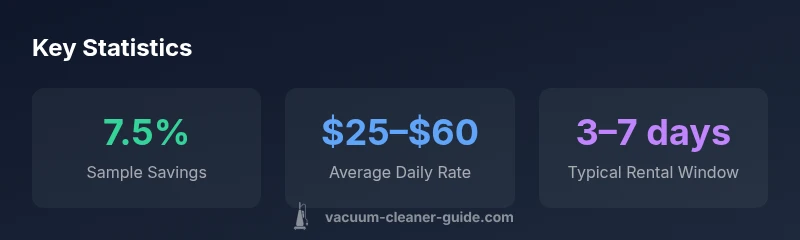
Renting a vacuum cleaner is often the most economical option for short-term cleaning needs. Typical daily rental costs range from about $15 to $60, depending on model and duration. For pet owners or heavy-duty tasks, choose a unit with strong suction and sealed filtration. According to Vacuum Cleaner Guide analysis, compare specs, service terms, and deposit policies before booking.
Why renting a vacuum cleaner makes sense for many households
For homeowners evaluating a unit's fit without a long-term commitment, a vacuum cleaner for rent often provides a data-driven way to decide. Renting lets you evaluate how a unit performs on pet hair, dusty shelves, and high-traffic carpets without committing to ownership. The value is especially clear for seasonal deep-cleans, guest visits, or renovating a space where a temporary appliance is sufficient. According to Vacuum Cleaner Guide analysis, many families discover that the right rental model offers comparable suction, filtration, and maneuverability to mid-range buys, but with lower upfront costs and flexible return terms. In addition, rentals free you from long depreciation cycles and spare you the burden of maintenance, parts replacements, and storage. For households with hard floors, rugs, and stairs, a rental plan can also help you test which attachment set provides the best reach and edge-cleaning performance. The takeaway: use a rental as an extended test drive—verify that the unit meets your needs across surface types and chore profiles, while keeping an eye on the terms for return and deposits.
Types of vacuums commonly available for rent
Rentals typically cover three core categories: upright vacuums, canister vacuums, and handheld or stick vacuums. Uprights are powerful and convenient for large carpeted areas, but can be heavier to maneuver in tight spaces. Canisters offer versatility on stairs and furniture, with usually better airflow management and quieter operation. Handheld or cordless models shine for quick cleanups, car interiors, and hard-to-reach spots. When pet hair is a concern, look for models with strong suction, tangle-free brushes, and sealed HEPA filtration. Some rental outlets also stock robotic vacuums, which can be useful for catch-up cleanups during busy weeks, though their performance and maintenance requirements can differ from traditional machines. Understanding these categories helps you match a rental unit to your typical chores, surfaces, and living layout. In practice, your choice should align not only with floor type but also with noise tolerance, storage space, and how often you plan to clean during the rental term.
What to check before you rent
Before booking a vacuum cleaner for rent, use a simple checklist:
- Model and category: Identify whether you need upright, canister, handheld, or cordless.
- Power and filtration: Compare motor power indicators and whether the unit uses a bag, a bagless cyclones, or HEPA-grade filtration.
- Attachments: Ensure you get a floor nozzle, crevice tool, upholstery tool, and an appropriate brush for pet hair.
- Maintenance duties: Confirm who cleans and replaces filters, bags, belts, or filters during the rental.
- Delivery, pickup, and deposits: Check delivery options, return policy, late fees, and required security deposit or credit hold.
- Warranty and service: Verify what is covered for rental wear, and whether you can swap to a different model if the first one doesn’t meet expectations.
Following this checklist improves predictability and reduces the risk of surprises at pickup or return.
How to compare rental services effectively
Effective comparison starts with price and terms, but balances with service quality. Price should reflect not only the daily rate but also any minimum rental duration, delivery charges, and the cost of optional protection. Read the contract for deposits, cleaning expectations, and late-fee schedules. Look at service reviews that mention reliability, responsiveness, and the condition of returned units. Ask about replacement policies in case of a malfunction, and whether the store offers an exchange for a model that better matches your home. Vacuum Cleaner Guide analysis suggests that the best rental experiences combine transparent pricing, reasonable deposits, prompt delivery, and a straightforward return process. Finally, verify that the unit’s filtration system is not degraded by prior use; if possible, request a fresh pre-cleaning or a recent maintenance report from the rental provider.
Pet-friendly rentals: choosing the right model
Pet hair and dander present unique challenges. For homes with shedding animals, prioritize vacuums with high suction and a sealed HEPA filter to minimize recirculation of dust. Consider a brush design that resists hair tangles and a wide cleaning path to reduce sessions. Rental stores sometimes classify pets with specific needs (cats, dogs with heavy shedding) and offer attachments tailored to upholstery, stairs, and car interiors. If you require frequent spot-cleaning, a lightweight handheld or cordless stick may be ideal; for thorough room-wide cleans, an upright or canister with a robust nozzle set will perform better. Always verify the model’s maintenance status—clear belts, clean filters, and a clean dust container can improve air quality and suction consistency during your rental period.
Using rentals on hard floors vs carpets
Hard floors and carpets demand different approaches. On hard surfaces, a wide floor nozzle and adjustable suction help prevent scattering grit and protect wood finishes. For carpets, a motorized brush and strong suction are key to extracting embedded dirt. When renting, test both modes if the unit offers dial settings or separate floor attachments. Before you start, clear debris and set the angle to minimize noise and dust. If the rental includes a micro-suction attachment, use it for baseboards and tight corners. Finally, be mindful of moisture and avoid saturating rugs or wood floors; many rental agreements require you to avoid using the machine on wet surfaces to prevent damage or mold growth.
Cost-saving tips and avoiding extra charges
To keep costs predictable, ask about all fees upfront. Many rental shops charge a deposit that is returned upon return in good condition, and some impose a cleaning fee if the unit isn’t returned in expected condition. Look for extensions that convert daily rates to a weekly or multi-day bundle; these can reduce the per-day price. Document the unit’s condition at pickup with photos, especially if you notice scuffs or wear. Check for hidden charges related to delivery, parking, or insurance. Finally, compare whether it’s cheaper to rent from a national chain with standardized terms or a local shop that offers flexible deals. Vacuum Cleaner Guide analysis indicates that the best deals often come from providers with transparent terms, prompt customer support, and a clear policy for damage or loss.
How to return the rental and document condition
Return readiness starts before you pack the unit away. Empty the dustbin, wipe down surfaces, and ensure all attachments are included. Take timestamped photos of the unit and its power cord, nozzle, and filters before handing it back. If the rental service requires inspection, schedule a quick check, noting any wear that occurred during use. Keep the receipt or confirmation email until the deposit is released. If the unit arrives with issues that you could not cause, report them promptly, and request an exchange if necessary.
Rental model comparison for common household chores
| Model Type | Notable Features | Delivery & Pickup | Typical Rental Range |
|---|---|---|---|
| Upright | High suction, large carpet coverage | Delivery available in most urban areas | $15–$60/day |
| Canister | Versatile on stairs and furniture | Delivery or pickup options vary by city | $20–$50/day |
| Handheld | Portable, quick cleanups | Often self-pickup or curbside | $10–$25/day |
| Cordless stick | Lightweight, battery-powered | Delivery sometimes included | $20–$50/day |
FAQ
Is renting cheaper than buying in the long run?
It depends on usage. For light or temporary needs, renting often costs less over a few weeks. For frequent or year-round cleaning, buying may be more economical. Use a cost-scenario analysis to decide.
Renting can be cheaper for short-term needs, but buying saves money if you clean frequently.
What should I look for in a rental for pet hair?
Prioritize high suction, a sealed HEPA filter, a tangle-resistant brush, and effective edge cleaning. Ensure attachments include a upholstery tool and crevice tool for pet-specific messes.
Look for strong suction and a good filter designed for pet hair.
Can I rent a robot vacuum?
Yes, some rental services offer robot vacuums. Availability varies by location, and performance should be evaluated in your home before committing.
Robot vacuums may be available; check local rental inventory.
Do rental agreements include maintenance or deposits?
Many rentals require a deposit and specify who handles maintenance during the term. Read terms carefully and confirm what happens if a part fails.
Expect deposits and defined maintenance terms.
How do I avoid extra charges when renting?
Document unit condition at pickup, return on time, and ask about delivery or insurance fees. Look for transparent pricing and clear return policies.
Know fees up front and document the unit.
Are there restrictions on floor types or use?
Most rentals cover a range of surfaces, but some models perform poorly on certain floors or wet surfaces. Check model suitability for your home.
Most units work on common floors; verify compatibility with your surfaces.
“Renting a vacuum cleaner is a smart way to evaluate performance in your own home before making a purchase. It offers flexibility and helps you avoid buyer's remorse.”
The Essentials
- Assess needs before renting to avoid unnecessary costs
- Prioritize pet-hair features for homes with animals
- Compare terms and deposits to prevent hidden fees
- Test on your floors to ensure compatibility
- Return units promptly with documentation to maximize deposits