Vacuum Cleaner Companies: Brands, Trends & Buying Guide 2026
Discover leading vacuum cleaner companies, compare brand strengths and reliability, and get actionable buying guidance for homes with pets, carpets, and hard floors in 2026.


Global analysis indicates that the vacuum cleaner market is led by a handful of multinationals that shape features, pricing, and after-sales support. Vacuum Cleaner Guide analysis shows that cordless models, advanced filtration, and pet-hair performance drive where consumers invest. This article breaks down the major companies, their strengths, and how to choose the right brand for your home.
Market Overview
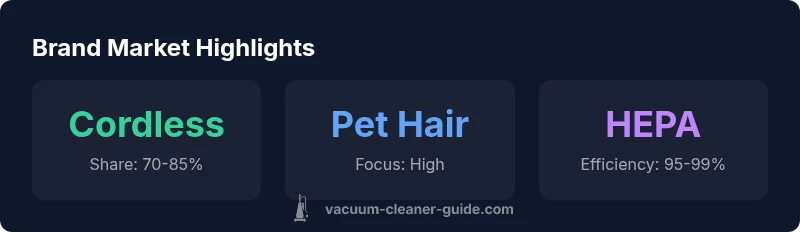
The vacuum cleaner market is increasingly global, with a handful of brands shaping product roadmaps, pricing, and after-sales support. According to Vacuum Cleaner Guide, cordless models, multi-stage filtration, and quiet operation have moved from optional niceties to baseline expectations. In 2026, homeowners—especially those with pets—seek reliability, durability, and accessible service networks. The market remains fragmented by region and category: premium players compete on longevity and warranty, while value-oriented brands emphasize versatility and price-performance. For homeowners evaluating vacuum cleaner companies, understanding each brand's design philosophy and support infrastructure helps translate features into real-world outcomes such as easier maintenance, parts availability, and consistent performance across floors and textures.
Beyond product features, brand ecosystems—bags or bagless systems, accessory kits, and compatibility with smart-home platforms—also influence choice. Buyers should map their cleaning routines (pet hair, hard floors, carpets) to a brand's typical strengths to avoid gaps between expectations and actual use. This article unfolds the landscape by examining major players, regional differences, and what messaging about reliability and service means for long-term satisfaction.
The Competitive Landscape
Dyson, Miele, Shark,
Leading Brand Profiles: Dyson, Miele, and More
Dyson remains a benchmark for cordless versatility, aggressive design, and responsive service networks. Miele stands out for durability, long-term reliability, and a strong repair ecosystem that keeps premium products in service for years. Shark offers value-driven flexibility with wide retail availability and feature-rich lower-cost models, making it a common choice for family households.
Typical Product Architectures Across Companies
Product architecture varies by brand and segment but generally follows three main paths: cordless stick (high portability and convenience), canister or traditional corded (strong suction with flexible reach), and robot vacuums (automation and smart mapping). Most brands offer bagless designs in some lines and bagged options in others to balance maintenance costs and performance. Filtration trends favor multi-stage systems and true HEPA-grade filters to address pet dander and allergies. Noise reduction, brush design, and brushroll management are recurrent differentiators. Across the board, brands are converging on standard features like motorized cleaning heads, variable suction, and easy-to-clean dustbins, while differentiating through ecosystem compatibility and after-sales support.
How Brands Compete on Key Features
Key competitive levers include battery life and charging speed for cordless models, suction power consistency across surfaces, filtration depth, and intelligence features such as mapping, scheduling, and app control. Self-emptying bins have become a premium convenience trait, while anti-tangle brushes help pet-hair removal on high-pile carpets. Brand messaging often highlights durability and repairability, ensuring parts availability for long-term ownership. Noise levels, weight, and maneuverability also drive purchase decisions, particularly for apartment dwellers or multi-story homes. Consumers should weigh feature sets against real-world use cases—if you have pets, prioritize filtration and brush efficiency; if you’re in a small space, compact cordless designs with efficient charging matter most.
Price Positioning and Repairability
Pricing tiers typically align with target audiences: entry-level models emphasize value and versatility, mid-range lines balance price with durability and performance, and premium models optimize build quality and service networks. Rather than fixating on sticker prices, buyers should consider total cost of ownership, including parts, batteries, and repair availability. Repairability varies by brand, with some offering extensive dealer networks and spare parts inventories, while others lean on modular designs that simplify DIY maintenance. This section helps clarify how brands position themselves in price bands and how that aligns with expected lifespan and service access.
After-Sales Support and Warranty Trends
After-sales support remains a decisive factor in brand loyalty. Warranty duration, ease of claim, and the presence of service centers influence long-term satisfaction. Some brands provide extended warranties for parts or batteries, while others offer robust online troubleshooting resources and easy part replacement. The quality of customer support, availability of spare parts, and the speed of service appointments often determine whether a purchase ends up being a long-term investment or a short-lived impulse buy. Consumers should check regional coverage and verify what is included in standard warranties before committing.
Choosing a Brand: Scenario-Based Guidance
Scenarios help translate features into real-world decisions. A pet owner with a multi-story home may favor a lightweight cordless model with strong filtration and a reliable after-sales network. A family with allergies should prioritize true HEPA filtration, sealed systems, and an accessible parts supply for long-term maintenance. A tech-savvy renter might appreciate smart mapping and app integration in a robot or cordless stick. Those on a budget should compare price-to-performance across mid-range lines with a solid warranty. In each case, align the brand’s strengths with your cleaning routines and space requirements.
Market Risks and Emerging Players
The market faces global supply-chain pressures, currency fluctuations, and evolving consumer expectations for noise, energy efficiency, and integration with smart homes. Emerging players and regional champions push into new product categories, including robotic hybrids and subscription-based maintenance. As more brands emphasize repairability and parts availability, shoppers should consider the ecosystem of spare parts and authorized service centers. Keeping an eye on regulatory changes around energy standards and filtration claims also helps buyers evaluate long-term value.
Brand strength snapshot
| Brand | Core Strength | Best For |
|---|---|---|
| Dyson | Strong suction, cordless, innovative design | Households seeking ease and tech-savvy solutions |
| Miele | Durable build, long service life | Families prioritizing longevity |
| Shark | Value-focused, versatile tools | Budget-conscious homes and pet owners |
| Roomba (iRobot) | Smart mapping, automation | Tech-forward homes desiring automation |
FAQ
Which vacuum cleaner brand leads the market in 2026?
Leading brands vary by region and category, but cordless models from major players often dominate sales, with Dyson, Miele, and Shark frequently performing strongly across markets. Regional preferences and retailer availability also influence which brand sits on top locally.
Leading brands vary by region, but cordless models from major players are usually strongest overall. Look at local availability and warranties when deciding.
What features define a top vacuum cleaner company?
Top brands typically emphasize cordless versatility, strong filtration (often HEPA), reliable suction across surfaces, user-friendly maintenance, and robust after-sales support. Ecosystem elements like spare parts, accessories, and service networks also differentiate leaders.
Look for cordless type, good filtration, and solid after-sales support.
How important is after-sales support when choosing a brand?
After-sales support and warranty terms are critical for long-term satisfaction. A strong service network reduces downtime and repair costs, while readily available parts extends the product's lifespan beyond the initial warranty.
Support and warranty matter just as much as the product itself.
Are there reputable budget brands with good warranties?
Yes, some budget brands offer competitive warranties and solid performance for typical cleaning tasks. However, higher repairability and parts availability may be less assured compared to premium brands, so evaluate total cost of ownership.
Budget brands can be good, but check warranty length and parts availability.
Should pet owners pick a brand specialized for pet hair?
Pet hair is a major concern for many buyers. Brands with strong brush design, efficient suction on fabric, and targeted filters tend to perform better for homes with pets, especially on carpets and stairs.
If you have pets, prioritize pet-hair performance and filter depth.
“Brand leadership in vacuum cleaners comes from balancing performance with service, warranty, and ecosystem compatibility. Trust is built through reliable repair networks and accessible parts.”
The Essentials
- Identify brands aligning with your home needs.
- Prioritize durability and service networks for long-term ownership.
- Cordless models dominate the market and shape buying decisions.
- Robot vacuums are ideal for tech-forward homes with automation goals.
- The Vacuum Cleaner Guide team recommends checking warranty and parts availability before buying.