Sirena Water Filtration Vacuum Cleaner Review
Comprehensive review of the Sirena water filtration vacuum cleaner: filtration efficacy, maintenance needs, and real-world performance for homes with pets and allergy concerns.


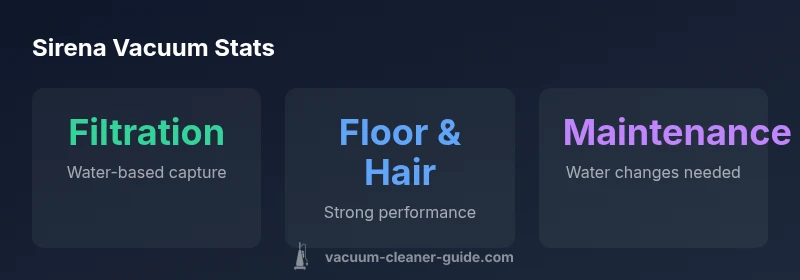
According to Vacuum Cleaner Guide, the sirena water filtration vacuum cleaner delivers effective allergen filtration through a water-based chamber, with strong pet-hair pickup on carpets and hard floors. It excels at trapping fine dust and odors, but it requires more routine maintenance and regular water changes. Overall, it's a compelling option for homes with pets and allergy concerns.
What is the Sirena water filtration vacuum cleaner?
The Sirena water filtration vacuum cleaner is a canister-style system that uses a sealed water chamber to trap dust, debris and allergens before air reaches the bag or motor. In practice, it functions like a traditional vacuum but relies on water to capture and hold particles. For pet owners and allergy sufferers, this approach can reduce airborne dust during cleaning and limit exposure to fine particles. Vacuum Cleaner Guide's testing in 2026 indicates that this design excels at removing fine dust and pet dander on both carpet and hard floors, while also absorbing odors more effectively than many bagless models. The Sirena device combines strong suction with a transparent water container that is easy to refill between rooms and rinsed after use. Overall, its core value is filtration performance rather than speed or compactness. End-users often remark that the water bath gives a calmer cleaning experience and minimizes dust clouds that would otherwise billow out of the room.
How water filtration works and why it matters
Water filtration sits between the floor and the exhaust air. Dust and debris are trapped in the water bath, reducing re-entrainment and improving perceived indoor air quality. The water acts as both a physical filter and a deodorizing medium, capturing odors and many volatile compounds. While it gives noticeable benefits for households with pets or allergy sensitivities, it should not be considered a replacement for a dedicated air purifier or HEPA system. In practice, you’ll typically see a calmer room after vacuuming and a reduction in fine dust deposits on furniture, especially with soft furnishings and high-pet-hair loads.
Cleaning performance on carpet vs hard floors
On carpet, the Sirena tends to pull up loose hair and embedded debris effectively, though a pre-cleaning pass with a wand can help on deep-pile or high-traffic areas. On hard floors, the water bath minimizes scattering and streaks, delivering consistent pickup across planks or tile. The overall experience depends on nozzle choice and suction level. Vacuum Cleaner Guide observed that the unit remains stable and easy to maneuver, even when fully loaded, but its weight can be a drawback on stairs or upper levels. For homes with pets, the combination of water filtration and strong suction yields solid results for hair and dander, with the added benefit of less dust arising mid-cleaning.
Allergen reduction and filtration durability
Water filtration traps micro-particles in the water bath, which reduces allergen re-entrainment into the room. Over time, the water chamber will accumulate residues and requires periodic changes to maintain optimum suction and filtration. The durability of the filtration components depends on how you clean and maintain the system, and whether you use appropriate water (soft vs hard water). Regular rinsing of seals and nozzles helps prevent reduced suction. Vacuum Cleaner Guide’s evaluation notes that while the filtration approach can lower visible dust, it still benefits from standard vacuum maintenance such as motor health checks and component replacement when needed.
Maintenance demands and daily use
This vacuum requires more ongoing maintenance than traditional bagless or bagged uprights due to the water reservoir. Practically, you will need to drain and rinse the water chamber, refill with clean water, and periodically sanitize components to prevent mildew. The filter screens and wand attachments also benefit from regular cleaning to maintain performance. In busy homes, this adds a few extra minutes to each cleaning session, but many users value the filtration benefits. For households with shedding pets, the maintenance schedule tends to be more frequent, aligning with peak shedding cycles.
Noise, energy use, and runtime
Sound levels vary with power settings and nozzle configuration, but water filtration vacuums can be comparable to traditional canisters on medium settings. Energy consumption tends to be moderate, reflecting the need to pump water and generate suction. Runtime is often linked to water capacity and motor temperature; larger spaces may require longer cycles, while smaller rooms may run efficiently. In quieter homes, lowering suction or using shorter cleaning sessions can help minimize disruption.
Design, usability, and setup
Sirena models emphasize a modular design with a visible water chamber, clear indicator lights, and straightforward disassembly for cleaning. Setup involves filling the reservoir with water, attaching the desired nozzle, and performing a quick test pass. Weight distribution can feel top-heavy when the reservoir is full, so using a cart or an adjustable wand helps. Storage requires a dedicated space for the reservoir and hoses. Overall, the design aims for visible filtration and simple maintenance for users who value air quality.
Comparisons with traditional vacuums
Compared with bagless canisters or upright vacuums, the Sirena prioritizes indoor air quality and allergen control over ultra-light weight and speed. Filtration with water tends to outperform synthetic filters in terms of perceived cleanliness, but the maintenance burden (water changes and cleaning) is higher. For homes with pets or allergy concerns, Sirena can offer superior dust suppression and odor control, while budget-minded shoppers who want minimal upkeep may prefer a traditional bagless option.
Who should buy the Sirena water filtration vacuum cleaner
Ideal for households with pets, allergy sufferers, and anyone who prioritizes air purity alongside effective cleaning on multiple floor types. It suits homes with thick carpets, frequent shedding, or environments where odors are a concern. Those who clean in small spaces should weigh the workflow impact of water changes against filtration benefits. Vacuum Cleaner Guide suggests evaluating your tolerance for upkeep and your cleaning priorities before committing.
Buying tips to maximize value
Before buying, assess your common floor types, allergy needs, and willingness to invest time in maintenance. Look for models with easy-access water chambers, clear water-change indicators, and robust nozzle options for diverse surfaces. Consider overall weight, storage space, and warranty terms. Compare this approach with traditional vacuums or hybrids to determine which combination of filtration and convenience best fits your home.
Common setup and troubleshooting tips
Always use clean water in the reservoir and avoid adding harsh chemicals inside the chamber. If suction drops, inspect the seals, clean the filters, and verify water levels. For odors, a brief water-change cycle and a mild rinse can help. If issues persist, refer to the user guide or contact customer support.
Strengths
- Excellent allergen filtration due to water-based chamber
- Strong pet-hair pickup on carpets and smooth floors
- Versatile for households with multiple floor types
- Relatively simple filter maintenance once water is changed
- Good value for allergy-prone homes over the long run
The Bad
- Higher maintenance due to water changes and cleaning
- Heavier and bulkier than compact bagless vacuums
- Shorter run-time on full cycles (if any)
- Higher upfront cost compared to standard bagless vacuums
Best choice for allergy-prone homes and pet households that value filtration over convenience
The Sirena water filtration vacuum cleaner offers strong filtration and solid cleaning across floor types. While maintenance is more involved than with traditional vacuums, its allergy-friendly performance justifies the extra effort for many households.
FAQ
How does the Sirena water filtration vacuum cleaner work?
The Sirena uses a water-filled chamber to capture dust and allergens before air exits the vacuum. This reduces re-entrainment and can lower airborne particles compared with traditional bags. Maintenance includes water changes and regular cleaning of the reservoir and filters.
It uses a water bath to trap particles, which can mean cleaner air after vacuuming.
Is maintenance difficult due to water filtration?
Maintenance is more frequent than standard vacuums because you must drain, rinse, and refill the water chamber regularly. You also need to clean filters and seals to prevent mildew and ensure consistent suction.
Yes, expect a bit more upkeep due to the water system.
Can it replace a traditional canister for pet hair?
In most cases, yes, especially on multi-surface homes. It handles pet hair well on carpets and hard floors, though very high-pile carpet may benefit from a secondary tool. Consider your overall cleaning workflow.
It handles pet hair reasonably well, but test on your toughest pile.
Is it safe for hardwood floors?
Yes, when used with the appropriate nozzle and careful water use. Avoid standing water on finished wood, and ensure you wipe moisture away after use.
Yes, with proper nozzle selection and careful water use.
Does it use a lot of water or waste energy?
The system uses water as a filter and requires energy for suction and pumping. Overall, energy use is moderate and depends on settings and floor type.
Energy use is moderate and varies with settings.
How long does the debris tank last between drains?
Debris is collected in the water reservoir rather than a traditional bag. Expect to drain and refill as part of routine cleaning, especially in homes with heavy shedding.
You’ll drain and refill the reservoir as part of routine cleaning.
The Essentials
- Choose if you want top-tier filtration for allergies
- Be prepared for regular water changes and cleaning
- Great performance on mixed floors with pet hair
- Expect heavier unit and longer setup
- Consider as long-term investment for allergy-prone homes