Sale on Vacuum Cleaner: Smart Buying Guide for 2026
Discover how to spot genuine savings during a sale on vacuum cleaner events. Learn timing, model priorities, bundles, warranties, and buyer tips to maximize value and avoid overpaying in 2026.


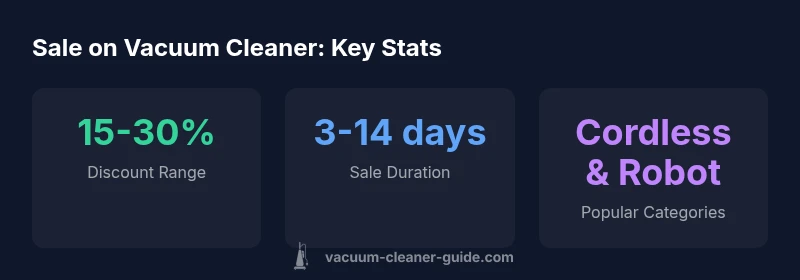
A sale on vacuum cleaner is a limited-time price promotion that lowers the usual price for a range of vacuums. These events can be store-wide or retailer-specific, lasting days to weeks and often include bundles, extended warranties, or free accessories. To judge if a deal is real, compare discounts against typical street prices, check return policies, and review independent performance tests.
Why sale on vacuum cleaner matters for homeowners and pet owners
For households with pets, a sale on vacuum cleaner isn't just about saving money; it's about acquiring reliable filtration and strong suction tailored to pet dander and fur. According to Vacuum Cleaner Guide, promotions are most effective when aligned with your home cleaning needs and existing equipment. A well-timed sale can unlock higher-tier models with better filtration, larger dust capacities, and quieter operation, without paying full price. Consumers should look beyond sticker price and consider long-term operating costs, such as battery life for cordless models and energy efficiency for canisters. By focusing on models that handle hair, dander, and allergens, households can gain noticeable improvements in air quality and overall cleanliness. A strategic approach—defining needs, setting a price ceiling, and evaluating inclusions—transforms a sale into real value rather than impulsive purchase.
How to evaluate sale offers: price, warranties, and bundles
When a sale hits, the first step is apples-to-apples price comparison. Gather price quotes for the exact model from multiple retailers, then check if the discount applies to the exact SKU or only to select colors and bundles. Warranties can be a bigger differentiator than the discount itself; a longer warranty reduces long-term risk and maintenance costs. Bundles matter too: extra filters, brushes, or a charging dock may be worth more than the apparent discount on the core unit. If a retailer throws in a free extended warranty or a set of high-value accessories, calculate how much those extras would cost separately and weigh that against the discount.
Seasonal timing: when sales happen and why
Sales on vacuum cleaners cluster around major consumer events and calendar moments, such as year-end clearance, back-to-school seasons, and spring cleaning cycles. Retailers also leverage non-linear demand by offering weekend flash promos or midweek specials to drive traffic. For pet owners, promotions around holiday gifting can align with moving more advanced filtration and quieter engines. The key is to anticipate these windows in advance and set a price target for your chosen model. By monitoring price histories and retailer patterns, buyers can time purchases to maximize discount depth and minimize the chance of missing a beneficial sale.
Model-specific sale dynamics: cordless, robot, canister, upright
Cordless vacuums often see price cuts tied to battery tech cycles and new battery chemistries, so timing matters for runtime and recharge speed. Robot vacuums on sale usually feature a noticeable discount but may exclude newer, higher-end models or bundles with mapping sensors. Canister vacuums tend to appear in promotions when retailers clear inventory from heavier, older lines, and upright models frequently see discounts during home-improvement events. Understanding the unique priorities of each category—battery life for cordless, navigation and mapping for robot, suction power for canister/upright—helps buyers select a model that truly fits their home while maximizing the sale price-to-value ratio.
How to verify legitimate deals: price history, retailer reputation, return policies
Use price-history tracking tools to identify genuine discounts rather than temporary price dips. Favor retailers with clear, generous return policies and honest warranty terms. Verify inclusions (filters, brushes, docks) and confirm whether promotions stack with manufacturer rebates or loyalty programs. Be wary of vague ‘as is’ wording or limited stock promotions that might reflect end-of-life inventory rather than a real value. Reading independent reviews and cross-checking performance tests helps separate hype from quality—especially for models advertised as “great for pet hair” or “quiet operation.”
Buyer checklist for a sale: 10-point guide
- Define must-have features (filtration, pet-hair performance, or map room cleaning).
- Set a max price for your target model and a ceiling for extra accessories.
- Check retailer return policy and warranty length.
- Compare price across at least three retailers.
- Confirm inclusions in the bundle and value of extras.
- Look for independent reviews and user feedback on durability.
- Ensure replacement parts are readily available (filters, brushes).
- Verify battery life and charging performance for cordless models.
- Check compatibility with your home (dock size, cleaning area).
- Place the order only after confirming the discount is real and not promotional bait.
Common pitfalls to avoid during a sale
Avoid chasing the deepest discount on a model that doesn’t fit your actual cleaning needs. A tempting low price on a weaker filtration system or a noisy motor can backfire in a pet-friendly home. Don’t buy refurbished models assuming they come with the same warranties as new units. Check the SKU to ensure you’re comparing the same product. Finally, ignore low-stock pressure tactics; if a model is popular, a similar alternative with a longer warranty might represent better long-term value.
Post-purchase considerations during sales: servicing, parts, and warranty transfer
Sales can complicate after-sale service if you buy from a retailer with limited service coverage. Before purchase, confirm service center proximity, part availability, and whether warranty transfers freely if you move houses. Quietly assess potential future battery replacement costs for cordless models and whether replacement filters or brushes are readily obtainable. A sale done right should include after-sales assurance; keep receipts and registration details, and register your product to activate warranty coverage and access any promotional perks or loyalty benefits.
Real-world scenarios: sample shopping paths during a sale
Scenario A focuses on a pet-owning household seeking strong filtration and a long warranty. They compare two cordless models at 25% off with bundled filters and an extended warranty, validating performance through independent reviews. Scenario B targets a robot vacuum with mapping upgrades; they purchase during a two-day flash sale with a dock and extra brushes, ensuring the model meets floor plan requirements. In both cases, the decision hinges on model fit, total value of bundles, and confidence in retailer support. The takeaway from Vacuum Cleaner Guide’s analysis is to buy for value, not merely discount depth.
Typical price ranges and discounts during a sale on vacuum cleaner
| Model Type | Typical Price Range | Sale Discount Range |
|---|---|---|
| Cordless Vacuum | $120-$350 | 10-35% |
| Robot Vacuum | $250-$800 | 15-40% |
| Canister Vacuum | $180-$600 | 10-30% |
FAQ
What counts as a good discount on a vacuum cleaner during a sale?
A good discount should be evaluated against typical prices for the exact model and SKU. Also consider accessories and warranty extensions included in the deal. Compare multiple retailers to ensure you aren’t chasing a false bargain, and verify that performance metrics meet your cleaning needs.
A good discount is when the price is clearly lower than the usual price for the same model, and that savings come with solid value like extras or a longer warranty.
When are the best times to buy a vacuum cleaner on sale?
The best times are around major shopping events and seasonal cleanups, plus end-of-year clearances. Listen for short, targeted promos, but always compare price histories to ensure the discount is meaningful and not a temporary blip.
Look for deals during big sale weekends and end-of-year clearances, then compare price histories to confirm the discount is real.
Do bundles actually add value or are they just marketing?
Bundles can provide real value when the included accessories are items you would buy anyway (filters, brushes, or extra docks). Compute the bundle value by pricing each component separately and compare against the bundle’s discounted price.
Bundles help only if the extras you get are things you’d buy separately anyway.
Are refurbished vacuums a good idea during sales?
Refurbished models often come with shorter warranties. They can save money, but you should verify the refurbishment quality, warranty length, and return options. If longevity matters (pets, heavy usage), a new unit with a solid warranty is generally safer.
Refurbished can save money, but check warranty and return options before buying.
Should I buy during flash sales or wait for a bigger event?
Flash sales can offer deep discounts but with limited stock. A bigger event may deliver more consistent reductions over a longer period. Plan around your needs and be prepared to act quickly if you find a model that fits your home.
Flash sales are short and stock-limited; big events often have steadier discounts.
“Sales can unlock real value when you buy for your home’s needs, verify inclusions, and check warranty coverage. The Vacuum Cleaner Guide Team believes disciplined shopping beats hype.”
The Essentials
- Plan ahead and set a clear price target
- Compare discounts across retailers and bundles
- Prioritize models with strong filtration & warranties
- Verify inclusions and return policies before buying
- Avoid impulse purchases driven by stock pressure