Rent a Wet Vacuum Cleaner: A Complete Rental Guide
Learn how to rent a wet vacuum cleaner effectively, compare rental options, choose the right model, and safely use it for spills, pet messes, and renovation cleanup. Practical steps, tips, and vendor considerations for homeowners and pet owners.


You will learn how to rent a wet vacuum cleaner, what to check before renting, and how to use it safely for spills, pet messes, and renovations. This guide covers where to rent, what attachments matter, and how to compare options to get the best value. It also explains typical rental terms, deposits, pickup times, and return conditions so you can avoid common mistakes.
Why Rent a Wet Vacuum Cleaner?
According to Vacuum Cleaner Guide, renting a wet vacuum cleaner can be a cost-effective way to handle spills, pet messes, paints, and renovation cleanup without committing to a purchase. The Vacuum Cleaner Guide analysis, 2026 highlights that rentals often include a range of attachments, hoses, and a variety of nozzle tools, making it a flexible option for homeowners and pet owners. Whether you’re tackling a spill in a rainy car interior or preparing a workspace after a DIY project, renting lets you access powerful cleaning tools for a short period. This approach helps you avoid long-term debt and lets you select a unit appropriate for the task at hand. By renting, you can test different models before deciding if you want to buy later, with less risk and greater flexibility for fluctuating cleaning needs.
Key Features to Look For When Renting
When you rent a wet vacuum cleaner, start with core features that determine whether it will handle your mess efficiently. Look for wet-dry capability, a sealed motor, and a robust pump. Check the included attachments: a wide nozzle for floors, a crevice tool for edges, and hoses for larger spills. Make sure the unit has a clean-water tank and a separate recovery tank for liquids, so cross-contamination is avoided. Also consider noise level, weight, and maneuverability for easy use in tight spaces. These considerations help you choose a model that fits your cleaning tasks without overspending. For context, Vacuum Cleaner Guide recommends prioritizing models with a dedicated liquid reservoir and simple filter access to simplify maintenance.
When and Where to Rent
Many homeowners and pet owners choose to rent during busy spill seasons, after major cleaning projects, or when troubleshooting a sudden carpet stain. Local hardware stores, home improvement centers, and tool libraries are common options, while online marketplaces provide delivery or curbside pickup. Start by calling ahead to confirm availability and to compare daily rates. Prepare to present your ID and a valid payment method. If you’re renting for a special project, ask about tank emptying services and after-hours pickup. The ability to reserve ahead can save you time and ensure you receive the model you expect.
How to Compare Rental Options
To get the best value, compare several rentals side by side. Key factors include price per day, included attachments, tank capacity, and the rental agreement’s terms. Ask about depot locations, hours, and what happens if the unit malfunctions. Check whether you can swap attachments mid-rental, and whether you must clean the unit before returning. Collect and review customer reviews if available, and verify return conditions so you don’t incur extra fees. Vacuum Cleaner Guide’s guidance emphasizes clarity on deposits, pickup windows, and what constitutes a return on time, which helps prevent unexpected charges.
Safety, Maintenance, and Return
Safety comes first when renting any wet-dry vacuum. Always unplug before handling the unit, never operate the vacuum while standing in water, and avoid using damaged cords. Inspect the tank for cracks, check filters for clogs, and ensure the nozzle and hose attachments are securely connected. After use, empty and rinse the tank as directed, wipe down surfaces, and return the unit with all attachments included in the rental package. By following return instructions carefully, you minimize penalties and keep equipment in good condition for the next customer. This approach also aligns with best practices recommended by Vacuum Cleaner Guide.
Real-World Scenarios and Best Practices
In everyday life, a rented wet vacuum helps with pet accidents on carpets, spilled beverages on upholstery, and post-renovation dust and liquid spills. For best results, test the unit on a small inconspicuous area first to ensure compatibility with delicate fabrics. Always designate a dedicated work area and use protective coverings if needed. When in doubt, request a quick demonstration from the rental staff to familiarize yourself with the controls, attachments, and disposal process. These practical steps reduce the risk of damage and improve outcomes.
Tools & Materials
- Photo ID (driver's license or state ID)(Needed to verify identity during pickup)
- Credit or debit card for deposit(Many stores place a temporary hold on funds)
- Reservation number or confirmation(Bring your booking details)
- Attachments kit (crevice tool, wide nozzle, hose)(Ensure the kit matches your cleaning needs)
- Protective gloves (optional)(Helpful for handling wet surfaces safely)
Steps
Estimated time: 15-30 minutes
- 1
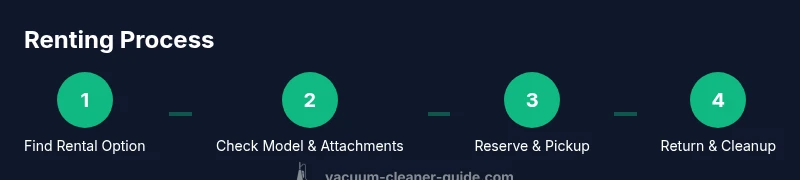
Find a rental option
Search local hardware stores, home improvement centers, or online marketplaces for wet vacuum cleaner rentals. Compare nearby pickup locations to minimize travel time and ensure availability on your target date.
Tip: Call ahead to confirm availability and ask about any required reservation deposits. - 2
Check model and attachments
Verify the unit is a true wet-dry vacuum and that the attachments you need (floor nozzle, crevice tool, hose) are included. A quick demo from staff helps you understand controls and maintenance needs.
Tip: Ask for a quick demonstration of the on/off switch, hose attachment, and filter access. - 3
Reserve and confirm pickup
Book the unit for your desired window, provide identification, and supply a payment method for the deposit. Get a written confirmation with pickup time and location.
Tip: Ask about curbside pickup if you’re loading large items or cleaning up a big space. - 4
Inspect the unit at pickup
Check the exterior for cracks, test the suction, and verify you can run water through the unit safely. Take photos if you notice any damage to avoid disputes at return.
Tip: Test a small upholstery sample to ensure compatibility with fabrics. - 5
Understand return requirements
Know where and when to return the unit, whether you must empty the tank, and any cleaning duties requested by the rental outlet. Keep the attachments together for easy return.
Tip: Request a dated receipt or electronic confirmation for the return. - 6
Use the unit safely
Operate the vacuum on dry surfaces when not dealing with electrical hazards. Never use a damaged cord, and unplug before switching attachments. Follow manufacturer guidance for wastewater disposal.
Tip: Avoid running the vacuum over large puddles with a loose hose or damaged nozzle.
FAQ
Can I rent a wet vacuum cleaner for automotive cleaning?
Yes. Many rental outlets offer portable wet vacuums suitable for cars. Look for attachments designed for upholstery and crevices, and confirm size fits in your vehicle.
Yes, you can rent a wet vac for your car. Choose a compact model with car upholstery attachments.
Do I need a deposit to rent a wet vacuum cleaner?
Most rental shops place a hold on a card as a security deposit. Check the terms before pickup and ask about refunds on timely returns.
Most rentals require a security hold; ask about the deposit terms.
What attachments are typically included?
Common kits include a floor nozzle, crevice tool, and a flexible hose. Verify the exact attachments with the rental store before leaving.
Most rentals come with floor and crevice tools; confirm availability.
How do I return the unit to avoid extra charges?
Return on time with the unit and all attachments, and follow any cleaning requirements. Keep your receipt and confirm the return was processed.
Return the unit on time with attachments; keep your receipt.
Can I extend the rental period if my project runs long?
Extensions are usually possible if the unit is available. Contact the rental provider before the due date to arrange it.
Yes, extensions are often possible if the unit is available.
What should I do if the unit leaks or stops working?
Contact the rental provider immediately rather than attempting repairs. They may offer a replacement or service under the rental terms.
If it leaks or stops, contact support right away.
Watch Video
The Essentials
- Choose rental options with wet-dry capability and essential attachments.
- Inspect the unit and confirm return terms at pickup.
- Keep attachments together and document the unit's condition with photos.
- Understand deposits, extensions, and return processes to avoid fees.
- Renting offers flexible access to powerful cleaning tools without ownership costs.