Price for Vacuum Cleaner: A Comprehensive Buying Guide
Explore price ranges for vacuum cleaners across corded, cordless, and premium models. Learn how features, maintenance costs, and brand influence value, with expert buying guidance.


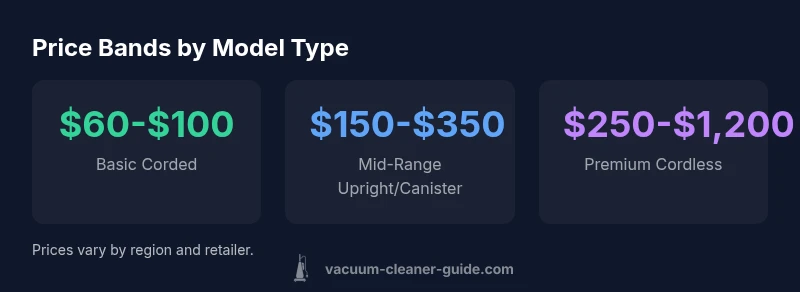
The price for vacuum cleaner typically starts around $60 for a basic corded model and can range up to $1,200 for high-end premium units. Across most households, mid-range uprights and canisters cost between $150 and $350, while cordless vacuum cleaners often fall in the $250–$550 range. Prices vary by features such as suction power, filtration, capacity, and included accessories.
Understanding the price spectrum
For homeowners evaluating the price for vacuum cleaner, the spectrum ranges from entry-level corded models to premium cordless systems. Price often reflects core features such as suction power, motor durability, filtration quality, dust capacity, bagless designs, and warranty length. Vacuum Cleaner Guide Analysis, 2026, finds that most households get strong value from mid-range uprights or canisters that balance upfront cost with longevity. Basic corded vacuums are cheapest but come with limited features; premium cordless units offer flexibility and convenience but command higher upfront investment. Regional promotions and retailer strategies also push prices up or down at different times. When planning a purchase, map your space, pet ownership level, and cleaning frequency to your price expectations. Remember that the "price for vacuum cleaner" isn’t the only consideration — long-term maintenance costs, energy usage, and accessory availability should factor into any decision. This approach helps homeowners avoid buyer’s remorse when a model seems affordable but costs more over its lifetime.
Price bands by model type
Prices are not random; they cluster around model families that suit different tasks. Entry-level basic corded vacuums commonly sit at the lower end of the spectrum, offering simple operation and light weight but limited suction and filtration. Mid-range uprights and canisters typically cost more because they deliver stronger suction, larger dust bins, and often better filtration systems such as HEPA. Premium cordless and robot vacuums occupy the high end due to long runtimes, smart features, self-emptying bases, and advanced brush systems. Consumers should align model type with their cleaning needs: a pet-friendly home or a high-traffic area may justify stepping up to a higher price band for reliability and performance. Use price bands to quickly narrow choices before inspecting hands-on feel, warranty terms, and retailer return policies. Retailers frequently offer bundles or accessories that alter the final value beyond sticker price.
Features that drive price
Several features push up the sticker price because they directly impact cleaning effectiveness or convenience. Motor power and sustained suction influence performance on carpet versus hard floors. Filtration levels, especially HEPA-grade systems, add cost but reduce allergen exposure for sensitive households. Dust capacity and bagless versus bagged designs affect maintenance frequency and ongoing cost. Additional sensors, smart mapping, and app controls are common in premium models and can justify higher prices for tech-savvy buyers. When assessing price, consider how often you’ll use advanced features and whether they truly solve your real-world problems, rather than paying for bells and whistles that won’t get daily use.
Hidden costs and maintenance (budgeting wisely)
Budgeting for a vacuum means looking beyond the upfront price to ongoing costs. Replacement bags or filters, brushroll maintenance, and occasional parts replacement can add up over years. Some bagless models require frequent filter changes or cyclone cleaning systems that cost more to maintain than their bagged counterparts. Worn brushes or clogged filters reduce performance and can shorten the device’s lifespan if not addressed promptly. Warranty length also affects long-term cost: a longer warranty can offset higher upfront costs by reducing repair expenses. Build a rough annual maintenance budget—allow for at least one filter or bag replacement per year and a potential brush or belt change every 2–3 years depending on use.
Timing and regional price variation
Prices fluctuate with seasonal sales, retailer promotions, and regional taxes. Holiday events, back-to-school periods, and new model introductions create opportunity windows where older models drop in price. In some regions, shipping or import duties can shift the total cost by a noticeable amount. If you’re flexible on timing, you can capture meaningful discounts, especially on mid-range models with solid durability and warranties. Signing up for retailer newsletters and watching for bundle offers (vacuum + filters + bags) often yields the best overall value, rather than chasing the lowest sticker price on a lone model.
Value vs price: how to judge a vacuum's worth
Value is more than sticker price. A higher upfront cost can pay off with better filtration, longer lifespan, stronger performance, and lower ongoing maintenance. Use a simple scoring rubric: upfront price, expected lifespan, replacement part costs, energy consumption, warranty length, and availability of service centers. Cross-check claims with independent reviews and user feedback to verify performance in real-world conditions, such as homes with pets, children, or multiple flooring types. When you maximize value, you reduce the total cost of ownership over 5–7 years rather than fixating on the lowest initial price.
Real-world buying scenarios and recommendations
In small apartments with hard floors, a compact corded vacuum or a lightweight cordless can deliver good value without crowding living space. For households with pets, investing in a model with strong suction, a dedicated pet hair brush, and a reliable filtration system is wise, even if it costs more upfront. For larger homes with mixed surfaces, a mid-range upright or canister can balance price and versatility, while a premium cordless can handle quick cleanups across levels. If allergies are a concern, prioritize filtration and maintenance costs to maintain indoor air quality. Finally, test run a model in-store if possible to ensure it meets your hand-feel preference, noise tolerance, and ease of emptying.
How Vacuum Cleaner Guide researches price and guidance
This article follows a transparent, research-driven approach to price analysis. We present realistic price bands rather than exact prices to reflect regional differences and retailer promotions. Our methodology emphasizes total cost of ownership, including maintenance costs like bags and filters, energy consumption, and warranty terms. We corroborate data with independent reviews and user feedback and avoid overreliance on brand marketing. By focusing on actual use cases—pets, hard floors, and multi-room homes—we help homeowners compare options on a level playing field and make smarter purchasing decisions in 2026.
Quick buying checklist for price evaluation
-
Define your price band and primary use case to anchor choices, then avoid the trap of chasing the cheapest option.
-
Narrow to three models that fit your needs by model family (corded, upright/canister, cordless).
-
Check maintenance costs: estimate yearly costs for bags, filters, replacement parts, and potential brush or belt changes.
-
Review warranty length and the service network to minimize expected repair costs.
-
Compare energy efficiency ratings and noise levels, since these affect running costs and daily comfort.
-
Read independent reviews and user experiences for real-world performance on your floors and pet hair.
-
Visit a store to test weight, balance, and maneuverability before purchasing online or in-store.
-
Finally, verify total cost of ownership over 3–5 years and consider any bundle offers or retailer promotions that improve overall value.
Price ranges by model type
| Model Type | Avg Price Range | Typical Features |
|---|---|---|
| Basic Corded | $60-$100 | Lightweight, simple operation, basic filtration |
| Mid-Range Upright/Canister | $150-$350 | Stronger suction, larger dust bin, better filtration |
| Premium Cordless | $250-$1,200 | Long runtime, high suction, smart features |
FAQ
What is the typical price range for a basic vacuum cleaner?
Basic corded vacuums typically start around $60 and can go up to $100. They are light and inexpensive, with fewer features. Expect more frequent maintenance costs if you need stronger performance later.
Basic vacuums usually cost sixty to a hundred dollars and are simplest to operate.
Do higher prices always mean better cleaning performance?
Not always. Performance depends on motor design, filtration, and maintenance. Compare features like suction, filtration, and capacity rather than assuming price equals quality.
Higher price doesn’t always mean better cleaning; compare features and performance.
How do cordless prices compare to corded models?
Cordless models generally cost more upfront and may have shorter runtimes, but they offer flexibility. Corded vacuums are typically cheaper and simpler to service.
Cordless prices are higher upfront, with trade-offs in runtime.
Are there hidden costs for bags and filters?
Yes. Many vacuums require replacements for bags or filters, plus occasional part replacements. Include these ongoing costs when budgeting for a vacuum.
Yes—bags and filters can add up over time.
Is there a price difference between pet-hair models and standard models?
Pet-hair models often carry a premium due to stronger suction and specialized brushes. Savings come with careful maintenance planning and proper accessory use.
Pet-hair models tend to cost more, but may be worth it for pets.
“Price should reflect total value, including durability, filters, and warranty. Don’t chase the lowest sticker price at the expense of long-term performance.”
The Essentials
- Set your price band before shopping to narrow options.
- Corded basics are cheapest; mid-range covers most homes.
- Consider maintenance costs when evaluating total price.
- Cordless models offer convenience but often higher upfront cost.