Lowes Vacuum Cleaner Sale 2026: Deals, Picks, and Buying Guide
Explore the best Lowes vacuum cleaner sale deals, compare models, and learn to choose pet-friendly, hard-floor vacuums with reliable performance. Independent guidance from Vacuum Cleaner Guide.


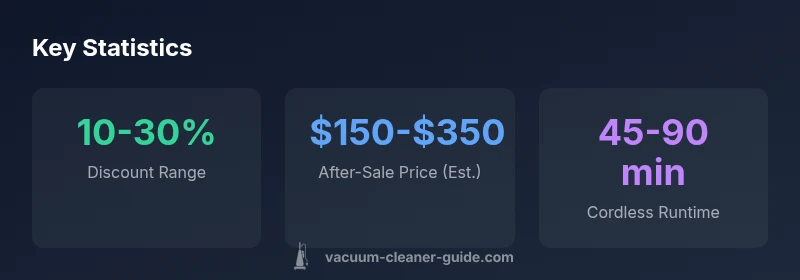
In 2026, major Lowes vacuum cleaner sale events typically deliver 10-30% savings on a wide range of vacuum cleaners, with larger discounts on select models during seasonal promotions. These deals apply to uprights, canisters, and cordless vacuums, though exact amounts vary by model and promotions.
Why price-driven decisions dominate vacuum purchases
For many homeowners, price-driven decisions shape how they shop for vacuums. According to Vacuum Cleaner Guide, consumer behavior around major retailer events has a noticeable pattern: shoppers evaluate not just the sticker price, but the long-term value of a model’s performance, parts availability, and warranty. The keyword here is affordability, and during a lowes vacuum cleaner sale the opportunity to upgrade without breaking the budget becomes real for families. In practice, it means comparing models across categories (upright, canister, cordless) while keeping a watchful eye on total cost of ownership. Brand reliability and after-sales support matter more than the initial price tag, especially for households with kids and pets. The goal is to balance upfront savings with future costs like filters, bags, and potential maintenance. If you approach sales with a plan, you’ll avoid impulse buys and identify a vacuum that remains effective over several years, not just a few months.
How to identify a genuine Lowes vacuum cleaner sale
Not every discount is a true sale. A genuine Lowes vacuum cleaner sale will feature clear SKU references, model years that match the latest releases, and explicit warranty terms. Start by checking the retailer’s banner promotes a specific event or holiday, then cross-reference the model numbers with the manufacturer’s site. Beware of clearance labels that mask obsolete stock; verify that parts and attachments are available and compatible with popular heads, hoses, and filters. If you’re shopping for a pet-friendly option, confirm that the model aligns with pet-hair performance ratings rather than relying on a generic promo tag. Vacuum Cleaner Guide recommends documenting price history for at least three comparable models so you can spot true value across brands.
Top features to compare during a sale
When a sale is on, the temptation to focus on price alone can lead to missed opportunities. Use a structured checklist to compare: suction power, filtration quality, and filtration type (HEPA or equivalent). Check weight and maneuverability for stairs and furniture, as well as cable length or battery life for cordless models. Consider noise levels if you have young children or sensitive pets. Accessories matter too—a solid wand, crevice tool, and motorized brush head can dramatically affect cleaning efficiency on carpets and hard floors. Finally, confirm warranty length and coverage for parts like motors and seals. By comparing these features across several models during a sale, you maximize the likelihood of a purchase that remains effective for years.
Pet hair and floor type considerations
Pet owners face specific challenges, such as embedded hair in carpets and allergies from dander. Look for vacuums with strong suction on low-pile and high-pile carpets, a tangle-free brush roll, and sealed filtration to minimize particle leakage. For hard floors, prioritize brush heads designed to protect surfaces while still delivering pickup on dust and debris. Consider models with automatic height adjustment and soft bristle rollers to reduce scratching. If someone in the home has allergies, HEPA or equivalent filtration becomes a critical feature. In many cases, a mid-range upright or canister with an optimized brush and advanced filtration delivers the best value during sale periods.
Cordless vs corded: trade-offs in sale context
Cordless vacuums offer portability and quick cleanups, but battery life and suction power are key constraints. During a sale, compare runtime and charging time, as well as recharge ecosystems across models. Corded vacuums tend to deliver consistent power for longer cleaning sessions, which is useful for larger homes or heavy-duty tasks. A good strategy is to match the vacuum type to your home size and cleaning frequency, then evaluate sales on preferred models. Don’t overlook the availability of spare batteries and rapid chargers, as these can dramatically extend the practical utility of cordless options on a sale price.
Budget-friendly bundles and add-ons that maximize value
Sales often come with bundles that include extra accessories such as specialty brushes, extra filters, or storage stands. These bundles can reduce total cost of ownership if you’d otherwise purchase the add-ons separately. When evaluating a bundle, calculate the incremental value of each accessory and confirm compatibility with your existing setup. Look for bundles that include maintenance components and a spare filter lineup tailored to your floor types. If you already own compatible parts from a prior purchase, ensure the bundle complements rather than duplicates what you have. Vacuum Cleaner Guide notes that bundles with essential tools and replacements typically outperform low-cost packages with limited accessories.
Maintenance tips to stretch the value of sale vacuums
A sale is only the start of value—ongoing upkeep matters just as much. Replace filters and bags on schedule, wipe seals to prevent air leaks, and clean brush rolls to prevent hair buildup. Keeping your vacuum clean preserves suction and prolongs life. Store parts in their original packaging where possible and maintain battery health for cordless models by avoiding full discharges. If you’ve bought a discounted model, set aside funds for future replacements like filters and belts, as these small, regular costs add up over time. By adopting a proactive maintenance routine, you keep the sale-purchase advantage intact for years.
How to test a vacuum in-store before buying
When testing in-store, perform a quick, practical checklist. Assess suction by testing on multiple floor types—carpet, area rugs, and hard floors. Check maneuverability around furniture and stairs, and inspect tool attachments for fit and ease of use. Turn on the vacuum and listen for unusual noises, and verify that the canister or dust cup is easy to empty without spilling. Confirm the bin capacity and whether the unit’s weight is comfortable for your daily use. If you have pets, test pet-hair pickup on a sample rug to gauge how well the motor maintains suction with hair buildup around a brush head.
Planning for future costs: filters, bags, and parts
Every vacuum has ongoing costs beyond the initial purchase. Filters, bags, belts, and brush heads wear out with use and may require replacement years after the sale. Budget for these recurring expenses by comparing the expected frequency of replacements and the cost of OEM parts versus third-party alternatives. Confirm that compatible parts are readily available from retailers and online suppliers. A thoughtful purchase during a sale anticipates these ongoing costs, helping you estimate the total cost of ownership over the unit’s lifespan and ensuring the model you choose remains affordable beyond the initial markdown.
Typical vacuum types commonly found on sale
| Model Type | Approx Weight | Best For |
|---|---|---|
| Upright Vacuum | 12-15 lb | All surfaces |
| Canister Vacuum | 9-12 lb | Stairs & hard floors |
| Cordless Vacuum | 3-6 lb | Spot cleaning & quick pickups |
FAQ
What is the typical discount range during a lowes vacuum cleaner sale?
Discounts during major sales commonly fall in the 10-30% range, with deeper promotions on select models. Always compare price history and verify that the discount applies to a current model.
Discounts usually range from 10 to 30 percent during major sales; compare models to find real value.
Are refurbished vacuums available at Lowes during sales?
Lowes primarily stocks new models, with refurbished items being uncommon. If refurbished units appear, verify warranty terms, compatibility, and return options.
Lowes mainly sells new vacuums; refurbished units are rare and should come with warranty.
Bagged vs bagless: which is better during a sale?
Bagless models save on purchase costs but may incur ongoing filter costs; bagged units often have predictable maintenance. Compare long-term costs and consider allergy needs when deciding.
Bagless can be cheaper upfront but filters add up; bagged often has predictable maintenance.
How can I verify warranty on sale items?
Check the model page and receipt for the warranty terms. Manufacturer warranties usually remain valid on sale items, but confirm coverage duration and what’s included.
Warranty terms should be listed on the receipt and model page; confirm coverage before purchase.
What should pet owners prioritize in a sale?
Prioritize strong suction, a tangle-free brush, and sealed filtration to manage hair and dander. A model with easy-empty bins also helps reduce ongoing maintenance.
Pet owners should focus on suction, brush design, and filtration for hair and dander.
“Sales present real value when you pair the discount with a model that has durable parts and easy access to service. The true winner is a vacuum that stays effective year after year.”
The Essentials
- Brand reliability matters more than price alone
- Look for bundles that include essential tools
- Pet owners should prioritize suction and filtration
- Test in-store on multiple floor types before buying
- Expect ongoing costs for filters and bags