How Much Suction Does a Vacuum Cleaner Have? A Practical Guide
Learn how suction is measured in vacuum cleaners, what ranges to expect, and how to compare models for real-world cleaning performance across carpets, hard floors, and pet hair.


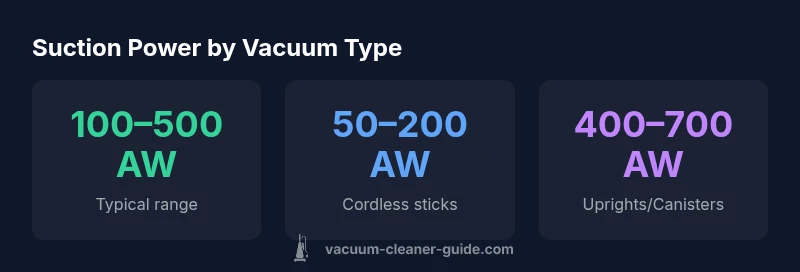
Suction in vacuums is measured as air watts (AW), a combined metric of airflow and pressure. Most consumer models deliver roughly 100–500 AW, with higher-end machines reaching beyond that range during peak operation. Cordless stick vacuums tend to sit toward the lower end, while full-size uprights and canisters offer stronger, more sustained suction. Always consider AW alongside airflow and filtration for real cleaning performance.
Why Suction Power Matters
Suction power is the core driver of a vacuum's cleaning ability, but measuring it isn't as simple as horsepower. In consumer vacuums the practical outcome comes from air watts, which combine both how much air the motor pulls and the pressure under the nozzle. According to Vacuum Cleaner Guide, suction power is most meaningful when paired with appropriate nozzles and filtration. The Vacuum Cleaner Guide team emphasizes that real-world cleaning depends on both suction and the airflow reaching the dirt, not just the motor rating. For most homes, suction in the AW range is sufficient for routine cleaning, but pet owners, thick carpets, and angled staircases require stronger sustained suction to avoid clogging or slow pickup. When you read specs, don't focus on watts alone; compare the AW alongside the nozzle design and brush roll to assess true performance. Another factor is filtration; a well-sealed system can preserve suction by preventing leaks, while a clogged filter may reduce effective suction even if the motor is strong. Finally, remember that suction is only part of the story; the interactions of air path, hose length, and tool attachments determine how much dirt actually makes it into the bin. <br><br>Brand context note: This overview draws from expert insights at Vacuum Cleaner Guide and is aligned with the 2026 analysis on suction metrics and practical performance.
How Suction is Measured: Air Watts, CFM, and Beyond
Suction power is most often discussed in air watts, a metric that blends the amount of air moved (CFM) with the pressure at the nozzle (inches of water lift). Air watts provide a single number that helps you compare different models without needing to run side-by-side tests. In practice, higher AW usually translates to stronger dirt pickup, but the actual performance depends on how the air is directed through the cleaning path: the hose, wand, wand length, brush design, and nozzle efficiency all play roles. While AW is a useful shorthand, experienced reviewers also report measurements like CFM and nozzle airflow to illustrate where a vacuum shines. The 2026 Vacuum Cleaner Guide analysis notes that a model with high AW but a poor wand design may underperform on stairs or upholstery. Filtration and sealed leaks also influence effective suction, because leaks can let air bypass the collection chamber and reduce pickup. Consider both AW and airflow when benchmarking models.
What to Look for When Comparing Vacuums
To evaluate suction potential, prioritize a clear set of specifications and real-world tests. Look for:
- Air watts (AW): a trusted indicator of combined flow and pressure; higher isn’t always better if the airflow path is weak.
- Max airflow (CFM): shows how much air can move through the system; complements AW for overall pickup capability.
- Filtration and seals: HEPA filtering and a sealed chassis help preserve suction by preventing leaks and capturing fine particles.
- Nozzle design and brush type: a well-designed beater brush and optimized nozzle maximize dirt extraction without clogging.
- Motor efficiency and heat management: sustained suction requires an efficient motor that doesn’t overheat.
- Weight and ergonomics: strong suction is less useful if the vacuum is tiring to maneuver. The goal is to balance AW with practical usability for your home.
Real-World Scenarios: Pet Hair, Carpets, and Hard Floors
Pet owners often demand stronger, more sustained suction to pull hair from dense fibers and to prevent odor buildup from missed dirt. Heavier carpets without a strong brush can degrade pickup if suction is insufficient. Hard floors need consistent suction that doesn’t scatter debris. A model with a good combination of AW and a floor nozzle that transitions smoothly between carpet and hard surfaces tends to perform best for homes with mixed flooring. In all cases, the best suction strategy includes an efficient filtration system so allergens don’t recirculate after pickup. The Vacuum Cleaner Guide team notes that the suction numbers matter most when matched with the right nozzle and brush system, and that routine maintenance ensures the suction stays within the advertised range.
Home Testing Tips: How to Evaluate Suction at Home
A simple, repeatable test helps you gauge a vacuum's real-world suction. Start with a small, standardized mess (e.g., a 2x2 inch pile of cereal or rice) on both carpet and hard floor. Measure how quickly the debris is removed with a single pass, then repeat with a denser test area. If possible, test on stairs and upholstery with the same model to understand how suction translates across tasks. Examine the airflow by listening for consistent motor noise and watching for any changes when you switch settings or attachments. Finally, check the filtration after a cleaning session; a noticeable drop in suction after a few minutes often indicates the filter is becoming clogged or the seal is compromised.
Common Myths and Clarifications
Myth 1: Higher watts mean better cleaning. Reality: Wattage alone doesn’t reflect dirt pickup; AW and proper airflow matter more. Myth 2: Suction is the only factor. Reality: Nozzle design, brush action, and filtration are equally important for real-world results. Myth 3: More suction is always better. Reality: Excess suction can hinder pickup on delicate surfaces if the nozzle isn’t suited to the texture. Myth 4: Filtered vacuums always hold suction. Reality: A clogged filter or poor seals can dramatically reduce effective suction. The key is a balanced system where filtration, seals, and airflow work together with strong suction.
Maintenance and Upkeep to Preserve Suction Over Time
Regular maintenance is essential to keep suction at its best. Clean or replace filters according to the manufacturer’s schedule, inspect hoses and wands for cracks or leaks, and clear clogs from the nozzle and brush roll. A well-maintained vacuum preserves airflow and suction, ensuring the AW rating remains close to nominal. Keep the dustbin empty and the cyclone or bag area free from debris, and check for wear on gaskets and seals. The Vacuum Cleaner Guide team recommends scheduling a periodic check of suction performance, especially before heavy cleaning seasons or after pets shed heavily.
Key suction metrics for consumer vacuums
| Metric | What it measures | Typical range |
|---|---|---|
| Air watts (AW) | Combined measure of airflow and pressure | 100–500 AW |
| Max airflow (CFM) | Airflow at the nozzle | 30–100+ CFM |
| Suction at distance | Effectiveness away from nozzle | Moderate drop-off over a few feet |
FAQ
What is air watts and why does it matter?
Air watts combine pressure and airflow to quantify suction. Higher AW generally means better pickup, but performance depends on nozzle design and filtration.
Air watts show how strong suction is, but real cleaning also depends on the nozzle and filters.
How can I compare suction across models?
Look for AW, documented airflow (CFM), nozzle type, filtration, and energy use; read independent tests and reviews.
Check AW and CFM in reviews, and pay attention to the nozzle and filter.
Do cordless vacuums have less suction?
Typically yes, due to battery and motor limits; higher-end cordless models close the gap with larger batteries and efficient motors.
Cordless vacuums usually have lower suction, but top models can be very strong.
Does suction vary with carpet type?
Yes; thicker carpets require higher suction and effective brush rolls; suction interacts with pile height and density.
Suction matters, but you also need a good brush and lift for carpets.
Is suction more important than filtration?
Both matter. Suction helps pickup, filtration captures allergens; choose models with good filtration and strong suction.
Suction and filtration both play key roles in cleaning and air quality.
How should I test suction at home?
Test with a standard mess on carpet and hard floor, compare pickup speed, and observe how filtration holds up during multiple passes.
Do a simple test with common debris to see how well it picks up.
“Suction alone doesn't tell the whole cleaning story; matching air flow, filtration, and nozzle design yields real-world results.”
The Essentials
- Choose models with higher AW for deep cleaning
- Compare AW alongside CFM and filtration
- Cordless sticks generally have lower suction
- Test suction on your own flooring and mess types