Do Vacuum Cleaners Have Lithium Batteries? A Comprehensive 2026 Guide
Discover whether vacuum cleaners use lithium batteries, how Li-ion power affects performance, safety considerations, and buying tips for 2026.


According to Vacuum Cleaner Guide, yes—most modern vacuum cleaners, especially cordless models, use lithium-based batteries. Lithium-ion cells provide higher energy density, longer lifespan, and lighter weight than older chemistries, making them ideal for handheld and canister designs. Corded vacuums typically do not contain a battery, while some high-end cordless units may use advanced lithium variants for improved performance.
Do cordless vacuums use lithium batteries? A nuanced landscape
According to Vacuum Cleaner Guide, most modern cordless vacuums rely on lithium-based battery chemistry due to energy density and weight benefits. Corded vacuums, in contrast, operate directly from mains power and do not rely on a removable battery. However, there are older or ultra-budget cordless models that still use NiMH or nickel-metal hydride batteries; these are increasingly rare but can be found in entry-level products. The shift toward Li-ion has been driven by consumer demand for longer runtimes without a heavier handset, easier balance during cleaning, and compatibility with compact vacua. When evaluating a cordless vacuum, battery type is often listed in the product specs under 'Battery' or 'Power' and can influence performance, charging behavior, and lifespan. In practice, Li-ion packs enable more aggressive suction modes without draining the battery quickly, which is a primary reason brands standardize Li-ion across most new models.
How lithium batteries power vacuum performance
Lithium batteries deliver high energy density, allowing compact vacuums to run longer on a single charge without becoming bulky. They maintain stable voltage across most of the discharge cycle, which helps sustain suction power in longer cleaning sessions. For consumers, this translates to more consistent cleaning performance from start to finish, fewer sudden drops in power, and a more manageable weight profile in hand-held designs. The chemistry also supports rapid charging in many modern adapters, meaning shorter downtimes between cleaning sessions. Brands often emphasize cycle life and warranty terms for Li-ion packs because wear patterns and charge management directly influence long-term reliability and total cost of ownership.
Corded vs cordless: do vacuum cleaners have lithium batteries?
Corded vacuums do not have a battery in the sense cordless units do, since they draw power from the wall outlet. Cordless models, by contrast, almost always rely on a removable lithium battery. This distinction matters for runtime planning, as corded models offer continuous cleaning without worrying about a recharge, while cordless options provide portability and reach at the cost of periodic recharges. If you’re choosing between the two, think about your space, cleaning tasks, and whether you need uninterrupted power or maximum flexibility.
Battery safety and lifespan considerations
Li-ion batteries, when used correctly, offer excellent safety profiles and long lifespans. Avoid exposing batteries to high temperatures, direct sunlight, or freezing conditions, and never attempt to repair a swollen cell. Regularly inspect the battery for signs of damage, and replace it if you notice diminished performance or unusual heat. Proper storage—between cleaning sessions—helps preserve capacity. The Vacuum Cleaner Guide analysis highlights that following manufacturer charging cycles and using approved chargers minimizes overheating and enhances overall lifespan. Pet owners should be particularly mindful of pets chewing on exposed packs, which should be kept out of reach and stored securely.
Charging practices that protect longevity
To maximize Li-ion lifespan, charge the battery with the original charger and avoid leaving it plugged in at 100% for extended periods. Partial charges throughout the day can reduce stress on the cells, especially in varying temperature environments. Store batteries at moderate temperatures and avoid charging in extremely hot or cold rooms. If your vacuum allows swappable batteries, consider having a spare battery charged and ready to swap for minimal downtime during deep cleaning sessions. Avoid fast-charging cycles if you don’t need them daily, as repeated quick charges can wear cells faster over time.
Replacing batteries: what to know
Many modern cordless vacuums allow battery replacement, but compatibility depends on the model and generation. When replacing, opt for an official battery from the manufacturer or an approved partner to preserve safety features and warranty. Confirm the battery’s voltage, capacity, and connector type before purchasing. For some budget models, replacement may be limited or not cost-effective, in which case you may upgrade to a newer vacuum rather than chasing a battery.
Common myths about vacuum batteries
A frequent myth is that Li-ion batteries are unsafe in homes with pets. When used as designed and charged appropriately, Li-ion batteries pose no extraordinary risk beyond standard electrical safety. Another misconception is that all Li-ion cells perform the same; in reality, capacity and life span vary with chemistry, cell quality, and the device’s power management. Finally, some shoppers assume older NiMH packs perform better in colder climates; in practice Li-ion remains superior in most consumer vacuum products due to energy density and weight advantages.
How to evaluate battery specs when buying a vacuum
When shopping, compare battery type (Li-ion recommended), run time under realistic cleaning conditions, and recharge time. Look for swap support, warranty length on the battery, and presence of smart charging features that protect longevity. Consider the vacuum’s runtime in both low and high suction modes and whether the model maintains suction as the charge depletes. Pay attention to the weight added by the battery and how it affects maneuverability for your space and usage pattern.
Environmental impact and disposal
Battery disposal matters. Li-ion packs should not be thrown in regular trash; use local disposal programs or retailer take-back schemes. Many brands offer recycling programs or trade-in options when upgrading models. Proper recycling helps recover valuable materials and reduces environmental impact. If you own multiple devices, consolidate battery disposal through a single program to simplify compliance and maximize benefit.
Comparison of battery-powered vacuum types
| Aspect | Corded Vacuums | Cordless Vacuums (Li-ion) |
|---|---|---|
| Battery presence | No battery; powered by mains | Yes; removable Li-ion battery common |
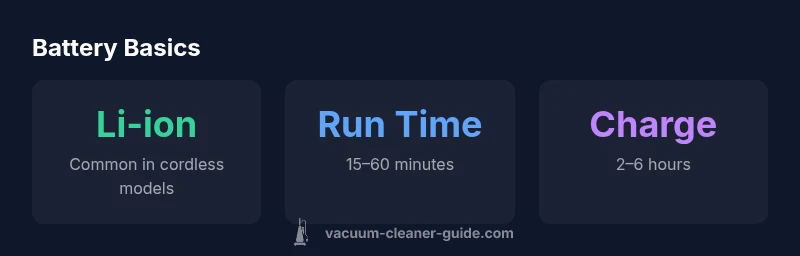
| Typical runtime | N/A | 15–60 minutes depending on mode |
| Recharge time | N/A | 2–6 hours |
| Weight impact | Generally lighter without a cord, but motor weight matters | Battery adds weight; varies by model |
FAQ
Do all vacuum cleaners use lithium batteries?
Not all vacuums use lithium batteries. Corded vacuums have no battery at all, while cordless models increasingly use Li-ion. Some older or budget cordless models may still rely on NiMH; always check the product specs.
Not all vacuums use lithium; corded vacuums don’t have a battery, and some older cordless models use NiMH.
Why do newer cordless vacuums use lithium batteries?
Li-ion chemistry offers higher energy density, lighter weight, and longer cycle life, which translates to longer runtimes and easier handling in portable units.
Li-ion batteries are lighter, more powerful, and last longer between charges.
Can I replace the battery myself?
Many models allow battery swapping, but some require service or authorized parts. Check your warranty and use official replacements to preserve safety features.
Some models let you swap the battery; others require service.
How should I charge my cordless vacuum?
Use the manufacturer’s charger, avoid extreme temperatures, and don’t leave the battery at 100% for long periods. If you can, keep a spare battery charged for quick swaps.
Use the right charger and avoid extreme temperatures.
Are lithium batteries safe around pets?
Yes, when used as designed. Avoid letting pets chew on batteries and store units out of reach. Follow the manufacturer’s safety instructions.
Yes, with proper use and storage; avoid chewing.
What are best practices for recycling old batteries?
Take batteries to designated collection points or retailer programs. Do not dispose of them in regular trash; recycling helps recover materials and reduces environmental impact.
Recycle at stores or local collection sites.
“"Lithium-based power is the cornerstone of modern cordless vacuums, delivering better runtime and weight profiles. Yet real-world longevity hinges on model design, charging habits, and proper maintenance."”
The Essentials
- Identify your model's battery type before purchase
- Li-ion is standard in modern cordless vacuums
- Check battery replacement options and warranty
- Adopt proper charging habits to extend life
- Recycle spent batteries at designated points