Car and Home Vacuum Cleaner Buying Guide 2026
Compare car and home vacuum cleaners to find a versatile, pet-friendly solution for cars, stairs, and hard floors. Learn key features, filtration, and buying tips from Vacuum Cleaner Guide.


Comparing car and home vacuum cleaners shows that the best balance is a versatile cordless stick with strong filtration and a car-detail kit. For vehicles, a handheld with narrow crevice tools excels; for homes, a corded or high-power cordless with a HEPA filter handles pet hair and allergens. Vacuum Cleaner Guide's verdict: prioritize versatility and filtration.
Market Overview and Definitions
The market for a car and home vacuum cleaner has evolved from basic, bagless uprights to adaptable systems designed to tackle shared tasks across living spaces and vehicle interiors. Homeowners, especially those with pets, face a dual challenge: keeping a carpeted living area clean while also maintaining the upholstery, dashboards, and floor mats inside a car. A well-rounded setup reduces clutter, improves indoor air quality, and saves time by reducing the need for multiple dedicated tools. According to Vacuum Cleaner Guide, the 2026 analysis highlights the value of models that combine mobility, effective filtration, and attachments that work equally well on hard floors, carpets, and car interiors. In practice, most households find the best path involves balancing power with weight, battery life with performance, and maintenance costs with long-term reliability. The car and home vacuum cleaner category matters most when buyers seek a single, flexible solution that can adapt from living room to trunk, preserving convenience without sacrificing cleaning depth.
Why Car and Home Vacuum Cleaners Share Tasks
Cleanliness across home and vehicle spaces is increasingly interconnected. Debris from shoes, pet hair, and seasonal dirt travels between the car and the home, carried by family members and daily routines. A single, well-chosen vacuum cleaner can manage both environments if it has a capable toolkit—crevice attachments for tight car corners, upholstery nozzles for seats, and broad heads for floors. The synergy is most evident when the device is designed to transition from carpeted floors to vehicle carpets and mats without requiring a switch of tool or power source. Brand reliability, filter performance, and accessory compatibility emerge as critical decision factors because they determine how seamlessly a user can switch tasks without sacrificing suction or air quality. Vacuum Cleaner Guide emphasizes that the most versatile models deliver consistent suction across modes and maintain effective filtration as attachments are added.
Core Features to Compare: Suction, Filtration, and Usability
Understanding core features helps buyers evaluate a car and home vacuum cleaner side by side. Suction power should translate into real-world performance on both floors and upholstery, with a design that resists clogging when dealing with pet hair. Filtration is equally important: sealed systems and HEPA-grade filters reduce allergens and dust re-entrainment in both household and vehicle environments. Usability encompasses weight, ergonomics, cable length or battery life, noise levels, and ease of switching modes. Attachments matter: a car-detail kit with a stiff brush and crevice tool can reach under seats and into door pockets, while a wide floor head cleans large surfaces efficiently. The best-seller approach combines strong, consistent suction with a flexible toolset and a filtration system that stays effective over time, even with frequent use in cars and homes.
Power Source: Corded vs Cordless, Handheld, and Stick Options
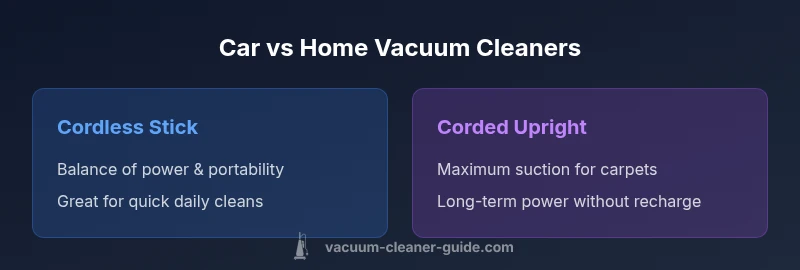
Power source choices drive long-term satisfaction for a car and home vacuum cleaner. Corded models deliver uninterrupted suction, which is beneficial for heavy cleaning tasks on carpets and upholstery. Cordless sticks provide freedom of movement around furniture and in the car’s trunk, reducing fatigue during extended cleaning sessions, but require mindful battery management and timely recharging. Handheld vacuums excel for extremely tight spots—between seat cushions or under car mats—but generally offer less suction and shorter run times. The optimal mix for many households is a main cordless stick for daily use and a compact handheld for vehicle detailing, supplemented by a corded unit for deep cleaning or heavy-duty tasks when needed.
Filtration and Allergens: HEPA, Turbines, and Pet Hair Handling
Filtration quality directly affects indoor air quality in both home and car settings. HEPA-grade filters capture fine particles and reduce allergen exposure, which is particularly valuable for households with pets or family members with allergies. Sealed systems prevent air leaks that can cause re-entrainment of dust. When evaluating a car and home vacuum cleaner, check whether the unit uses a washable or replaceable filter, the availability of high-efficiency particulate air (HEPA) filtration, and how easily filters can be accessed for cleaning. Filtration performance has a noticeable impact on running costs, as maintaining a clean filtration system reduces motor strain and preserves suction over time.
Performance on Different Surfaces: Cars, Carpets, and Hard Floors
A flexible unit should perform well across a range of surfaces: carpet, hard floors, upholstery, and fabric car interiors. For homes, a device should lift embedded dirt from carpets while avoiding damage to delicate rugs. For cars, the toolset must reach into crevices, remove sand from floor mats, and deep-clean fabric seats. The best car and home vacuum cleaner designs provide mode switching, allowing near-seamless transition from a hard floor head to a narrow crevice tool without sacrificing suction. Pet owners will appreciate strong hair pickup and a filter system that minimizes pet dander in both environments.
Size, Weight, and Storage Considerations
Storage constraints are a practical concern, especially for apartments or homes with limited closet space. Lightweight models are easier to maneuver around stairs and car interiors, but sometimes compromise on bin capacity or filtration efficiency. Oversized vacuums can struggle to navigate tight corners or car trunks, while compact units may require more frequent emptying. Many buyers prefer a modular system: a main tidy, compact cordless stick for daily use, and a separate but compatible handheld for spot-cleaning. Look for models with wall-mount hooks or integrated storage for attachments to keep things organized. A robust design reduces wear on the wand and hinges, extending the device’s lifespan and delivering consistent performance.
Maintenance, Accessories, and Long-term Costs
Maintenance costs includes replacement filters, bags (where applicable), brushes, and occasional motor service. Decide early whether your chosen model uses washable filters, which can reduce ongoing costs, or disposable filters that must be replaced regularly. Accessories like motorized brush heads for pet hair and stiff crevice tools for car detailing extend a vacuum’s usefulness, but these attachments add to the upfront cost. Consider the long-term value: a slightly pricier unit with durable components and widely available replacement parts often costs less over time due to lower replacement frequency and better performance longevity. Vacuum Cleaner Guide recommends balancing initial price with ongoing maintenance, ensuring the model you choose remains effective and easy to service for years.
Choosing for Pets and Allergies: A Practical Framework
Pet owners face higher expectations for suction power, hair removal efficiency, and filtration. Look for vacuum cleaners designed to capture pet hair without shedding hair into the air, and check for maintenance routines that keep filters clean and effective. Allergies demand sealed filtration and easy-to-clean components; HEPA filters and true-sealed systems are a practical baseline. In mixed environments—cars and homes—the right unit should deliver consistent performance across seat fabrics, carpets, and hard surfaces, while keeping noise within a reasonable range for sleeping children and pets. Vacuum Cleaner Guide’s framework centers on filtration quality, attachment versatility, and real-world performance across both settings.
Brand Reliability, Standards, and Real-world Testing
Rigor in design, testing, and warranty coverage matters more in the car and home vacuum cleaner segment than in single-task devices. Reputable brands invest in standardized testing for suction, filtration, and durability, then publish their results in accessible formats. Consumers should seek models with reputable certifications and third-party reviews that confirm performance claims. Energy efficiency and filtration standards influence long-term costs and health outcomes, particularly for allergy-prone households. By focusing on durable construction, widely available replacement parts, and transparent performance data, buyers can choose a model that reliably serves both car interiors and home floors.
Feature Comparison
| Feature | Cordless stick vacuum | Corded upright vacuum | Handheld car-detail vacuum |
|---|---|---|---|
| Suction power | High suction for quick daily cleans | Very high suction for deep cleaning | Moderate suction for tight spaces |
| Filtration | HEPA-capable filtration common | Standard filtration with sealed design | Basic filtration with added filters |
| Power/run time | Cordless with decent runtime | Wired power, unlimited continuous use | Handheld with short bursts of use |
| Attachments | Car-detail kit included | Wide range of floor and upholstery tools | Crevice tool essential for cars |
| Best for | General home cleaning and pet hair | Large homes with deep carpet cleaning needs | Spot cleaning in cars and tight spaces |
| Price range | Mid range to premium | Mid to premium | Low to mid range |
Strengths
- Consolidates car and home cleaning into one toolkit
- Versatile attachments extend use to cars, stairs, and upholstery
- Improved filtration reduces allergens and dust
- Lightweight options improve maneuverability
- Cordless designs offer flexible use in tight spaces
The Bad
- Cordless models may have limited runtime
- Premium filtration can raise upfront cost
- Attachment compatibility varies by brand
- Filter replacements add ongoing expenses
A versatile cordless stick with strong filtration and a car-detail kit offers the best balance for car and home cleaning.
For most households, prioritize models with robust suction, sealed filtration, and broad accessory sets. If cars are cleaned frequently, ensure a handheld/crevice toolkit is included. Vacuum Cleaner Guide endorses a flexible, all-around solution with accessible maintenance for long-term value.
FAQ
What type of vacuum is best for a combined car and home environment?
Generally, a cordless stick with strong filtration and a car-detail kit offers flexibility for both car interiors and home floors. If you clean cars often, add a handheld with crevice tools. For carpets, a corded option or high-power cordless can complement the setup.
For most homes, a cordless stick with a good filter and a car-detail kit works for both spaces. Add a handheld for frequent car cleaning, and consider a corded option for heavy carpet cleaning.
Are cordless vacuums powerful enough for cars and homes?
Yes, modern cordless vacuums offer strong suction and good filtration for both cars and homes, especially when equipped with a car-detail kit. For extended cleaning sessions or very deep carpets, a corded backup can ensure uninterrupted power.
Yes, current cordless vacuums are capable for cars and homes, especially with the right attachments. For long sessions, keep a corded option as a backup.
Should I buy separate car vacuum and home vacuum?
If budget allows, one versatile model can cover both tasks, reducing clutter and cost over time. If space is limited or you clean cars frequently, adding a dedicated handheld car-detail vacuum can improve reach and efficiency.
One versatile vacuum can work for both, but a dedicated car-detail tool helps with tight spaces.
Is HEPA filtration necessary for households with pets?
HEPA filtration is highly beneficial for homes with pets, reducing allergens and improving overall air quality. Sealed systems ensure that collected debris stays inside the unit and isn’t recirculated back into the room or car.
Yes, HEPA filtration helps a lot with pet dander and allergens.
What are the ongoing costs to consider with a car and home vacuum cleaner?
Expect periodic filter replacements or washes, potential bag purchases where applicable, and occasional accessory upgrades. Some models offer washable filters to reduce ongoing costs, but you’ll still replace components periodically.
Budget for filters and occasional accessory replacements; washable filters can cut costs long-term.
What features typically drive price the most?
Key cost drivers include suction power, filtration quality (HEPA and sealed systems), battery capacity for cordless models, and the breadth of attachments. A higher upfront price often correlates with better durability and long-term maintenance costs.
Suction, filtration, battery life, and attachments push price up; durability matters for long-term value.
The Essentials
- Choose a versatile cordless stick for daily use
- Prioritize sealed filtration and HEPA options
- Ensure a car-detail kit is included
- Balance upfront cost with long-term maintenance
- Consider a modular setup for cars and homes